


My sweet son Kai’s epilepsy journey began when he was just ten months old. One second he was my peaceful, sleeping baby and the next he was stiff, shaking, and blue—truly a terrifying experience for me as his mom. It was diagnosed as a febrile seizure (as he was slightly ill at the time) and we were home within twelve hours. We didn’t think it could happen again, but it did.
Three weeks later, I found myself at his bedside in the hospital after another one—only this time, it wasn’t stopping despite multiple medications. The room was full of medical staff and there were countless tubes coming out of his little body. After 21 minutes straight, the seizure finally let up. Due to the severity of the event and the fact that it wasn’t the first, Kai was prescribed an anti-seizure medicine and spent a few days in the hospital for observation.
Within a week of being home, I started noticing that Kai would have these little “jerks”—they didn’t seem to bother him, but they did bother me. I called his pediatrician, who recommended he have an EEG as soon as possible. We had the appointment later that week.
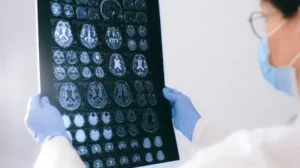
His EEG came back abnormal—he was having dozens of myoclonic seizures every minute, and the readings were all over the place while he was asleep. That day, Kai was officially diagnosed with generalized epilepsy, and our lives changed forever. He would try three more medications over the next year, but none of them would give him seizure freedom—and all of them came with side effects like vomiting, rashes, and lethargy. By his second birthday, he had experienced seven tonic-clonic seizures, hundreds of thousands of myoclonic seizures, and three episodes of status epilepticus (prolonged seizures).
It was around then that his neurologist suggested genetic testing. Desperate for answers, I gladly agreed. Honestly, I didn’t think it would come back positive—or maybe I just didn’t want to. Either way, it did. We learned that Kai’s epilepsy was caused by a mutation in his SCN1A gene.
His neurologist explained that SCN1A-related seizures have a wide spectrum of severity and prognosis. Some people only have febrile seizures and grow out of them. Some people have epilepsy that can be well-controlled with medications or improves with age. Some people have drug-resistant epilepsy and continue to experience seizures throughout their lives. Some people not only experience severe intractable epilepsy, but also have significant developmental disabilities, high risk of death, and other comorbidities due to the condition.
When I learned that Kai could end up developing Dravet syndrome, the disorder representing the most severe end of the SCN1A spectrum, I was heartbroken and terrified. I hadn’t known that epilepsy could have such catastrophic effects. However, his neurologist told me that it was far from guaranteed—we would just have to wait and see. We would continue to treat his seizures while closely monitoring his development so we could respond appropriately if he started to miss milestones. I was beyond scared, but I was going to do everything I could to give my son the best life possible—whatever that looked like.
Once we knew the cause of Kai’s condition, we could treat it better. The very first medication he had been prescribed and been on since his second seizure belongs to a class of medicines (sodium channel blockers) that is heavily contraindicated in SCN1A epilepsy (as the core mechanism of the disorder is a problem with sodium channels in the brain). These medications are common, standard treatments for seizure disorders, and no one could have guessed they would actually be harmful to Kai.
Once we took him off, we quickly saw improvement. Not only was he having much fewer seizures, he was also more engaged and energetic. It was truly as if he was a different kid. He was walking, talking, and smiling so much more that I felt like maybe the medicine had been the real problem, and now things could be far easier.
I got a reality check about two months later when we landed in the emergency department for a 49-minute status seizure—at that time, his second-longest. I broke down in tears yet again that night, clutching the home rescue medication we had been discharged with. Watching my child suffer like this was breaking my heart. His older sister, who was almost six at the time, asked me, “Mommy, are you sad because Kai is still sick?” How do you tell a child that her brother will never “get better?”
It took a while, but over time, epilepsy blended with the rest of life and became a challenging but “normal” reality. Throughout his third and fourth years of life, we continued to refine medications until we found a “sweet spot” that granted decent seizure control without sacrificing his (or our) quality of life. He developed absence seizures during this period, which was scary at first but was eventually just another “annoying” seizure type. Kai was still having a lot of seizures, but we were learning to live with it. Knowing his mutation was de novo, (meaning it was not inherited) we decided that we were ready to have a third child.
When he was around three and a half, Kai’s team and myself decided it was time to try something else. Even though he had a decent quality of life, ongoing seizures in small children can damage the developing brain—so if there was something that could reduce them further, it was worthwhile to give it a shot. For us, this meant starting the ketogenic diet—a treatment proven to help patients with intractable epilepsy.
It was one of the best decisions we have made in regards to his treatment. Within a month, we saw a huge decrease in seizures. Hundreds of myoclonic seizures a day became a few dozen. Absence seizures reduced in frequency, intensity, and duration. He had no tonic-clonic seizures during that month. The improvement was mirrored on an EEG, much more significantly than with any medication. I was excited, but wary to celebrate too soon again. Only when the effects had held up a few more months did I allow myself to feel joy at the possibility that it would truly last and grant Kai a better future.
Once he was four, his neurologist felt comfortable declaring Kai did not have Dravet syndrome, as he was average or above average in all developmental areas. His diagnosis was GEFS+, or genetic epilepsy with febrile seizures plus, a condition closer to the middle of the SCN1A spectrum. I was so relieved, but I knew my son’s road would still be long and bumpy.
Kai is now five and a half. He is kind, super smart, social, loving, determined, helpful, brave, and wise beyond his years. Having epilepsy has shaped his childhood and put him through far more than anyone, especially a kid, should have to go through, but it’s also made him an incredibly resilient and compassionate person. He loves his siblings, his friends, his family, sports, and school.
Is he still having seizures? Yes. He’s not seizure free and may never be. Is he living a beautiful life filled with love and joy? Absolutely. Those are not mutually exclusive. Epilepsy takes a lot, but it certainly doesn’t take all. It doesn’t get to. I will always hope for a cure to end the fear and suffering, but in the meantime we will make the most out of every day.