

CURE - Citizens United for Research in Epilepsy
cure epilepsy
cure epilepsy

Past Grant Recipients

CURE awarded its first research grants in 2000. Since our inception, we have awarded 76 exciting grants that explore new and innovative ways to cure epilepsy. CURE will continue to fund grants until a cure for epilepsy is found.

2006 CURE Award Recipients

cure epilepsy

Tracy Butler, MD - Weill Medical College of Cornell University, New York, NY

Imaging Neuroinflammation in Focal Epilepsy

Inflammation, a vital process by which dead or damaged tissue is broken down, can be harmful when excessive or prolonged.  This project will use Positron Emission Tomography (PET) scanning to examine inflammation in the brains of patients with uncontrolled focal epilepsy. This could prove helpful in planning for epilepsy surgery and may lead to the development of new strategies, including use of anti-inflammatory agents to treat and prevent epilepsy. 

  cure epilepsy
cure epilepsy

Vittorio Gallo, PhD - Children’s National Medical Center & George Washington University, Washington DC

Regeneration of Hippocampal Neurons in Mesial Temporal Lobe Epilepsy

The goal of this proposed project is to develop a new approach to curing mesial temporal lobe epilepsy (MTLE), one of the most commonly recognized forms of childhood-onset epilepsy. This study will investigate the transfer of progenitor cells to replace inhibitory neurons lost in patients with temporal lobe epilepsy as a means of re-establishing normal function.
  cure epilepsy
cure epilepsy

Michael Kubek, PhD - Indiana University School of Medicine, Indianapolis, IN

Intranasal Delivery of Sustained-release Anticonvulsant Neuropeptide Nanoparticles in Seizure Therapy

Certain neuropeptides may be effective in inhibiting seizures. Unfortunately, there are challenges associated with developing neuropeptides for use by patients with epilepsy. This project will explore the use of an intranasal delivery of neuropeptide nanoparticles for seizure therapy. Positive results of this project could lead to new directions for epilepsy therapy, prevention and ultimately a cure.

  cure epilepsy
cure epilepsy

THE  FALK MEDICAL RESEARCH TRUST AWARD

Heidrun Potschka, DVM - University of Veterinary Medicine, Hannover, Germany

Validation of New Strategies to Overcome Pharmacoresistance of Epilepsy Based on Multidrug Transporter Overexpression

Several genetic studies point toward a specific genetic abnormality (the overexpression of multidrug transporters) in patients with epilepsy whose seizures do not respond to medications. The first goal of this project is to test whether modifications in that gene might help these patients better respond to medications.  In addition, intranasal delivery of antiepileptic drugs will be tested as a means of bypassing the blood-brain barrier to achieve sufficient delivery of medications directly to the brain. 

  cure epilepsy
cure epilepsy

THE CHRISTOPHER DONALTY INTERDISCIPLINARY RESEARCH AWARD

Jenna L. Rickus, PhD and Pedro L. Irazoqui, PhD - Purdue University, West Lafayette, IN

A Hybrid Cellular-Silicon Neural Prosthetic for Epilepsy

The major treatment problems facing patients with epilepsy are resistance to drugs and unwanted side effects. Targeting treatment to a specific area of the brain immediately prior to and during a seizure would present a significant advancement. The goal of this project, which melds biology and engineering, is to develop a novel, cell-based neural prosthetic to electrically detect a seizure before it occurs and respond by stimulating transplanted cells to rapidly release GABA (a critical therapeutic target in epilepsy), thereby preventing the seizure.

  cure epilepsy
cure epilepsy

THE GRAHAM GODDARD AWARD
(sponsored by an unrestricted educational grant from UCB Pharma)

Alexander Rotenberg, MD, PhD - Boston Chidren’s Hospital, Brookline, MA

Transcranial Magnetic Stimulation: Anticonvulsant and Antiepileptic Properties

Transcranial magnetic stimulation (TMS) can potentially be used to interrupt ongoing seizure activity, prevent epilepsy after an event such as status epilepticus, and increase seizure-free periods. Yet, TMS is in the early stages of development, and the field would benefit from the use of animal models to evaluate whether seizures can be shortened with this technique and whether TMS can protect against the development of chronic epilepsy. This study will examine the utility of TMS in a rat model of epilepsy. The results will guide the use of TMS in patients with epilepsy and the prevention of epilepsy in those patients at risk. 

  cure epilepsy
cure epilepsy

THE MAGGIE LOEFFEL AWARD

Walter M. St.-John, PhD - Dartmouth Medical School, Lebanon, NH

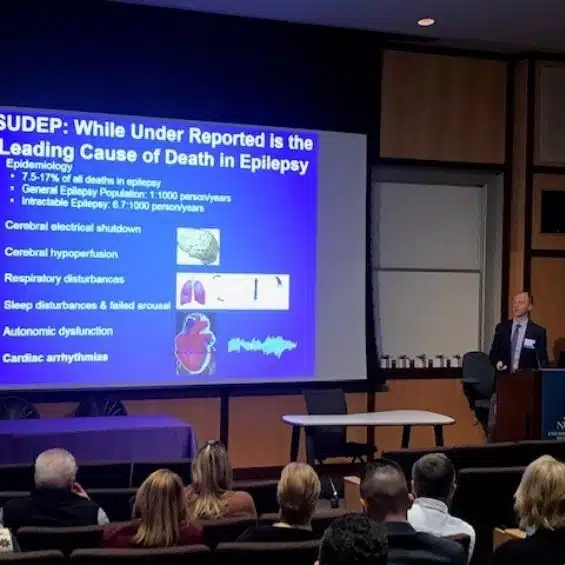
Seizures and Respiration – A Possible Basis for SUDEP (Sudden Unexplained Death in Epilepsy)

Although seizure-induced changes in breathing and/or in the function of the heart have been proposed as the cause for this devastating consequence of epilepsy, much research still needs to be done. This investigator will categorize changes in breathing during seizures and describe how these changes might be responsible for SUDEP.

  cure epilepsy
cure epilepsy

THE RHODE ISLAND AWARD

Nikolaus J. Sucher, MD – Children’s Hospital & Harvard Medical School, Boston, MA

A role for the mTOR Pathway in NMDA Receptor Mediated Epileptogenesis: a Molecular Investigation of Protein Interactions

The NMDA receptor is crucial for the normal function of the brain. The receptor is a protein complex that is composed of multiple subunits, some of which may be critical for the development of epilepsy in patients with Tuberous Sclerosis (TSC). This study will investigate the molecular details of the interaction and function of selected proteins, which may suggest novel targets for the treatment of TSC and epilepsy.


2005 Grant Recipients

HOPE FOUNDATION
Controlling Epileptogenicity in Human Focal Cortical Dysplasia

Massimo Avoli, MD, PhD
Montreal Neurological Institute and Departments of Neurology & Neurosurgery, McGill University / Montreal, PQ, Canada Dipartimento di Fisiologia Umana e Farmacologia, Università di Roma "La Sapienza" / Rome, Italy

Focal Cortical Dysplasia (FCD) is a structural abnormality in the brain, which can lead to seizures, which do not respond to pharmacological treatment. In a second year of CURE funding, Dr. Avoli will be testing the hypothesis that gap-junctions in patients with FCD contribute to seizures and whether repetitive electrical stimulation of FCD networks can prevent seizures.

cure
RHODE ISLAND AWARD
Identification of Potential Gene Targets for Cortical Dysplasia

Gabriella D’Arcangelo, PhD
Baylor College of Medicine / Houston

This study will conduct a molecular characterization of the abnormal neurons found in brain tissue resected from patients with focal cortical dysplasia (FCD). Gene expression profiles of abnormal neurons will be generated using cutting edge technologies such as laser capture microdissection and microarray analysis. This research will provide the necessary groundwork for designing future studies aimed at reducing or eliminating seizures in cortical dysplasia patients.
cure

FALK FOUNDATION
Developmental Phenotype of Seizure-Prone Mice

Stephen C. Heinrichs, PhD
Boston College Department of Psychology

In a mouse model of epilepsy, Dr. Heinrichs will examine the role of parental care during early development in halting or delaying the onset of seizures. Better understanding of the importance of early environment could allow for the design of non-drug interventions, which could potentially be used in children who are at risk of developing epilepsy.


Pathogenesis of Cortical Lesions in a Model of Tuberous Sclerosis

Arnold R. Kriegstein, MD, PhD
University of California, San Francisco

Sixty to ninety percent of patients with tuberous sclerosis have difficult to control epilepsy due to genetically abnormal progenitor cells, which hamper proper cortical development. In this study, observation of the proliferation and migration of these cells will add valuable insight into how these gene defects influence cortical development and on potential new therapies.
cure

THE MAGGIE LOEFFEL AWARD
Development of Novel Antiepileptic Drugs

Edward Perez-Reyes, PhD
University of Virginia

Mutations in certain genes may be responsible for hyperexcitability in the brain. A specific T channel gene has been associated with childhood absence epilepsy, a type of epilepsy in which the child exhibits staring spells during which he or she is unaware and unresponsive. Dr. Perez-Reyes strives to develop a T-type channel blocker as a novel anti-epileptic medication, which can be used in significantly lower doses to substantially reduce debilitating treatment side effects for these children.

cure

HOPE FOUNDATION
Gene Expression in Cortical Dysplasia

Brenda E. Porter, MD, PhD
Children’s Hospital of Philadelphia

Many children with hard to treat epilepsy have an abnormality called focal cortical dysplasia (FCD) in which, during brain development, neurons become disorganized and misalign. This study tries to understand which molecules in the cortical dysplasia neurons are different and how these differences cause epilepsy. The long term aim is to investigate possible means of “turning off” the cortical dysplasia neurons in the hope of fulfilling CURE’s goal of no seizures/no side effects.


Molecular Mechanism of Limbic Epilepsy in a New Genetic Mouse Model

Yan Yang, PhD
The Jackson Laboratory / Maine

Mouse models of epilepsy have contributed to the discovery of human epilepsy genes and all antiepileptic drugs to date. Dr. Yang has identified a new gene (BRUNOL4), which plays a role in a type of epilepsy originating in the temporal lobe. He will investigate how a deficiency in this gene leads to recurrent seizures in mice, and evaluate novel anti-epileptic therapies using this new mouse model of epilepsy.


2004 Grant Recipients

Development of Novel Epilepsy Treatments Utilizing Embryonic Progenitor Cells

Scott C. Baraban, PhD
University of California, San Francisco

The aim of Dr. Baraban’s project is to investigate whether stem cells transplanted into the central nervous system of mice can alter synaptic function in the brain, change the overall level of excitability in the brain and act as a “cure” for patients with uncontrollable epilepsy.


Therapeutic Efficacy of Environmental Enrichment Following Early-life Seizures

Sookyong Koh, MD, PhD
Children’s Memorial Hospital / Northwestern University

The potential of an intense educational program as a therapeutic tool for children with epilepsy has received very little attention, though it is believed to be effective for other neurological disorders. There is currently no effective intervention for children with epilepsy to prevent the long-term brain damage and neurological effects of seizures. The goal of Dr. Koh’s project is to study, in young rats, the effectiveness of environmental enrichment in reversing seizure-induced brain damage.

 
Specific Immunotherapy for epilepsy via GluR3B peptide oral vaccination or anti-GluR3B peptide antibodies administration

Vivian I. Teichberg, PhD
Weizmann Institute of Science, Israel

In the last few years, immunotherapy has emerged as a possible treatment for diseases of the central nervous system, including epilepsy. Dr. Teichberg is investigating the scope and efficacy of vaccination against a particular AMPA receptor in epilepsy. This is an important preliminary look at the potential of vaccination in epilepsy as a means of achieving ‘no seizures-no side effects’.

 
Neuroprotective Effects of b-estradiol on seizure-induced hippocampal damage

Jana Veliskova, MD, PhD
Albert Einstein College of Medicine / Bronx, NY

Temporal Lobe Epilepsy is one of the most common forms of epilepsy, and often results in loss of neurons in the hippocampus of the brain, which subsequently leads to an increase in seizures. Dr. Veliskova’s study is examining, in female rats, the effectiveness of lowdose b-estradiol in protecting against damage to the hippocampus and the resulting increase in seizures.
 
THE CHRISTOPHER DONALTY MEMORIAL AWARD
Prevention of Sudden Death in Epilepsy

Carl L. Faingold, PhD
Southern Illinois University School of Medicine

Sudden Death in Epilepsy (SUDEP) accounts for 5-17% of deaths in patients with epilepsy, including children. The aim of this proposal is to understand what brain abnormalities cause animals to be susceptible to SUDEP and determine if blocking the action of certain naturallyoccurring brain chemicals can prevent sudden death in those animals.

 
THE FALK MEDICAL RESEARCH TRUST AWARD FOR 2004
Polyunsaturated Fatty Acids for Treatment of Refractory Epilepsy

Edward B. Bromfield, MD
Brigham and Women’s Hospital / Boston

The objective of Dr. Bromfield’s study is to determine whether polyunsaturated fatty acids can be used safely and effectively to treat epilepsy. Fatty acids have been shown to protect against seizures in animal models, and there is some evidence of the same effect in humans. This is the first controlled, double-blind trial in humans, and will provide the foundation for a larger multicenter trial if efficacy, safety and tolerability are confirmed.

 
THE GRAHAM GODDARD AWARD (SPONSORED BY AN UNRESTRICTED GRANT FROM UCB PHARMA)
Identification and evaluation of neuroprotective genes in the primed pilocarpine model

Karin Borges, PhD
Emory University

Epilepsy is strongly correlated with the death of neurons in the brain. Protecting neurons seems to be a promising strategy to inhibit the development of severe epilepsy. In a mouse model of epilepsy, Dr. Borges will identify and evaluate genes involved in the brain’s own protective mechanisms for their ability to inhibit the development of epilepsy. This could potentially aid in identifying new biochemical pathways leading to new drug targets which could limit neuronal injury and the development of epilepsy.
 
THE MAGGIE LOEFFEL AWARD
High frequency epileptiform oscillations in extratemporal epilepsy

Gregory A. Worrell, MD, PhD
Mayo Clinic / Rochester, MN

Advances in epilepsy surgery and the advent of implantable brain devices which predict the onset of seizures and administer treatment, require greater accuracy in pinpointing the exact location where seizures begin. Dr. Worrell’s study of the usefulness of high-frequency epileptiform oscillations to more accurately locate the area of the brain involved in the seizure, is a unique collaboration combining the neuroengineering strength of the University of Pennsylvania with Mayo Clinic’s large surgical epilepsy practice, translating engineering advances into clinical practice.


2003 Grant Recipients*

Controlling Epileptogenicity in Human Focal Cortical Dysplasia
Massimo Avoli, MD, PhD. Montreal Neurological Institute and Departments of Neurology & Neurosurgery, McGill University / Montreal, PQ, Canada Dipartimento di Fisiologia Umana e Farmacologia, Università di Roma "La Sapienza" / Rome, Italy

Ion Channel Mutations in Inherited Epilepsy
Andrew Escayg, PhD. Emory University

Can Preemptive Low Frequency Stimulation Decrease the Incidence of Kindled Seizures?
Jeffrey H. Goodman, PhD. Center for Neural Recovery and Rehabilitation Research, Helen Hayes Hospital

Potassium Channel Viral Vector Treatment for Epilepsy
Philip A. Schwartzkroin, PhD. University of California, Davis

*Pending Final Contract Approval


2002 Grant Recipients

Early Detection and Minimal Perturbation for Seizure Control
Peter L. Carlen, MD, FRCP Toronto Western Research Institute

Drug Application to the Seizure Focus
Robert Fisher, MD, PhD Stanford University

Suppression of the Epileptic Focus by Intracerebral Injections of Tetrodotoxin-Loaded Microparticles
Gregory Holmes, MD Harvard University

Cortical Magnetometabolic Mapping of Focal Epileptogenic Malformations of Development
Ruben Kuzniecky, MD University of Alabama at Birmingham

Targeting Inflammatory Cytokines for Controlling Seizures
Anna Maria Vezzani, PhD Mario Negri Institute Milan, Italy

Effects of Photodynamic Therapy on Seizures in the Rat Kindling Model of Epilepsy
Edie Zusman, MD UC Davis


2001 Grant Recipients

Early Detection and Minimal Perturbation for Seizure Control
Peter L. Carlen, MD, FRCP Toronto Western Research Institute Toronto, Ontario, Canada

Developing a Cure for Lafora's Progressive Myoclonus Epilepsy
Antonio V. Delgado-Escueta, MD UCLA & Greater Los Angeles VA Medical Center Los Angeles, California

Glial Function in a Chronic Model of Epileptic Excitability
Adriana Emmi, MD, PhD University of Washington Seattle, Washington

Intraoperative Optical Mapping of Human Neocortical Epilepsy in the Treatment of Partial Onset Seizures
Theodore H. Schwartz, MD Weill Medical College of Cornell

Focal Cooling as a Therapy for Neocortical Epilepsy
Steven M. Rothman, MD Washington University School of Medicine St. Louis, Missouri

Anticonvulsant Effects of Substantia Nigra Stimulation
Libor Velisek, MD, PhD Albert Einstein College of Medicine Bronx, New York


2000 Grant Recipients

Anticonvulsant Effects of Substantia Nigra Stimulation
Libor Velisek, MD, PhD Assistant Professor Albert Einstein College of Medicine, Bronx, NY

Autoantibodies in Acquired vs. Genetic Variants of Pediatric Epilepsy
Michael G. Chez, MD Lake Forest, IL


Research Grants
quote