
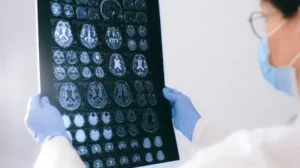
A Surprising Brain Cleanup Reduced Epileptic Seizures and Restored Memory
New research suggests that temporal lobe epilepsy (TLE), which causes seizures and often interferes with memory and thinking, is also tied to early aging in certain brain cells. Scientists report that eliminating these aging cells in mice led to fewer seizures, better memory, and protection against epilepsy in some animals.
TLE is the most common form of epilepsy, affecting roughly 40% of people with epilepsy. To explore the biology behind TLE, researchers examined donated human brain tissue that had been surgically removed from the temporal lobes of epilepsy patients.
When compared to individuals without epilepsy, the tissue from TLE patients showed a five-fold increase in senescent glial cells. These cells accumulate with age and release substances that can damage neurons and contribute to cognitive decline.
This led the team to investigate whether a similar buildup of aging cells occurred in a mouse model designed to mimic TLE. Within two weeks after the brain injury that initiated epilepsy in the mice, the researchers detected clear increases in markers of cellular aging at both gene and protein levels. When treatments were used to remove the aging cells, mice performed normally on maze-based memory tests, experienced fewer seizures, and about one-third were completely protected from developing epilepsy.
The drug treatment tested in mice combined dasatinib and quercetin. Dasatinib is a targeted therapy currently used to treat leukemia. Quercetin is found in fruits, vegetables, tea, and wine and can act as a powerful antioxidant and has anti-inflammatory properties. The researchers selected these drugs in part because both are already being evaluated in early-phase clinical trials for other conditions.
Senior author Patrick A. Forcelli, Ph.D., professor and chair of Georgetown School of Medicine’s Department of Pharmacology & Physiology and the Jerome H. Fleisch & Marlene L. Cohen Endowed Professor of Pharmacology commented, “We would like to understand the critical windows for intervention in epilepsy, and the hope is that these studies will lead to clinically useful treatments.” The results offer new hope for patients who do not respond to existing medications.