

My son Ben was an incredibly active, gregarious kid who loved sports. He could and would play anything and play it well. Whether he was on the neighborhood green space, the school playground, or community fields, he was always among the most valued of teammates for his constant energy, skill and genuine love of the game. His favorites were football and rugby, but he also excelled at soccer, lacrosse, and wrestling.
Honestly, he could have done any sport and excelled at that time. He was always up for being on the field and usually the last to leave it. One more kick on goal, one more punt, one more tackle drill with a teammate. I routinely had to drag him off.
When he was 9 1/2, we found out that these sporadic episodes of blurry vision, nausea, and vomiting he’d been having the last year or so that were previously believed to be migraines were in fact “benign occipital seizures.”
Now, seven years later that initial diagnosis seems ridiculous and even cruel. I fully understand the medical terminology, but anyone who has had any type of seizure can tell you there is nothing benign about it. And in Ben’s case, it couldn’t have been farther from the truth.
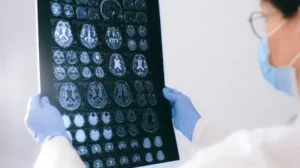
After a year and half of failed meds, multiple MRIs, EEGs, VNS placement, and genetic testing, it was confirmed that Ben has a de novo mutation of the DCX gene, which caused a subcortical band heterotopia and subsequent intractable epilepsy.
At this time Ben’s seizures had slowly morphed from absence seizures to drop and myoclonic seizures and were happening throughout every day. He doesn’t remember much of middle school between COVID, seizures, and being so overly medicated. Every drug possible was just piled one on top of the other in attempt to get some control.
A corpus callosotomy was recommended to stop the drop seizures, but there was not consensus about the risk/benefit of a procedure like this for Ben amongst his medical team. We sought a second opinion that confirmed our belief that it was not a worthwhile option for him at that time given his typical development and level of function.
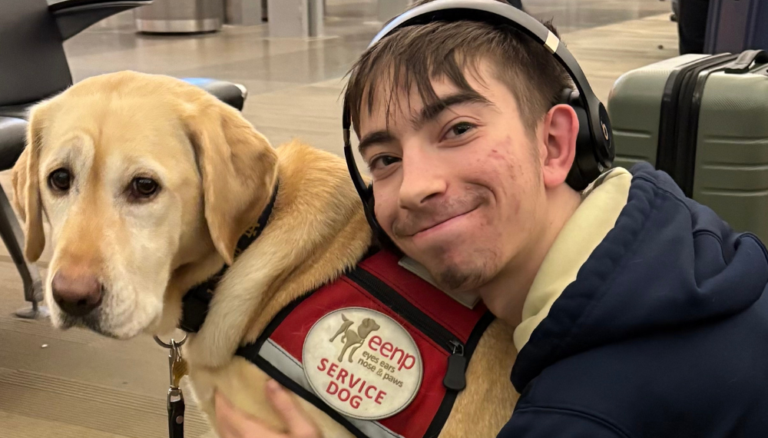
Now, 5 years later, Ben is 16. He is the bravest and most “mentally strong” (as he calls it) person I know. And his life is nothing like we thought it would be. He continues to have myoclonic absence seizures and drop seizures every day with some newly arriving tonic clonics thrown in there recently. His seizures essentially present as LGS, although he does not have the developmental, intellectual, or behavioral challenges typical of that diagnosis. While we are grateful for this, it complicates decisions regarding evidence based treatments, as Ben does not fit the mold of the patients being studied.
Having not found any relief from drop seizures we have found ourselves right back at a place where the corpus callosotomy is being recommended for us to consider again. It is like trying to solve a risk/benefit equation where every variable is X. It will reduce drop seizures but by how much? Is one drop seizure a day instead of four worth whatever will be lost from preventing communication between right and left hemispheres? Will he still be able to throw a spiral or juke a neighbor during the neighborhood Thanksgiving bowl game? If he could swing a golf club or tie his own shoes, would one drop a week be worth it? What if all those sneaky neurons figure out they can still cross through the posterior third of the brain? Is there a chance any benefit could therefore be temporary even though the risks/ losses are definitely permanent? Who can make a decision like that?
We have searched far and wide and cannot find anyone quite like Ben to look for for guidance. As Dr. Devinsky from NYU told us, Ben is essentially drawing his own map as he follows it. At this time and for a long time now, just standing up to walk to the bathroom or anywhere for that matter is a huge safety risk for Ben. He has suffered countless injuries, stitches, bumps bruises, looking like a prize fighter, loose teeth, broken teeth and even one oculoplastic surgery and yet he maintains this ever positive outlook on life. We don’t know how and we are just on awe of him.
He continues to go to school and access the standard course of study with a lot of accommodations through an IEP as frequent seizures and medication side affects do make cognitive tasks more laborious for him although remains capable of doing them. He has a 1:1 instructional assistant (who he thankfully enjoys being with )with him all day for safety. I am told he has friends that he socializes with during classes but he eats lunch with teachers and does not see any friends outside of school.
A cure would mean freedom from the binds of epilepsy that literally have him tied to his bed, a couch, a seat, the supervision of an adult or family member familiar enough with his seizures to keep life threatening injuries at bay. It would mean the freedom to walk from one place to another (even over concrete!) without considerations of safety. It would mean enjoying sports, and just plain exercise again. It would mean accessing post secondary education and the possibility of living independently one day, having friends he’s sees outside of school or FaceTime. It would mean a roadmap for his future when mom and dad are not here to spot his every move in order to prevent life threatening falls. I mean, I don’t know how else to say it would mean a completely different life than the one he is currently living. It would mean everything.