
Episode #157 - A Trailblazing Career in Epilepsy and Clinical Trials featuring Dr. Elinor Ben-Menachem
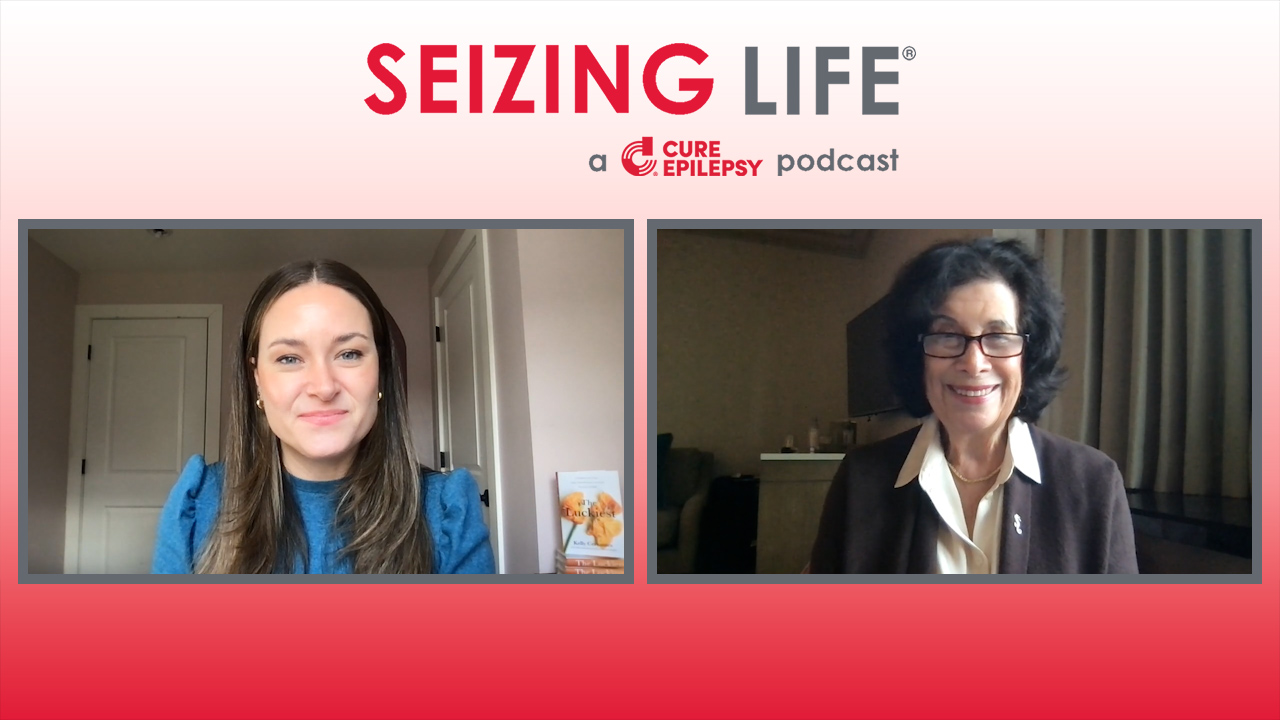
A Trailblazing Career in Epilepsy and Clinical Trials
Episode Overview
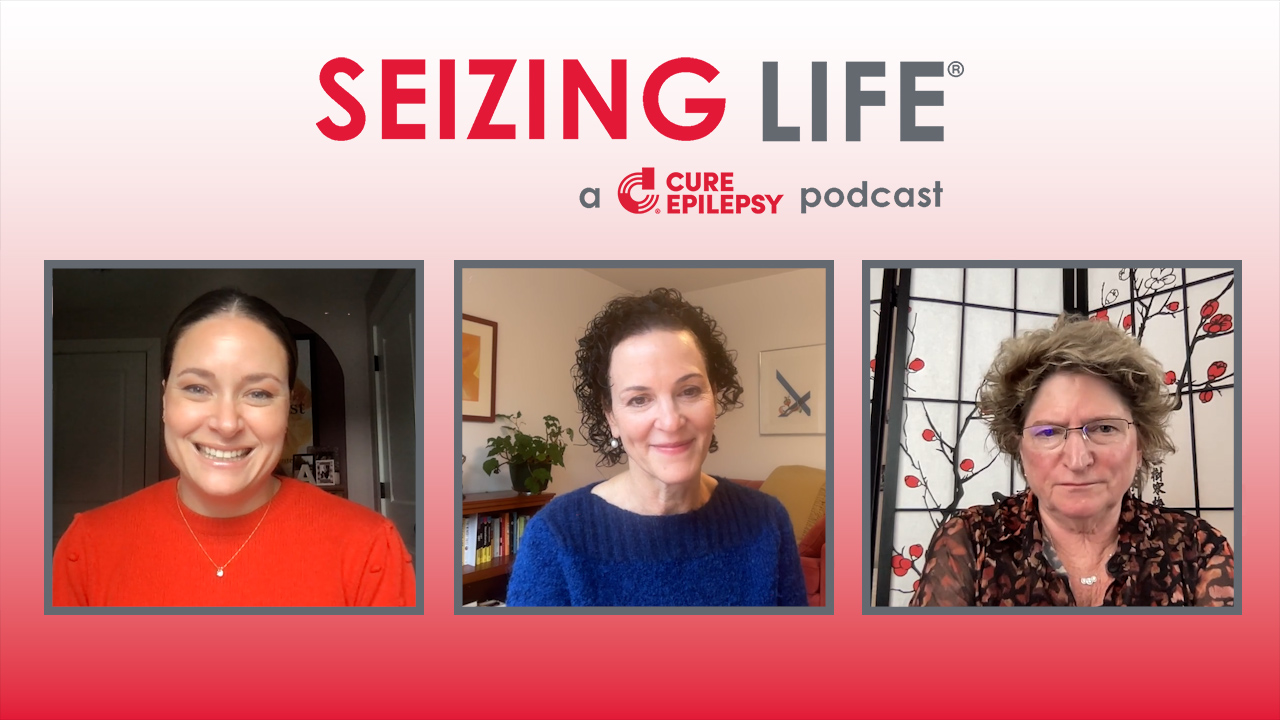
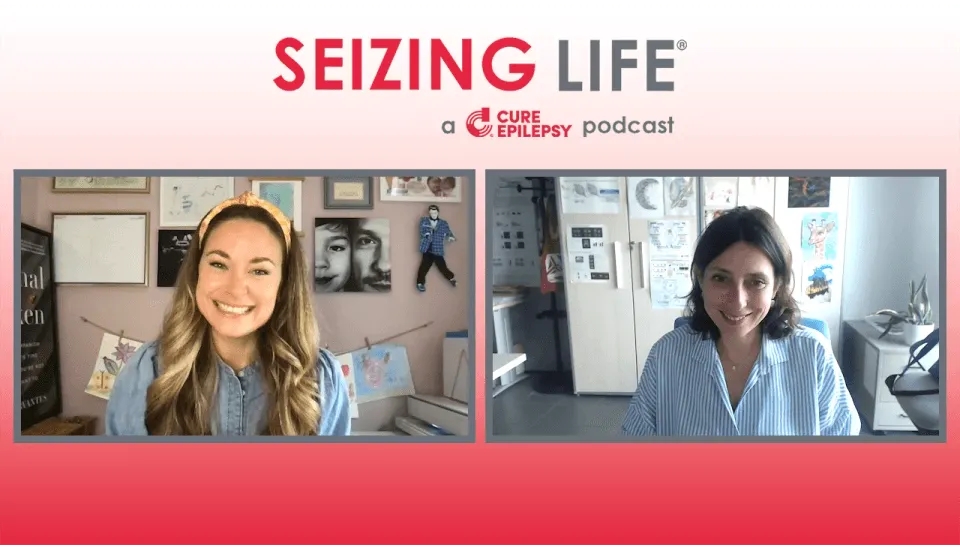
This month on Seizing Life® Dr. Elinor Ben-Menachem joins us to share her insights and experiences working in the epilepsy field for more than 40 years.
Dr. Elinor Ben-Menachem is a true trailblazer in the world of epilepsy, having taken part in over 100 clinical trials and worked with epilepsy patients in the United States and Sweden for more than 40 years. Dr. Ben-Menachem, who works and teaches at the University of Gothenburg in Sweden, spoke with us while in the United States attending the recent American Epilepsy Society meeting last month. Dr. Ben-Menachem recounts her early days in the field and explains how and why she gravitated to caring for those with refractory epilepsy. She discusses her approach in working with these patients, the importance of neurologists learning about new medications, and some of the many clinical trials of which she has been a part. Dr. Ben-Menachem also touches on the importance of collaboration between researchers, pharma companies, and providers to push epilepsy knowledge and treatment forward. Finally, she shares the current areas of epilepsy research and technology that she finds to be the most promising. Dr. Ben-Menachem has not only witnessed vast changes in the epilepsy field during her long career, she has been a key player and participant in some of the most important areas of epilepsy research and treatment during that time.
Episode Transcript
Kelly Cervantes:
Hi. I’m Kelly Cervantes, and this is Seizing Life, a monthly podcast produced by CURE Epilepsy. This month, I’m excited to welcome a woman who has been a true trailblazer in the epilepsy field, Dr. Elinor Ben-Menachem. In her 40-plus years as an epileptologist, Dr. Ben-Menachem has worked closely with refractory epilepsy patients in both the United States and Sweden. During that time, she has also been a part of more than 100 clinical trials, including important studies involving Vigabatrin and VNS devices. She has served on the American Epilepsy Society’s board of directors, and was the recipient of the 2022 AES Founders Award. Today, she continues to treat patients with refractory epilepsy at her practice in Sweden.
Dr. Ben-Menachem, thank you so much for joining us today. I’m so excited to share your wealth of information with our listeners. To begin, can you just give us a thumbnail history of your career in epilepsy and how you came to be practicing medicine as an American in Sweden?
Dr. Elinor Ben-Menachem:
Yeah. Well, thank you very much. I have to start with saying that I was born and raised in sunny California. When I graduated UCLA, I had the opportunity to study abroad for a year. I went to Sweden because in Sweden, you didn’t have to speak the language of the country. I ended up in Uppsala, Sweden, which is near Stockholm. It’s the first university. After several events that happened, I started to study medicine in Sweden, in Uppsala, so I graduated medical school in Sweden. I became a neurology specialist in Sweden.
During this time, I also took all of the exams that you need to be able to be qualified in America, and after my residency in Sweden, I did a postdoctoral fellow at UCLA and the VA, and I was able to get into the comprehensive epilepsy program. We’re talking about 1982, about, ’81, ’82, and that’s how I got into epilepsy. I really was open to any type of area in neurology, because every area is interesting once you delve into it.
This is where I learned how to treat epilepsy patients. We did clinical trials, and I started at the American Epilepsy Society in 1982. I’ve been a member since then, gone to every single meeting. I’ve been active in the American Epilepsy Society, been on the board of directors, been head of the Council on Education, and been head of the Annual Meeting of what we’re having today here. Through my connection with the AES and also the International League Against Epilepsy, I’ve been able to have a very good clinical program and be able to help a lot of patients.
Kelly Cervantes:
That’s remarkable. We are so grateful for your dedication to the epilepsy community over these last four decades. I can’t help but think about how our understanding and treatment of epilepsy has likely changed over that time. What strikes you the most as differing from when you were first starting out in the ’80s to today?
Dr. Elinor Ben-Menachem:
Well, I think of the development of our knowledge of epilepsy and of all neurology. It’s a continuum, and we stand on the shoulders of the great people who came before us. By the time that we got to 2000, the NINDS started this program, and it was a lot from the American Epilepsy Society epilepsy benchmarks, and writing out what things do we have to know and to do research on to cure epilepsy. Now we’ve had five different benchmark episodes, 2000, 2007, ’13, ’21 and now, so we have to keep updating what is our next goal, because we are, with the help of the NIH and then with all of the donations from CURE and AES and CDC, everybody is helping to go forward with these benchmarks to solve the puzzle of epilepsy. We do have a better understanding of the causes of epilepsy. We understand this. It’s not just epilepsy, it’s all of the syndromes, and each one has a different profile. We get to know the genetics. I mean, and genetics is so big now.
Kelly Cervantes:
Yeah. Genetics has exploded within the last few years.
Dr. Elinor Ben-Menachem:
I think that genetics should be done almost at birth for every kid. I really think that with the knowledge of genetics today, if somehow this could be cheaper and we could do this, then we would be able to be proactive and be able to treat people before they get the damage that we see with all of these different syndromes.
Kelly Cervantes:
Preventing something before it can rewire the brain is a cure in and of itself. I couldn’t agree with you more.
Dr. Elinor Ben-Menachem:
You have to do that at least. We don’t have the resources, the knowledge yet to, with genetic knowledge, be able to cure someone who’s already damaged and the brain is damaged by several years or years of horrible epilepsy.
Kelly Cervantes:
Yeah. Now, to that end, your main focus throughout your career has been refractory epilepsy, this epilepsy that is medically resistant. What is it that has attracted you to these extraordinarily challenging cases and patients?
Dr. Elinor Ben-Menachem:
Well, it was exciting back at UCLA. My mentors, David Treiman and Antonio De Gato Esqueda, they had patients with epilepsy, and they were very dedicated and still are to these patients. I was taken in by them, and I grew with them and understood the importance. I also see that epilepsy is not these special cases. It could be me as well. I have this empathy that I put in with my patients, and we work together as a team.
Kelly Cervantes:
I love that you used the word team, because that was something. A friend of mine who suffers from a different chronic illness, when my daughter was first diagnosed with epilepsy and we were bringing on all of the clinicians, she was like, “Do you trust your team? Are they including you as a part of the team?” It was the first time that I had thought of myself as being a member of the team.
I think in our modern medical system, we sort of look to doctors and we give them all of this power. In some ways they’re almost godlike, but in reality we are all learning and we do, the patient or the caregiver, we all have to be a team in this together. It just warms my heart to hear you say that. I wonder, how has your approach changed throughout the years … it sounds like you had incredible mentors … but as new understanding and treatments of epilepsy have emerged?
Dr. Elinor Ben-Menachem:
There’s so much happening. This is a different world in 2026 compared to 1982. We are doing better. There are still 30% of people who have … I mean, we don’t really know, but there’s about 30% who are still refractory or not totally healthy, but we’re able to improve the lives of people who are refractory with making seizures shorter, less often, and the social aspects of the situation. That’s what we forgot back in the ’80s more, and this is the comorbidities. The depressions, the functional problems and all of these things, have to be addressed, especially stigma.
If you have a person who has a focal epilepsy and it is a child or whatever, they have a great stigma in school. If they have seizures, kids will tease them. They develop a type of stigma in themselves that they grow up with, and even the parents, but the parents and the other siblings may treat that child differently, so it can be a very tough family relationship as well. Then you have the institutionalized stigma, which I think that it’s being addressed better than the ones down at the personal level.
Kelly Cervantes:
Yeah. To that end, what advice do you offer patients or families that are living with a diagnosis of refractory epilepsy?
Dr. Elinor Ben-Menachem:
Well, I live in Sweden. This is halfway it’s a paradise compared to America, and halfway it’s a nightmare. The socialized medicine that we have in Sweden, I don’t get paid that much. We get paid like everyone else. You don’t make huge amounts of money there, and I pay about 50% in taxes as well. We have a system that if a patient needs a medication, they get it. There’s no big deal of the insurance company or the hospital saying, “You can take it for two months.” You can take it for your whole life. This is a very big relief.
However, for a person with epilepsy to even get to a specialist, that can be a problem, unless they’re a child. A child always gets to go to the specialist. The doors open up there. As a grownup, you go to the hospital, the epilepsy center, you maybe meet one person, and the next time you meet the next person, maybe they say, “Come back in six months,” and you come back in two years. The lines are very long as well. It’s a change of which do you like. On the other hand, if the patient gets in trouble, they can always call a nurse and then get to the doctor.
I do differently than most of my colleagues. I see every patient myself, even in clinical trials. I keep my patients for like 30 years, 40 years. They don’t change. They know who they come to and we’re the team, but it’s difficult to be a team like that in socialized medicine.
Kelly Cervantes:
Interesting.
Tasia:
Hi, this is Tasia from CURE Epilepsy. Since 1998, CURE Epilepsy has raised over $100 million and funded more than 300 epilepsy research grants in 19 countries. Learn what you can do to support epilepsy research by going to cureepilepsy.org. Now, back to Seizing Life.
Kelly Cervantes:
Can you walk us through, Dr. Ben-Menachem, your approach to working with patients with refractory epilepsy? I imagine that there might be some differences between data collection in Sweden versus in America, but what does that process look like?
Dr. Elinor Ben-Menachem:
I don’t think it is so different. I think that we’re all very on the same page, in Europe and in America. I’m very always surprised how everything’s the same. Our workup with epilepsy, it depends if you’re a child or an adult. We have equality of care wherever a patient lives. Don’t forget, in Sweden, there’s only 10 million people. This is a lot easier. Anyway, if you live in the top in the north or the bottom, you still are supposed to get the same quality of care. The epilepsy evaluation always begins with a EEG. Now, advanced EEGs with video recording, those come later on if the patient becomes refractory, but a regular EEG and MRI to detect anything, get any signal. Then the patient, if they are deemed to have epilepsy, they’re started on a anti-seizure medication.
We’ve had guidelines … and this is a problem also in America … guidelines from 2018. We’re talking about eight years ago. We’ve got a lot of very exciting new ASMs that are better for the patient. They have less side effects, and their efficacy, like Cenobamate, is astounding. I mean, the FDA just let them pass by these different phases of clinical trials. Cenobamate got to not do a Phase 3 trial because it was so powerful. We have better ones, and doctors, at least in Sweden and in America, are afraid to use these more modern medications that maybe might improve the lives especially of new-onset epilepsy.
Kelly Cervantes:
Why do you think doctors are not prescribing the newer medications?
Dr. Elinor Ben-Menachem:
Because number one are these guidelines, which also are in America, and so they feel if you’re not a doctor who really works as an epileptologist in a tertiary clinic, then you want to be on the safe side, and you don’t want to go into something that you don’t really understand or you haven’t heard so much. I don’t think that drug company representatives are allowed to really contact a lot of neurologists. Even at the AES, we had problems. You can’t really have a symposium on these drugs in detail. If you don’t know how to treat your patient, how are you going to improve them?
Kelly Cervantes:
Right. How do you know about the new treatments if no one is telling you about them?
Dr. Elinor Ben-Menachem:
I mean, it’s just mind-boggling. Now we have some industry symposia, so now we’re allowed. They let the bars down a little bit. Now we’re allowed at these conferences to have symposia in the evening from drug companies. There’s so many exciting new drugs, and I don’t think we should be giving drugs like … well, you go into the hospital, you get levetiracetam. Everybody starts on levetiracetam. At least it’s not phenytoin or carbamazepine. It’s levetiracetam, easier to change and go forward. Then the patient, if they’re lucky, they get to go to a neurologist.
I think, actually, that with new-onset seizures, that’s very important. You have to stop the seizures then, before you get connectivities and the roads in the brain that you have to try to get rid of. It’s better to get rid of them at the beginning, and so people are not that aggressive, and I think it’s the same in America and in Sweden. I’m very aggressive. If I see a new patient, then we work very hard. They are not allowed to have more than one seizure after they come to me. We do the next step.
Kelly Cervantes:
I love that so much. “It is forbidden.”
Dr. Elinor Ben-Menachem:
Yeah, because I really feel it’s like almost a panic situation, that we really should try.
Kelly Cervantes:
Yes.
Dr. Elinor Ben-Menachem:
Then I can say, “Come back in a year.”
Kelly Cervantes:
Yeah. Yeah.
Dr. Elinor Ben-Menachem:
No. This is what I get of 40 years of treating patients. That’s basically my take-home message.
Kelly Cervantes:
Yeah. Now, switching gears a little bit, you have been involved in over 100 clinical trials, which is just incredible. How and when did you first get involved in conducting clinical trials?
Dr. Elinor Ben-Menachem:
That was at UCLA in 1982. I did my first trials, Vigabatrin. Vigabatrin was sort of my first baby. I went on and developed and did all of the pharmacokinetics and lumbar punctures and the mechanism of action of Vigabatrin in the brain of humans, and that’s what I got my PhD thesis on. Then we decided after a year that we needed to go back to Sweden, and so we went back there, and that’s when I finished all of my Vigabatrin work.
Meanwhile, I had my wonderful colleagues in America like B.J. Wilder and Kiffin Penry and Richard Mattson and David Treiman. They knew what I could do, and I could work with basic science. It was over the street, and we were all friends. This was a different time. It was wonderful. I could get ideas and then we could work together to do amazing things, then.
I was the first one to begin looking at vagal nerve stimulation. I did those beginning trials, and we did lumbar punctures and we looked at the mechanism of action. We know that it causes neurogenesis in the brain, that it’s good for Alzheimer’s. Nobody ever has wanted to continue to take these discoveries forward. It’s like depression, right?
I showed how good vagal stimulation can be in patients with Alzheimer’s. We looked at tau, we did lumbar punctures and all sorts of things, followed them for two years. It’s all published, but the economy of this. It became a different world, and nobody wanted to put the money into these more interesting topics.
Topiramate was one of my first drugs. It was me and my colleague in medicine who found that it causes weight loss. We did those first publications of that. Gabapentin, it was me who discovered and told the company about pain, that it wasn’t so good for epilepsy, it wasn’t so strong, but it sure helped against pain.
Kelly Cervantes:
Now, what would you advise to patients and their families who are looking to participate in clinical trials?
Dr. Elinor Ben-Menachem:
Well, the most important thing if you have bad epilepsy is that you can be proud of yourself if you help others as well and join a clinical trial. We have trouble finding patients. We have wonderful new medications, but they have to be tested in a proper way. You just can’t write, “I think that this is good for you.” You have to do those double-blind studies, and patients who maybe can’t get expensive medications at this time, if they’re in a clinical trial, number one, they get fantastic care. They get a total workup of everything, of their body, in a clinical trial, and they have people who are very invested in their care.
For three, four years, they can be in these clinical trials, and they can get a new medication. The people that were in the clinical trials of Cenobamate or Epidiolex or Fenfluramine, they were already able to be treated five, six years before these things even appeared on the market. It’s your chance to get in on the deal and get new therapies, new treatments, and be taken care of, and it doesn’t cost anything.
Kelly Cervantes:
No, that’s remarkable advice. Dr. Ben-Menachem, you have been working with patients for decades now. What have you found to be the most important aspects of care in terms of improving the quality of life for patients? I’m thinking, yes, in terms of treatment, but also in terms of support and lifestyle.
Dr. Elinor Ben-Menachem:
Yeah. Well, this ends up to be the most important thing, is lifestyle, support, you have a supportive family. Are you all alone? Are you poor? How can you get the proper help that you need? I mean, there are wonderful things in America like CURE and being a member of CURE, or Epilepsy Foundation of America. I mean, these are wonderful things to help the patient and the whole person. You have to look at a person holistically, and what can you do to help this person go forward in school or as an adult? Sometimes just changing the job can help, because if you have a night shift, this is just simply terrible for someone with epilepsy, and they can have a whole different situation if they can try to find a new job. This is easier said than done, and some people are stuck in bad jobs. Alcohol is a big problem.
I think that what is neglected a lot is exercise, and music. You had a webinar on music too, which was great, but if you have epilepsy, there is a publication in the International League Against Epilepsy about what types of activities that you can do. Especially if you’re a child, there’s a wonderful opportunity to actually excel in sports. There’s something called the Paralympics that everybody seems to forget, that there is this fantastic organization, Paralympics, who really want to help with children and bring children with handicaps forward, just the stigma. It’s really fantastic.
Kelly Cervantes:
Now as we speak, you are currently attending the American Epilepsy Society Conference, which this year is in Atlanta. I know the conference is just beginning, but what is some of the promising research that you are excited to be learning about at the conference?
Dr. Elinor Ben-Menachem:
Well, the big emphasis is on genetics and immunology, and how inflammation can affect the development of epilepsy. Can we use therapies that are anti-inflammatory to reduce epilepsy? Very interesting. Then there is this presentation on the National Plan for Epilepsy, which is starting in America. In Europe or in the world, we have this international global plan, action plan for epilepsies. The WHO is very active on this and reaching out to Africa and even in Europe to help patients. Now you are starting a national plan, and CURE is part of it. This is so important, because then you will have the social structure to be able to show your patients to go here and there. That’s going to be a whole new world.
It’s very interesting. There’s so many things to attend. I want to see in a scientific workshop how they can now image neurotransmitters and amino acids, to image. I mean, I had to do lumbar punctures and measure them chemically, so I think that for me is something very interesting. I’m always interested in mechanisms of action.
Kelly Cervantes:
It sounds like you are going to be very, very busy over the next few days. I know I personally can’t wait to see all of the exciting presentations that come out of this year’s conference. I am fascinated by inflammation and its role in epilepsy and the different ways that we can treat it. That piece in particular is super intriguing to me. Dr. Ben Menachem, thank you so much for taking time to speak with us and share your knowledge and experiences with us. It really means so much to me and our community.
Dr. Elinor Ben-Menachem:
All right. Thank you very, very much.
Kelly Cervantes:
Thank you, Dr. Ben-Menachem, for taking time to speak with us during your trip to the 2025 AES Conference, and thank you for your 40-plus years of dedication to the epilepsy community. CURE Epilepsy has been a part of the epilepsy community for more than 25 years. From its start in 1998, CURE Epilepsy has been focused on funding epilepsy research aimed at finding a cure. As the largest non-governmental funder for epilepsy research, CURE Epilepsy has raised more than $100 million to fund research and other initiatives that will lead the way to a cure. If you would like to support our efforts, please visit cureepilepsy.org/donate. Thank you.
Legal Disclaimer:
The opinions expressed in this podcast do not necessarily reflect the views of CURE Epilepsy. The information contained herein is provided for general information only and does not offer medical advice or recommendations. Individuals should not rely on this information as a substitute for consultations with qualified healthcare professionals who are familiar with individual medical conditions and needs. CURE Epilepsy strongly recommends that care and treatment decisions related to epilepsy and any other medical conditions be made in consultation with a patient’s physician or other qualified healthcare professionals who are familiar with the individual’s specific health situation.