
Episode #159 - Living, Working, and Dating with Adult-Onset Epilepsy featuring Landis Wiedner
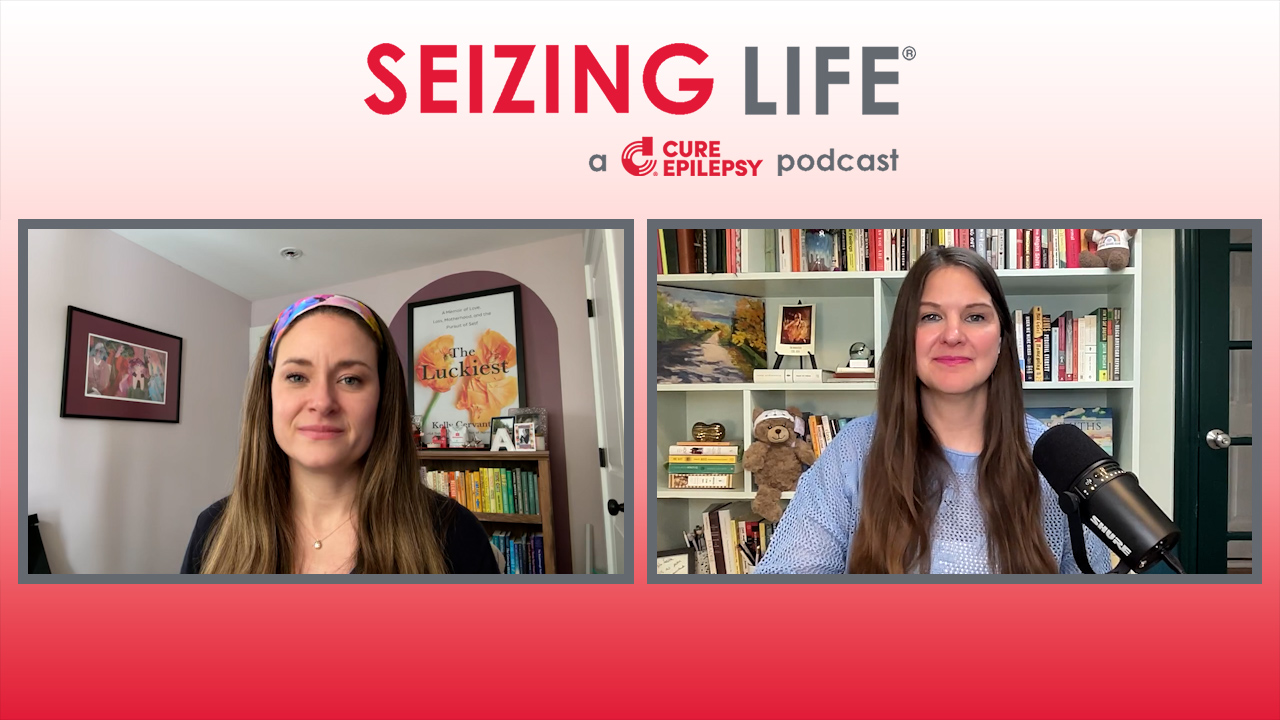
Living, Working, and Dating with Adult-Onset Epilepsy
Episode Overview
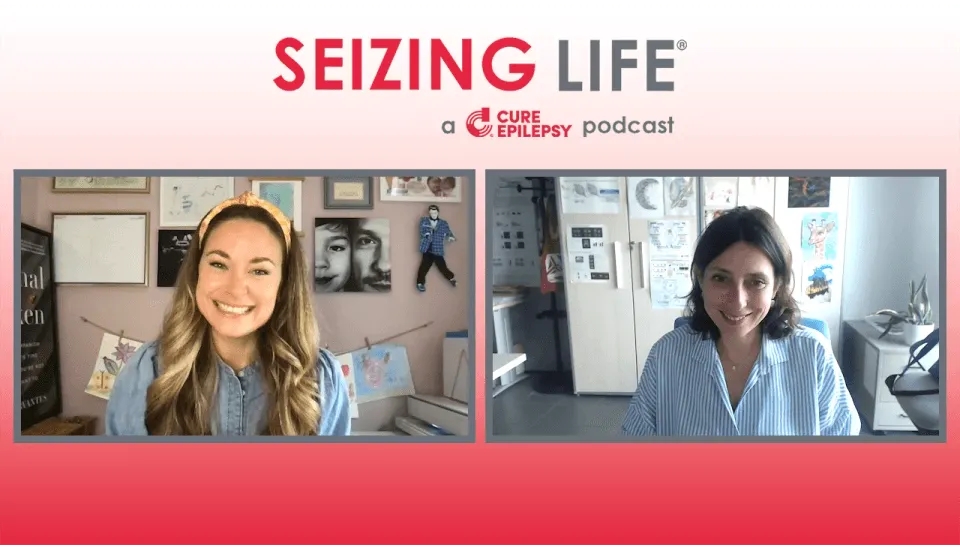
This month on Seizing Life®, Kelly speaks with fellow podcaster Landis Wiedner about her journey with adult-onset epilepsy after being diagnosed at the age of thirty-two.
Landis Wiedner’s first two seizures led to the discovery of a brain tumor and a subsequent surgery to remove it. Weeks later, while recovering and undergoing radiation, Landis experienced another seizure and was ultimately diagnosed with epilepsy, likely due to scar tissue from her surgery. On this episode of Seizing Life®, Landis shares her epilepsy journey, describes how the condition impacted her busy life, and explains how a stay in an epilepsy monitoring unit led to a life-changing medication change. Landis also shares her experiences dating with epilepsy, and details with humor the various strategies she tried before determining that honesty was the best approach. She explains how a lack of resources for adult-onset epilepsy, combined with a relative’s challenges with epilepsy, and her own personal experiences led her to create the What The Efpodcast and its recent IRL offshoot The Otherside Lounge, a pop up community concept for people living with epilepsy. Finally, Landis offers her advice for others living with adult-onset epilepsy.
Episode Transcript
Kelly Cervantes:
Hi, I’m Kelly Cervantes and this is Seizing Life, a monthly podcast produced by CURE Epilepsy. This month, I’m happy to welcome Landis Wiedner to the podcast. You might know Landis from her own What the Ef?! podcast, which also focuses on epilepsy stories. Landis lives with adult-onset epilepsy having been diagnosed in her early 30s. She is here today to share her journey, expertise, and advice for others living with epilepsy.
Landis, thank you so much for joining us today. I’m so excited to have this conversation with you. It is long overdue. But before we get started, why don’t you give us a little intro to yourself before epilepsy came into your life?
Landis Wiedner:
Yeah. Thanks so much for having me, Kelly. This is just so much fun, just especially since having you on my podcast. Was that two years ago already?
Kelly Cervantes:
Yeah. Yeah.
Landis Wiedner:
I don’t even know.
Kelly Cervantes:
That’s wild.
Landis Wiedner:
It is wild. And so, I really appreciate being on here. I just love talking to you. But yeah, my life before epilepsy was totally different, literally changed overnight. I was diagnosed when I was 32. So I lived a very active lifestyle in that I had my own business. I did comedy. Everyone in Chicago does comedy. I also had a bunch of creative projects going. And it was just, like the night before my first seizure, I left my house at 6:00 in the morning to go into the office of my client, DePaul University in Chicago. And I got home at 11:30 that night because in between that day, I had met with a friend for a creative project, had meetings with DePaul, who was my client. I had dinner with a former… I used to be a high school teacher, a former student and his wife invited me over for dinner.
And so I came home and I remember just being like, “Wow, what an amazing day. I’m so tired, but I got to do so many things.” And then I had a seizure in my sleep that night. And so that’s why I say it literally changed overnight.
Kelly Cervantes:
Yeah. Yeah. So talk to us about that seizure and that sort of demarcation point, before and after. What came next?
Landis Wiedner:
Yeah. So next was because I was single and I lived alone, so there was no way to be sure if I had had that seizure in my sleep.
Kelly Cervantes:
Yeah, I guess, how did you know that you’d had a seizure?
Landis Wiedner:
I reached out to my migraine neurologist because I woke up and I just felt awful and not in a migraine way. It was like I’d woken up really quickly at 5:00 and then just fallen back asleep. Apparently turned off my alarm. Don’t remember doing that. Slept until 10:00, something that I never did. And it felt like I had pushed a truck and run a marathon at the same time and had this terrible headache. And there was something in my being that was like, this feels like I had a seizure, but I don’t know. So I reach out to him, I shoot him an email and he’s like, “It’s possible. If it happens again, go into the ER.” And then I reached out to a friend of mine who has epilepsy and I said, “I’m just throwing this out there. What do you think?” And she was like, “Oh, you definitely had a seizure. That is literally how I feel after a seizure.”
And so I was like, “Okay, we’ll just see what happens.” And then five days later, it happened again. And so I went into the ER and this was like December 21st. So it was right before Christmas. And as everyone’s coming in for the holidays into Chicago and nothing better than just coming in and going straight to the hospital. But in that timeframe when I was admitted, we found out I had a brain tumor. My second brain tumor actually, and this was most likely causing the seizures. And so from there, they scheduled brain surgery to remove it, but they were like, “Don’t worry, it’s like stage 1, everything’s going to be fine. It’s a great brain tumor to get.” And I love hearing that because my first one is 2.
Kelly Cervantes:
It’s the weirdest things that come out of our mouths, right? [inaudible 00:04:38].
Landis Wiedner:
I know. Well, and I just kept saying, I was like, “I’m so angry that my brain tumor got a boyfriend before I did.” I’m like, “They’re just in there canoodling and I’m still single. What is going on?”
Kelly Cervantes:
So they find this brain tumor. And were you diagnosed with epilepsy at that point or was the hope that they’re going to operate, remove this brain tumor and you’re going to be okay?
Landis Wiedner:
Yeah. That was kind of what we were leaning into and what the doctor said was going to happen. And most likely there was no guarantees, obviously, when it comes to neurosurgery, but it was like, “Yeah, this is probably why you’re having these seizures in your sleep and then we’ll do the surgery and within three months you will be recovered.” And I even talked to a friend of mine who I went to high school with. We ran cross country together and she reached out to me because she had gone through something similar and she was like, “Listen, three months later I was running a half marathon.” And I was like, “Oh, amazing.” And I hung onto that time marker like, “Okay, in three months after the surgery, everything’s going to be great.” And I was incorrect about that.
Kelly Cervantes:
Okay. So you have the seizure, you come out of it, then what happens? But three months later, where are you?
Landis Wiedner:
Let’s see. Three months later after the surgery, I was in radiation because the tumor turned out to be stage 2, very rare with high recurrence. So I was getting radiation treatment and then two weeks into radiation treatment, I had my first epileptic seizure and that was while I was awake. And so they keep changing the names on these seizures, but it was focal, I think it’s impaired awareness seizure or something or focal, got all the different names, where basically my brain just gets pulled out for a second into this deja vu state and I’m starting to remember something that never happened. And it’s always very creative and very cool. Now I’ve come to appreciate it, but the first time it’s like you just get pulled out and I’m picturing this play in a theater that I’ve never been in.
But I’m trying to remember it. I’m like, “Who are the characters and what was going on?” And then I just kind of go into this zone out state for about seven minutes, which is very awkward for anyone who has to watch it, because you just have to sit there and let me go in and out of awareness.
Kelly Cervantes:
It’s a long time. Yeah.
Landis Wiedner:
It’s a very long time. But again, not for me, but for whoever has to be there with me for it. So yeah, thankfully they happened, like I had two seizures back to back because after the first one, I was admitted to neurology and I had a seizure on an EEG while I was in the hospital. And at the time I had no idea how lucky I was to get that. Yeah. I’ll never forget the doctor coming in and being like, “Yes, we call it a seizure.” And this is moments after I’m recovering. And I was like, “I hate you. Why would you ever say that?” And now knowing so much more than I did, I’m like, “Oh no, I was very fortunate to get that seizure on an EEG.”
Kelly Cervantes:
Yeah, they like to hide. I always say whatever that treatment is of being in the EMU with an EEG, if we can just bottle that and put that in a pill, then no one would ever have another seizure again.
Landis Wiedner:
That is so true because they never come out when you need them to.
Kelly Cervantes:
Yeah.
Landis Wiedner:
And then you get home and like-
Kelly Cervantes:
Remember me? So they catch the seizure, they diagnose you with epilepsy and did they start you on medication right away?
Landis Wiedner:
Yeah. I was on medication from out of the gate and was having three or four seizures a week and also going to radiation treatment every day for six weeks and living alone. So it was just a lot of the exhaustion and what hindsight always shows, I didn’t realize in the moment, but the exhaustion from the seizures, from radiation, and then from onboarding new anti-seizure drugs, my brain was just like shut down.
Kelly Cervantes:
And radiation on your brain no less. Radiation on any part of your body is exhausting, but all of this is impacting your brain all at once.
Landis Wiedner:
Yes. And it was so nuts because I just didn’t understand the gravity of what I was dealing with while I was dealing with. And I think that’s part of just survival mode, just being in it, doing it and I got to get this done. But yeah, it was a whole, that period of my life, and even after radiation was over, because sometimes that’s when the side effects kick in the hardest, it was like just this fatigue I can’t explain and I’ve never experienced before or after, but I remember, this was a legitimate crisis when I would look at the toilet paper roll and be like, “I don’t know how I’m going to replace that.” The idea of something so small seemed like I had to prep days ahead of time for it. It was just that weird level of exhaustion that was kind of hard to explain too.
Kelly Cervantes:
And again, doing it on your own and you can’t drive because you’re having seizures and so having to rely on, I hope you had strong community around you.
Landis Wiedner:
You know what? I was really lucky and a lot of people stepped up to help me because it is, when you’re 32 and you live alone and you’re single, it’s like, who’s responsible for you? It’s just different. And so, I was really lucky with people kind of all coming into different facets and making this quilt of a caretaker that really helped me get through different things. And it also really taught me how to reach out and therapy helped me figure out how to feature out.
Kelly Cervantes:
Amen for therapy. Amen for talking, to having friends and having community.
Landis Wiedner:
Yes. Yes.
Kelly Cervantes:
So fast forward a smidge because you get through the radiation, you are exhausted, you are still having multiple seizures a week. What changed? Because I know that you’re doing better now and I want to get to how you’re doing now, but what shift happened and how did it happen?
Landis Wiedner:
Yeah, the biggest shift was in two years after the surgery and the diagnosis, I was on four ASDs, anti-seizure drugs and my doctor was like, “Yeah, four. Four is a lot.”
Kelly Cervantes:
Four is a lot.
Landis Wiedner:
But so many people are on four.
Kelly Cervantes:
That’s true. Well, they like to cocktail them, right?
Landis Wiedner:
Yes. Right.
Kelly Cervantes:
But then you’re dealing with impounding side effects too.
Landis Wiedner:
Exactly. And like, so I went in for an EMU stay and with the goal of catching a seizure so that I could be a surgery candidate. And so went in, took me off three of the four drugs and the other one lowered it to a very baby dose. And so I’m like, I’m going through insane amounts of withdrawal because that’s something we don’t talk about either, is that like your body is like literally going through withdrawal as someone does when they’re recovering from addiction. And no better place to do it than in a hospital when you have to ask a nurse to come take you to the bathroom. So it’s just like, it’s an experience. And I didn’t have a seizure, of course, as we said, because that never happens in the EMU. I was there for nine days and, yeah, we really tried and it just got to the point where I mentally couldn’t handle it anymore.
And so my doctor was like, “That’s totally fine. I’m going to cut you loose.” And she’s like, “Okay, and we’ll have you leave on, we’ll add another one back, another medication.” And I was like, “What if we just tried? And what if I just tried to go on this one? Since I’ve been on this one, I haven’t had one in here. Can we try it?” And she was… I love my neurologist. I’m obsessed with her. She was like, “Yes, we can absolutely try it. There’s a possibility you will have to go back on and that titration up, as you know, is really hard.” So I said, “I know, but let’s just try.” And we did. And I literally have chills because I went from having one to four seizures a week to one a month after that shift.
And she is so amazing because she was like… And she didn’t have to do this, but she took responsibility and she said, “I overmedicated you. And I think the side effects of the medications, like you were saying, got you so tired that it actually induced more seizures.” And I was like, something I never would’ve thought of, makes complete sense.
Kelly Cervantes:
It makes total sense.
Landis Wiedner:
Totally.
Kelly Cervantes:
But also I want to give you major props for advocating for yourself because I think that it can be… We don’t have medical degrees. We know ourselves or I knew my daughter best better than the doctors, but we’re not doctors and sometimes we’re so tired and it’s so easy to just go with their recommendation. And so props to you for being like, “But can we try something different?”
Landis Wiedner:
Yeah. And it’s one of those things that I appreciate the props, but I also have to shine it back on my doctor too, because she’s someone that I feel comfortable doing that with. And that is a hard place to get to, I think, with doctors just because of how revered they are as they should be. But yeah, it was just like… And then once I got a taste of that, can we try this? Oh, I’ve been doing that ever since. I’m like, “Doc, can we try this?”
Kelly Cervantes:
But that’s how it should be. You’re a team, right?
Landis Wiedner:
Yes.
Kelly Cervantes:
You should be equal partners in managing your care. And I think it takes a while to get to that kind of relationship, but it is. It’s so important.
Tasia:
Hi, this is Tasia from CURE Epilepsy. Since 1998, CURE Epilepsy has raised over $100 million and funded more than 300 epilepsy research grants in 19 countries. Learn what you can do to support epilepsy research by going to cureepilepsy.org. Now back to Seizing Life.
Kelly Cervantes:
Okay. So you come down on your medication. Are you still on this lower dose of the medication? How are your seizures today?
Landis Wiedner:
Yeah, I’m still on this one medication, which is very rare for a person with epilepsy to only be on one. My seizures, it’s kind of like every two to six weeks. The longest I’ve ever gone is four months, and that was amazing. But I’m kind of at this place where I’ve noticed the more routine I am with yoga, and regular exercise, and eating healthy, and sleep habits, that all those wonderful things that we’re all supposed to be doing, I’m like, huh, my seizure frequency decreases a lot when I’m doing the things that I’m supposed to be doing. So it’s like that fine line of trying to be responsible for my seizures, but also not blaming myself when they happen, because sometimes I can be doing everything right and one’s just like, “Hello, you were trying to have fun. JK, you’re not going to today.” So that’s where I’m just kind of I try to do the best I can without being hard on myself about it.
I’m still open to trying different medications. There’s really only one I could try that’s out there right now that I’m debating. And that’s the whole thing is like, because titrating onto a new medication as well as titrating off a medication, it’s so tough. It’s so hard on your brain.
Kelly Cervantes:
Well, it takes a long time too. It’s not like… I mean, you’re talking about months to adjust medications. And then if that doesn’t work, you’re looking at months to go back.
Landis Wiedner:
Yep. It’s like you know about this. Yeah. So yeah, it’s one of those things where I’m debating. I’m like, “Okay, do it. And what are the side effects going to be? And what do we do?” But I just feel very lucky to be in a position where I can even debate that and just see what happens.
Kelly Cervantes:
Did the doctors think that you still might be a candidate for surgery?
Landis Wiedner:
I would have to go through so many tests to qualify and they’re pretty confident. Since they know where my seizures are coming from and it’s from scar tissue from the surgery, it would be kind of a, quote, unquote, “easy” one to do. But for me, it doesn’t feel like something I’m willing to take on yet. Maybe one day I’ll change my mind. Two years ago, I was like, “I’m never changing medications ever again.” And now I’m like, “Maybe I am.” So I just try to go with the fluidity of it and be like, “At this point, that’s not where I’m at. I’m not open to doing brain surgery.” That might change in a year, that might change in five years. I don’t know. But right now I’m just like, “Let’s just try medications and keep things a little even keel for me.”
Kelly Cervantes:
Well, and I think you are bringing up this incredible point about your quality of life and there is, ideally we all wish for seizure freedom, but there is this give and take in all of that. And if the status quo is serving you as best it can with still having the anxiety of whenever the next seizure is going to come along, I get that. Quality of life is so important and upending that can feel wildly overwhelming. So then as I want to take this opportunity to ask you a slightly more personal question because I think that there are just so many people out there that would be interested. And that is, you shared with us that when you’re first diagnosed, you’re 32, living by yourself, single. And I know because we’re friends that you were recently married and so there was some dating, I’m assuming in there, a boyfriend who turned into a fiance and a husband. Talk to us about dating with epilepsy.
Landis Wiedner:
I always say like, okay, so I dated without epilepsy for a long time. I was 32. And just like my life flipping overnight, my dating life flipped overnight too, because I think it’s not epilepsy exclusive to go into dating being like, “Oh my gosh, I’m insecure about X, Y, Z. Will someone ever want me because of these things?” That is totally normal and something I definitely experienced, but I honestly can’t even remember what I was insecure about before epilepsy. Because once I was diagnosed, I was literally like, “Who will want this? Who would want to deal with this?” And so I went through different phases of dating. The first phase was pretty… I wouldn’t recommend, but I didn’t tell the date I had epilepsy or anything and I lied about everything. I lied about why I wasn’t drinking.
I lied about why I needed to meet at 3:00 on a Saturday and not 8:00 at night on a weekday. I just lied. And my whole theory was we’ll fall in love and then I’ll tell him. I literally thought this would work, which saying now it’s just so funny. And so I’m like, that’s when I was also on a lot of drugs. So my thinking wasn’t very clear. And then I went through a phase where I thought I would tell someone pretty early, like second date at least, if not the first. And then if a guy continued to date me, I was like, “Oh my gosh, he’s such a saint.” Because he’ll go out with me because I have epilepsy. Even though there’s all of these terrible red flags and horrible behavior, I’ll ignore it all because he will still go out with me. I treated it like I was charity work or something.
It was just this dating out of deficit, which again, I don’t think is exclusive to epilepsy. I think a lot of people do that as well. And I think after the third really terrible relationship, I was finally like, “Wait a second, I deserve to be treated better.”
Kelly Cervantes:
Invaluable.
Landis Wiedner:
Yeah. Yeah. I was like, “This is not okay.” And then I would just disclose, because that’s the question I always get. This comes up a lot in conversations with people with epilepsy. I did a whole talk on dating with epilepsy years ago at the Epilepsy Foundation Conference and everyone’s like, “But when do you tell them? When do you tell someone?” And that’s the question that I wish there was one right answer for it, but all I can share is what I did. And it got to the point where I shared it either on the first date or before, because I was only meeting people through apps. And so, if on a dating app, someone’s like, “Hey, do you want to meet for drinks?” I’d say, “Sure, just so you know, I don’t drink. Happy to sit and have a mocktail with you. Would love to do that as long as it’s at 5:00, not at 7:00 on a weekday.” And some guys were like, “Yeah, I need someone who drinks.” I’m like, “Cool. We just saved each other time, got it out of the way.”
Because especially as, I don’t know, I dated when I got older, I was like, “I don’t have time. I’m too tired.” There’s just so many other things I’d rather do with my life than be on another bad date. So then it became a thing where I would say it on the first date. Somehow I would make sure, and it was not easy. I say this like, “Oh yeah, I just got this structure.” And it was totally fine. No, it was really hard. But I still just made sure that I did it just to see how they would respond and then be like, “Okay, if there’s not an issue with how they’re responding, let’s see if you have chemistry. It was just like I blocked myself so much with epilepsy as my own roadblock almost rather than another person’s that I forgot to look for the other things that you want in a relationship like, do we have chemistry? Is this going to work? Are our values aligned? Do we laugh together? All those things.
And then it was really easy to go on one, two dates and be like, “Nope, not the guy.” And usually had nothing to do with epilepsy at that point. It was just that that wasn’t compatible, nice person, just not a good match. And then I met Steve who I think you’ve met… Yeah, you’ve met at the CURE Epilepsy Gala. And the story is so cliche with Steve. It’s literally like, I met him for coffee at 3:00 on a Thursday because he’s a firefighter and so he has 48 hours off and then works 24 hours. So I was like, “This is awesome. He can meet during the week and in the afternoon. Amazing.” But like, when I walked in the coffee shop, he stood up when I walked in and I was like, “Oh no.” I do believe in this sort of kinetic energy towards someone that you know you’re going to have a connection with.
And that doesn’t always mean romantic. Sometimes that can be friendship too. And within our first date, I was just like, “Oh, I think we got something here. I think this is…” And I think by the third, we both knew we were going to get married and we were talking about it within the first month we started dating. It was like, “We’re this is, right?” “Yes, we are.” “Okay, cool.” And this is my mentor saying, it’s like the coziest sweater I’ve ever tried on is what Steve is for me. He’s just my comfy sweater.
Kelly Cervantes:
I love that so much. And I love that for you. And I’m curious, what was his response to you telling him about your epilepsy?
Landis Wiedner:
So it came about a little bit more organically because it was at that point tied to my work because I had started the podcast and also was writing, I had bylines in NBC, The Independent, and Wired and was still writing and stuff about epilepsy. And so it came out organically, which was very nice transition rather than me having to bring it up. But he was also, he asked me a few questions and he just showed compassion and then we just kind of were able to move on. And it was like he took it as like, “This is a big deal, but this is not going to change how I feel about you.” And-
Kelly Cervantes:
And it’s a part of you, it’s not all of you.
Landis Wiedner:
Exactly. Yeah. And also, he is a firefighter EMT, so he does see seizures on the regular. So I do think that played a part. I can’t say it didn’t, but it was just like, he wanted to know more, but also more just out of curiosity and how I was doing rather than like, what am I dealing with sort of situation.
Kelly Cervantes:
How is this going to inconvenience me versus how does this make you who you are?
Landis Wiedner:
Yeah, totally. When I had my first seizure in front of him, I hadn’t told him what to do because I’m still really bad at that, about telling people what to do when I have a seizure. But he responded so well and he now has just gotten to the point, because I was so used to doing it alone that I was very resistant to his help. And then now it’s like I have a seizure and I just go straight to bed and he brings me the ice pack, the medications, starts making a snack for me when I wake up a few hours later. Now if I have a seizure without him, I’m like, “Where is my butler? What is going on?”
Kelly Cervantes:
My coziest sweater.
Landis Wiedner:
Yeah, exactly.
Kelly Cervantes:
So you brought up the podcast, which is, for anyone who doesn’t know What the Ef?! podcast, you are brilliant, it is so informative, and funny, and real. Talk to us about how you started that.
Landis Wiedner:
Yeah. Yeah. So I started What the Ef?! because diagnosed as an adult, I felt like I couldn’t find anyone to relate to. So it kind of led me to the assumption, am I supposed to just have everything together as an adult? Because it was like resources for caregivers, resources for children, resources for teens. And I was like, “I guess everyone’s just got together then.” And then I slowly learned that was not the case. And also, my cousin, two years before I was diagnosed, who was a good friend of mine, he actually, he had epilepsy and he took his own life because epilepsy just took over and-
Kelly Cervantes:
I’m so sorry.
Landis Wiedner:
Thank you. And it was very strange because two years later I’m diagnosed and I start to understand his thinking because when you’re having seizure after seizure after seizure, it’s really hard to see the forest or the trees. And so I created What the Ef?! because I wanted to create a touchstone for people like my cousin Jim, for people like me out there who just need to see other people, other adults with epilepsy out there and feel connected, and feel seen, and feel validated, and laugh along the way. Jimmy was the funniest person I ever knew. Everyone will say that about Jimmy and I was like, “I need to have…” And I’m a big believer in coping through laughter. So I’m like, “Let’s just make this.” It’s not like… When I tell people I have an epilepsy podcast and it’s funny, people think I’m a monster, so it’s not like that, but it’s just talking about our things with a little bit of humor involved.
And within the first nine months, it went into the top 10% of podcasts globally, which was like, I was like, “Okay, so there was a need for this. There is a need for this.”
Kelly Cervantes:
Yes. Yes.
Landis Wiedner:
Yeah. And that was huge. So yeah, I’m just so grateful. And if anyone wants to listen, it’s on everything. It’s on Apple, Spotify, YouTube. Anytime you subscribe, it helps keep it going or give it a little thumbs up on something, but it’s just such a joy to do. I’ve met so many people that I am just amazed by and that’s why it’s also, like I was so nervous for today because I’m not good at being… I don’t like being the one answering questions. I like being on the other side. So all day I’ve been like, “Oh my God, you can do this. You can do this.”
Kelly Cervantes:
Well, we’re going to keep those questions and make you You keep answering them because I want you to tell us about the Otherside Lounge. You essentially realized that this need is there. So you create this podcast, Landis, but that’s not enough for you because like me, you’re an overachiever and you see a need. And so you managed to take this community, this virtual community that you’ve built and turn it into IRL. Talk to us about the Otherside Lounge and what it is.
Landis Wiedner:
Yeah. So it’s such a cool concept. And my friend and co-creator, Mark Slater, helped me create this thing or we created this thing together where we wanted to have a space, a physical space so that people with epilepsy can actually connect-connect. The podcast allows you to connect virtually and but not really have a conversation, you can listen to one and be a part of it. But this is like, you sit down, you get to meet people with epilepsy. And so we’ve done two at different epilepsy conferences because also like conferences, every brain at a conference needs a place to go rest, right? But especially epilepsy brains. And so there’s like space to just sit and chill out and do some art. There’s spaces to have conversations. And it’s just been so magical to watch people with epilepsy who were strangers. And then all of a sudden they’re sitting on these couches and just talking to each other and sharing experiences and creating connections.
Because when you meet someone else with epilepsy, even if your epilepsies are totally different, there is just this common thread that you just feel understood, you feel seen, you feel validated. And I think that’s so important for any experience and any trauma. And it’s harder to get a bunch of people with epilepsy all together in one space. And so Mark and I were like, “Let’s do it. Let’s just see if we can create this really super fun, awesome space.” And Mark’s the designer. I am not. And so the way it looks is so cool and I am in no way responsible for that. But I get to go and then talk to people and meet more people with epilepsy. And the only issue with the Otherside Lounge is because it’s physical, it is harder to get to places than a podcast.
So we are hoping that the Otherside will be at AES this year in Denver. So yeah, we’re still trying to figure that out. It’s just all like literally physical logistics because it’s like, how many times can you ship a sofa across the country? I don’t know.
Kelly Cervantes:
I feel that. I feel that. You were diagnosed at 32 and because of that and because of your focus on talking to adults with epilepsy and adult-onset epilepsy, what advice do you have for adults out there who are newly diagnosed or who are struggling with a diagnosis even perhaps many years later?
Landis Wiedner:
Yeah. Well, first, I’ve been there. It took me years to accept my diagnosis. And I still say that it’s a very, acceptance is a very fluid thing. It’s not like you accept something, “Oh, we move on and everything’s great.” It’s like, no, acceptance first of all is very hard process. And then I think it’s just something I reprocess over and over again because it’s just kind of sometimes when I live a little bit in denial and I’m like, “Oh, I can stay out until 11:00 and be fine.” It’s like, “No, if you’re going to do that, you have to take precautions. You have to add some bumpers.” But I think the biggest thing was what I wish I had learned earlier was stop trying to go back to my old life because what I learned is there’s no back, there is only forward and new and that’s it.
And trying to embrace the forward and new, and it’s okay to grieve what was left behind. It’s okay for me to grieve staying up until 2:00 in the morning writing. I miss that so much, but at the same time, just being like, “Okay, but I am moving forward and this is new.” And so that’s the thing that I really wish I had learned earlier. It took me a while to stop trying getting back because I just didn’t accept that this was going to change my life forever. And everyone gets there on their own terms, but it’s just, if there’s any way to connect with anyone, just talk to someone else with your experience, whether that’s on Reddit or whatever platforms are out there because I’m so bad at that stuff.
Kelly Cervantes:
Well, to that end, and we’ll have all of the links, of course, when all of this gets posted, but where can people find you and connect with you?
Landis Wiedner:
Yeah. Instagram, I’m on Instagram at whattheefpodcast, YouTube, What the Ef?! Podcast. My TikTok is a little sad, but it’s there for what that podcast, it’s there.
Kelly Cervantes:
It’s better than mine, which is nonexistent.
Landis Wiedner:
That might be better. So yeah, that’s the best place, or you can subscribe to just get updated when new episodes come out. I only send emails about episodes, so that’s at whattheefpodcast.com. Yeah. And I’m happy to reach out, or if someone’s reached out and just needs someone to listen, I’m around.
Kelly Cervantes:
You’re amazing. Thank you so much for sharing your story and your journey. Our community is so lucky to have you.
Landis Wiedner:
Oh, well, ditto, girl. Game recognizes game. You are awesome. So thank you so much for having me. I really appreciate it.
Kelly Cervantes:
Thank you.
Kelly Cervantes:
Thank you, Landis, for sharing your advice and experiences living with epilepsy. For over 25 years, CURE Epilepsy has fostered a supportive community for individuals and families living with epilepsy while pursuing our mission to fund and promote breakthrough research that will lead the way to a cure. If you would like to support our efforts, please visit cureepilepsy.org/donate.
Legal Disclaimer:
The opinions expressed in this podcast do not necessarily reflect the views of CURE Epilepsy. The information contained herein is provided for general information only and does not offer medical advice or recommendations. Individuals should not rely on this information as a substitute for consultations with qualified healthcare professionals who are familiar with individual medical conditions and needs. CURE Epilepsy strongly recommends that care and treatment decisions related to epilepsy and any other medical conditions be made in consultation with a patient’s physician or other qualified healthcare professionals who are familiar with the individual’s specific health situation.