

Episode #160 - Putting the Heart in Brain Surgery: A Pediatric Neurosurgeon’s Philosophy of Care featuring Dr. Howard Weiner
Putting the Heart in Brain Surgery: A Pediatric Neurosurgeon’s Philosophy of Care
Episode Overview
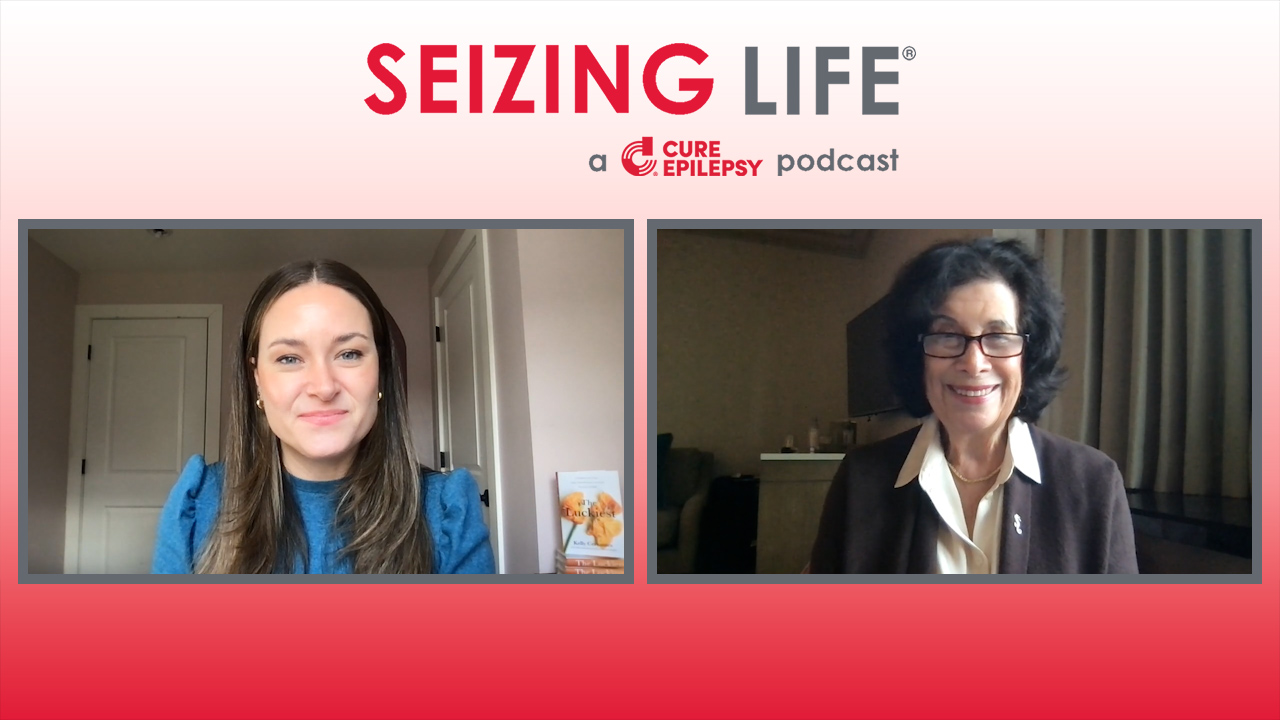
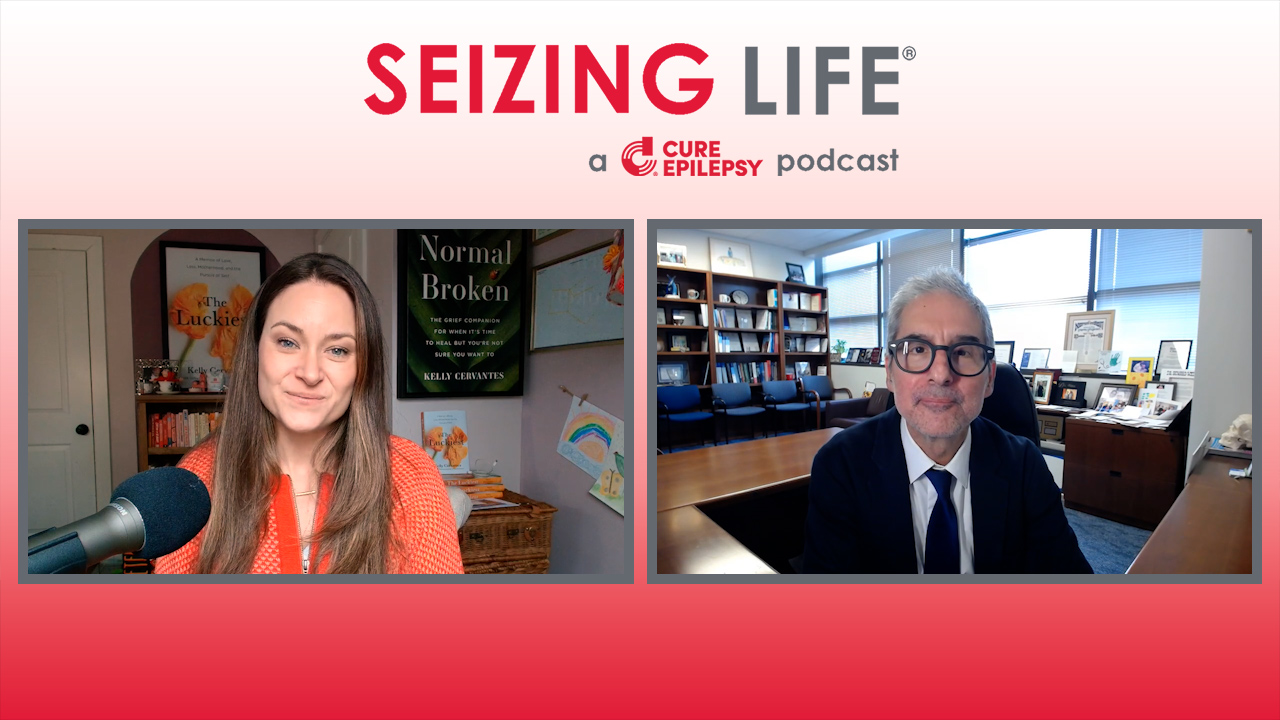
On this month’s episode of Seizing Life®, Kelly welcomes pediatric neurosurgeon Dr. Howard Weiner to the podcast for an engaging conversation about epilepsy neurosurgery. Dr. Weiner provides insights and advice on a wide range of topics from the importance of the human touch in epilepsy care to preparing children and families for brain surgery to advances in surgical technology and infusing humanity, empathy, and compassion into medical training.
As Chief of Neurosurgery at Texas Children’s Hospital and Professor of Neurosurgery at Baylor College of Medicine, Dr. Howard Weiner brings a down-to-earth, compassionate, and deeply human touch to patients, families, and medical students alike. He explains his philosophy of care which is inspired by hospitality principles in the restaurant industry, and shares how he embodies these principles in his interactions with children and their families as he helps them prepare for surgery. Dr. Weiner leans into the human element of medicine in building relationships with patients and families that are built on respect, kindness, and humility and often last years after surgery. Dr. Weiner also discusses the amazing technical advances that have been made in neurosurgery during the past few decades, resulting in an evolution from the old perspective of “Who is a candidate for surgery” to the current perspective of “Who isn’t a candidate for surgery.” Dr. Weiner shares how he achieves balance between the intense demands of being a neurosurgeon and creating a fulfilling personal life, and how that balance impacts his role as division chief at Texas Children’s Hospital. Finally, Dr. Weiner offers advice for fellow medical professionals, aspiring medical students, and those living with epilepsy who are considering surgery.
Episode Transcript
Kelly Cervantes:
Hi, I’m Kelly Cervantes and this is Seizing Life, a monthly podcast produced by CURE Epilepsy. This month, I’m happy to welcome Dr. Howard Weiner to the podcast. Dr. Weiner is the Chief of Neurosurgery at Texas Children’s Hospital. And professor and vice chair of neurosurgery at Baylor College of Medicine. In his work as a pediatric neurosurgeon, Dr. Weiner brings a warm, caring, attentive bedside manner to his interactions with patients and their families. He espouses a special philosophy of care within his division at the hospital, and to the many residents, fellows, and students that he teaches. Dr. Weiner is here today to share that philosophy with us and to provide insights and advice for families in preparing their children for neurosurgery. Dr. Weiner, thank you so much for joining us today. To begin, can you give us an overview of your philosophy about the surgeon-patient relationship?
Dr. Howard Weiner:
Thank you, Kelly. It’s such an honor and privilege to be here with you today. Yeah, so I get asked this question quite a bit now because it’s something I’m very, very passionate about. I am a neurosurgeon. I’m a pediatric neurosurgeon. I specialize in epilepsy surgery, and I think that the human side of what we do is equally important, if not more important. When I moved here to Houston from New York City about 10 years ago, someone sent me a very interesting book that they thought I would enjoy. It’s called Setting the Table by Danny Meyer, the famous restaurateur.
Kelly Cervantes:
My hospitality background has me very familiar with that book.
Dr. Howard Weiner:
So I read this book and I said, “Wow, this is my philosophy of life. I could have written this book.” And Danny has said so many profound things that really reflect how I like to practice and the philosophy that we espouse here at Texas Children’s. One of his famous quotes is, “Business like life is all about how you make the customer feel. It’s that simple and it’s that hard.” And he distinguishes between the technical side of the work and the human side of the work. The technical side he calls service, which in his line of work is preparing the hamburger, plating the fish, serving the wine in a certain way. In my business, it’s doing a perfect operation for the patient, which they deserve and which we aspire to every single time. Hospitality on the other hand is how the delivery of that technical service makes the customer or your patient or your colleague feel.
If they feel that you’re on their side, then that’s hospitality. And he argues, and I agree with this 100%, he argues that the service or the technical part is 49% and the hospitality or the human side of what we do is 51%. So it’s a subtle point of emphasis, but it really means that as neurosurgeons, we don’t have a break. We come to work every day, every day is a Super Bowl. We are expected to deliver a perfect operation, which the patient deserves and we should deliver every single time. But that in and of itself doesn’t make us the patient’s favorite or really help the patient as much as the human touch. And he argues that the hospitality side is slightly more important than the service, and you really need both to really do an excellent job. And I think this has many applications, not just in direct surgical care, but in managing complications.
Very rarely will have complications and we have to deal with it. So preventing complications as a neurosurgeon is a very technical exercise, but managing complications is ultimately very human. We talk about this in terms of developing a practice. So we’re very blessed. Many of our patients travel from outside of Texas, from across the United States, from abroad. That’s an everyday occurrence having these discussions with families. And I have wondered why families get on a plane and travel at great cost and great inconvenience for care when they have many other centers along the way that are equally good with excellent surgeons, with excellent technology and the latest devices. I think it’s something more than just the technical thing. And I’m still in touch with many, if not all of my patients from 25, 30 years ago. I had a Zoom call this morning with a patient from 2003 who found me and wanted to be in touch.
And it’s just really, really special. So I think that the human part of what we do holds way over the technical part. I’m not minimizing the technical part. It’s a given. It’s expected. We don’t get any brownie points from doing a perfect operation. It’s what we need to do every day as neurosurgeons. So that’s my philosophy.
Kelly Cervantes:
I think that for so many patients, that sort of philosophy is music to their ears, given how short the amount of time that they get FaceTime with their doctors, with their medical team, feeling like they’re being taken care of as an entire person or as a whole family is so important. And I want to get into how you put that philosophy into practice. But first, can you give us, you mentioned pediatric, neurosurgery, but specifically what ages do you treat?
Dr. Howard Weiner:
So we treat children from birth until about age 21. In New York City, I treated patients into adulthood, but here we are a freestanding children’s hospital and we have some adult programs in congenital heart. We have some neuro patients that will stay with us. The age is really changing. I would say that more and more we’re seeing kids in the first year of life. So I have surgery scheduled now for two nine month old kids that are coming in because it’s well recognized now that surgery is safe and that epilepsy is bad for the developing brain. And that if we can get this taken care of early, it’s better. So we’re seeing kids more and more. We have a lot more work to do to introduce this concept to the world because I still feel that epilepsy surgery is markedly underutilized for a lot of kids and a lot of families.
So the idea of spreading the word and letting them know that it’s safe, that we’re nice, normal, down to earth, that we’re not trying to push anything, but we’re trying to really help them. Interestingly, we do treat babies that are not born yet. So we have programs here at Texas Children’s and one of my partners, Bill Whitehead, leads this program where we do fetal surgery. So we treat children who have birth defects, like spina bifida or myelomeningocele, which is a defect where the nervous system is coming out of the lower back and it’s urgent. It has to be repaired early. And based on studies that came out in the New England Journal many years ago, we have developed a program where moms will come here. And they’ll stay in Houston for several weeks and they have to meet several criteria, but they can have their baby’s problem fixed in utero through a little endoscope like getting your knee surgery.
And it really helps the child’s development. It helps prevent certain problems like hydrocephalus or water on the brain. It helps with hindbrain herniation. So it’s a big game changer. So we actually treat babies before they’re born all the way up until age 21. So it’s a real blessing.
Kelly Cervantes:
I’ve never heard of that before. That is absolutely remarkable. I speak with families all the time and I think the longer that families are in the epilepsy community and their child is seizing, the more that they hope and they wish and they cross their fingers that epilepsy surgery is a viable option for them. And so I couldn’t agree with you more about getting that word out earlier, that epilepsy surgery is something to seriously consider as soon as possible. And I know that we wish that it would have been an option for our daughter. Speaking about my daughter, I think one of the things that really struck me very early on, and it was actually sort of a litmus test for me, was when we would meet with a specialist, it was whether they fully addressed me or whether they addressed Adelaide, my daughter.
And mind you, she was non-mobile, nonverbal. She passed away a few days before her fourth birthday, so she was very young for the duration of her life. But I always took note, despite all of that, when the doctors addressed her.
Dr. Howard Weiner:
Sure.
Kelly Cervantes:
I wonder how do you determine, because you talk about the patient=neurosurgeon relationship, and you’re in pediatrics and family encompasses that as well, but how do you make that determination between communicating with the parents versus communicating with the child and at what level of dialogue, vocabulary, jargon you’re using?
Dr. Howard Weiner:
So that’s a great question. I think that one of the important things for me personally is I’m myself. So one of the things that I think is really important is being kind, warm, down to earth, not talking down to the patient, not using medical jargon. So we get into all the detail, but we do it in a way that is appropriate for that child and that family. When I walk into a room, I sit down. The first thing I do is I ask the child if they’re able to, “What do you like to do? What are you into? Tell me some of your hobbies. What do you like?” So oftentimes I’ll have a screen, we’ll look at what they’re playing with on the screen. I ask them if they like dogs. We have two adorable, cute French bulldogs. So I’ll pull out pictures of my French bulldogs and we’ll talk about dogs.
And we just break it down to very, very simple communication. It’s very important though to be able to quote, read the room and see. When they come in to see me, it can be fraught with a lot of anxiety. It’s not as much as the morning of surgery, but my idea and my goal of that meeting is to bring the temperature down and to let them know that we’ve done this before, that it’s going to be great, that we’re going to get them through this. And I just talk to them in very simple terms, like the epilepsy is a network, the epilepsy is a focus. All the testing that we’re doing is to figure out where in the brain the seizures are starting, to find that hotspot. And then we get into more complexity as the conversation goes on.
And the questions that they give me will reflect their level of A, anxiety, B, understanding. Some families come in with lots of information. They’ve seen many other people and they’re interviewing me and I’m here to just help and I just am myself. And I can only offer what we’ve done in the past. I can’t make something up. But to your point about epilepsy surgery, what’s exciting now is the idea has flipped on its head. Meaning when I started almost 30 years ago, the question was, who is a candidate for epilepsy surgery if you are refractory to medical therapy? The question is now the opposite. It’s who’s not a candidate. We have so many new options now from neuromodulation, to laser, to traditional resection that we have something for everybody. So I want to make that clear to them that these are all the options. We discuss all of that.
I joke that I feel like my role is 80% rabbi or minister, 10% psychiatrist and 10% neurosurgeon. My job is to get that family through the Red Sea, we’re going to cross the Red Sea together, we’re going to get there, but we’re going to do it together. And I want to create that sense of we rather than me versus them. I want
Kelly Cervantes:
To quickly highlight something that you said earlier, Dr. Weiner, that there is a transition in neurosurgery from a patient being a surgery candidate to the reverse. And I think that that is so important for patients and their families to hear because I was in this world meeting with doctors just 8 to 10 years ago, 6 to 10 years ago, and it was still, “Are you a candidate?” And so I think it’s really important for patients and their families to hear that, that keep finding the doctor who is open to exploring other options, because there are so many new and fascinating techniques. I think to that point, what recommendations or tips do you give to families to help them prepare for neurosurgery? Because let’s be honest, the idea of brain surgery, the idea of it is scary. Even if the techniques have been so fine-tuned and when you’re working with an incredible surgeon, while there can always be issues, for the most part, it’s relatively safe these days. How do you help a family prepare or what should a family do to prepare?
Dr. Howard Weiner:
Well, I think that the most important thing is being with us in person and having that meeting and hearing what it’s like and knowing that we have a track record that this is something we do every day, that this is something that we don’t take lightly. Every child and every family is super special, but that doesn’t mean that it’s not very regular routine for us. And just on a very rudimentary level, we have a wonderful child life support system here. And so we can have a consultation with Child Life where the family will actually go through the steps of the day of surgery. There’ll be dramatizations of the day, depending on how young or old the child is on their level. So that’s very helpful. But I think walking them through the system very simply, very down to earth, this is what it looks like, this is how long the surgery will be.
And being honest with them, basically if you have any pain or anything uncomfortable during the experience, you let us know because we’re going to tell you everything that we know. We’re going to be very honest with you. I joke that the moms are typically great. They’re usually calm. And it’s the dads who fall apart. It’s very interesting. And when I come out of surgery, it’s one of my favorite times where I come to the family and say, “Everything’s been great, and it went great. And you’ll see your child in a few minutes, et cetera, et cetera.” And there’s usually hugs and kisses and crying and tears. And that’s just from the dads.
The moms are much more controlled and the dads are very out of control. But we have a wonderful team here at Texas Children’s. So we have two program coordinators that are essentially concierge service. They get to know the families really well and there are many points of contact. So as opposed to other types of neurosurgery, we’re getting to really know these families from the time we meet them through the whole workup process, to the process of their hospital admission where they may stay for a long period of time with invasive monitoring, with stereo EEG, and they’re here. So we get to know them. So the team is really, really important to make them feel comfortable. And I find that the families will bond with certain members of the team. We have wonderful physician assistants and nurse practitioners that are part of the team that are on the ground, and they stay in touch.
They stay in touch after the family goes home, their friends. And I think all of this is really important for healing and for wellness for the family. So I’m a big fan of all of these.
Kelly Cervantes:
Yeah. I can imagine feeling like you have support or if something happens, feeling comfortable enough to be able to know that you have someone you can call and that that person is going to respond. That’s huge. I think so often as caregivers, we feel like we’re on our own. And so to know that you have a whole team supporting you, that’s huge.
Tasia:
Hi, this is Tasia from CURE Epilepsy. Since 1998, CURE Epilepsy has raised over $100 million and funded more than 300 epilepsy research grants in 19 countries. Learn what you can do to support epilepsy research by going to cureepilepsy.org. Now back to seizing life.
Kelly Cervantes:
You mentioned that you have the two nurse program coordinators, physician’s assistants, obviously you, the neurosurgeon. Is there anyone else that families should be aware of that would be a part of their team?
Dr. Howard Weiner:
So we have a big team and every member of the team sort of touches this patient and this family. So we have, of the eight neurosurgeons here, two of us are involved in the epilepsy surgery, which is unusual to have two neurosurgeons in a pediatric program doing epilepsy surgery. It speaks to the depth and complexity of our commitment. We have a fellow, so if you want to be a pediatric neurosurgeon after four years of medical school, you do a seven-year residency and then another year of fellowship in pediatric neurosurgery. So there are 32 fellowships around the country and we have one of the most, I guess, sought after now. I’m very proud of that because the fellows are the crème de la crème. And we’ve trained a number of them that have gone out and become leaders in this field. So the fellow will be an integral part of the care of this child and this family.
We have four residents that rotate through. We have nurses that the families deal with in the office who do all the scheduling and the scheduling of the testing. And then me. And I try to be there every day if I can. If I operate on Friday, I’ll typically come in on the weekends. And I think that relationship is really important. I am so proud and happy that I’m still in touch with these families from years ago. And I think it relates to how that experience goes. I was a couple summers ago, this is just a really beautiful example. I was contacted out of the blue by a young woman who I took care of probably 15 years ago in New York when she was 10 or 11. She had a tumor and epilepsy, and we did surgery and we stayed in touch.
And then I was in touch again when she was getting married. She was an interesting young woman who she played guitar and she was in a religious community where that wasn’t so much of a value, but I love music. So we connected about music. So I get an email from her a couple summers ago saying, “Are you coming to New York this summer to see your kid?” She got in touch with me and I said, “Absolutely. I’ll be there in August sometime.” And she said, “Well, I would love to see you because I want you to meet my new baby. I have a newborn baby.” And they came into New York, she and her husband, we went out for brunch, they brought gifts, they came all dressed up, they had beautiful notes and that’s why I do what I do. I just love that. And all of that starts from the moment they’re in the hospital.
You build those kind of relationships from the beginning and it starts when they come into the hospital. It’s a stressful time, but I try to bring it to fuse that stress and let them know that everything’s going to be fine. And that’s hard on my part to have both the confidence and the humility at the same time. It’s really important. We live on this fulcrum of, the world was created for me, it’s all you, you got to do the job and do it perfectly, but at the same time, I am but dust and ashes. So I need to know when to leave my ego at the door.
Kelly Cervantes:
And I want to talk about that a little bit and flip this. You do such an incredible job of taking care of the families, but I know many epileptologists and where the demands of the job are intense and the hours can be long. And obviously, neurosurgery is not the same as epileptology, but how do you take care of yourself? How do you find balance in a career that can be stressful, that can be demanding?
Dr. Howard Weiner:
It’s a great question. We could spend all day talking about it because I try to model for our trainees a balanced life. And it sounds cliche, but my view of that is balance over a period of time. So you may not have balance every day, you may not have balance every week, but you want to be committed to that balanced life. So you may define it as a week. So I’ll start with my family. I’ve been married now 35 years to Barbara, she’s the rock and that’s what keeps me normal and balanced. And certainly keeps the ego in check and keeps me humble, but is a perfect balance for me and my three children, Hannah, Noah, Leo. And now we’re blessed with a little granddaughter who’s nine months old, Amalia and my son-in-law Avi. And be committed to family and friends, because in the end, that’s who will be there for you.
But I think if you come to work balanced, your patients will feel it, your colleagues will feel it. To let them know that I stand for something more than myself. So I’m a pretty spiritual person. I don’t pray with my patients. I don’t wear it on my sleeve, but I’m a very religious, spiritual person where I feel that it’s all one. My job and calling in my career and my personal life, they’re all one. I try to be the same person. I’m very, very, very focused on trying to stay healthy. So my day starts the night before. I go to bed super early. I’m probably in bed by 9:30, which is a big change from when I was in college and afterwards, but go to bed early. I get up 4:00, 4:30. I go running or I work out with my trainer.
My wife got me a trainer when I turned 60 and I’m totally hooked. I see him three days a week, comes to my garage with all his stuff. And so I do that. And then I go study a page of Talmud in synagogue with the rabbi and I pray. And then I’m at work at 7:15. So I have a whole day before I start. I’m very into music and music allows me to express my emotions and it’s a very, very important part of my life. So all these things keep me balanced. One thing that I would say about you having a more spiritual life is I have one day a week where it’s my Sabbath. If I didn’t have that day to desist from being a creative human being, and shutting off and celebrating what I’ve created in the world, celebrating the key relationships in my life and what really matters, I think I would have self-destructed a long time ago.
I think it’s like a great formula for anybody in the world, to have a day of recharging and you come back even better. And I think that’s really, really, really helped me. Sadly, a lot of people in the medical field are so tied into the day-to-day grind, if you will, and they lose sight of what’s really important. So I think having that balance, having those commitment to other things, being a giving person. So I’m all about being a giver in my relationship with my wife, others, I think that allows me to be a better neurosurgeon, to be a better doctor. So it’s a great question. I think about it all the time and I’m always trying to be better at it.
Kelly Cervantes:
You have brought up so many incredible things for lessons, for future neurosurgeons, for people who are practicing in terms of that balance in their life and finding joy. I know you are a professor of neurology. And I know the answer to the question that I’m going to ask you, but I’m going to ask it anyway, perhaps just to prove a point, are these things taught in medical school?
Dr. Howard Weiner:
So I think it’s becoming more of a topic. I think that sadly, when I went to medical school, I went to Cornell, it was a great medical school. The dearest friends in the world from that time finished in 1989, and it was not necessarily part of the curriculum. I feel nowadays I talk a lot about this hospitality concept in neurosurgery. When I talk about it, when I give lectures as visiting professor, there’s a hunger for this. I feel like it’s striking a nerve because certainly there’s a lot to master as a surgeon, right? You have to master the language, you have to master the knowledge, the technical skill. It’s like anything else, it’s hard work and you have to put the time in and work hard. But I think something is lost along the way. I think a lot of the trainees love to hear that you can be a successful surgeon and a professor, and still be human and still lean into all the human parts of our job.
In the end, that’s what we’re doing. Look, we use AI, I’m excited about AI, but I don’t want to lose the human aspect of what we do. I think a computer will never replace that. I won’t operate unless I meet the family in person. So if we’ve met by telemedicine online, that’s great, but I personally will insist that we meet in person because those intangibles of the human contact are. If I’m going to go into surgery and they’re going to undertake that commitment and that risk, if you will, we have to know each other in person. When I came here to Houston, I put a poster up on my wall, which sort of changed the oxygen in the room and it’s become a movement. It’s a block letter poster, a piece of art by the British artist, Anthony Burrill. And it says, “Work hard and be nice to people.”
And I saw that and I said, “That is so brilliant and it’s so hard. It’s so difficult because it’s the service hospitality, it’s that dialectic.” So I put it up on the wall and I said, “That’s going to be our marching orders here at Texas Children’s. It’s going to be our mantra.” And you’d be amazed how much something simple like that, like a mission statement sets the tone for the trainees. So I don’t have to lecture about how to be, I don’t have to give them a manual or articles. You just have to model it and you have to let them know that that’s a value that we look up to. And I think if it comes from the top, then people who occasionally misbehave or slip will feel bad about it. It’s like parenting, you don’t have to say it’s obvious.
And so I now buy this poster every spring. I give it out to all the graduating fellows and they all frame them and put them up. And we hired three of our fellows. So they’re all up in their office and my fellows who are in Chicago and DC, they all have them up in their offices. And I always get asked, “Is this something you can learn? Is this something that…” In the end, people are different and everybody on my team is different. We all exude these values in different ways. So I happen to be a warm and fuzzy, sentimental per person. Not everyone on the team is, but they still have these values. And so we’re not asking everybody to be the same, but we’re asking people to consider this aspect of their work and to prioritize it. So I think you can model it. I think that it can be taught to an extent. There’s some people who have it and some people that don’t and need some guidance.
Kelly Cervantes:
Yeah. We’ve spoken to a lot of young people on the program who have an interest in going into neurology because of their experiences in epilepsy and neurology. Having worked with children and families for so long, do you have any advice for the aspiring neurosurgeon or for someone who’s in medical school? Or who’s just finishing a fellowship and entering the field on their own? What have you learned that you wish to impart on them?
Dr. Howard Weiner:
Yeah, it’s a great question. I think it relates to what we’ve been talking about. I think that I learned a big lesson when I left NYU. So I was in practice at NYU for about 20 years. I was there for 27 years altogether and they made me a party and there were goodbyes. But what I learned from that goodbye was all the letters and the emails and the notes that I got. And they all were structured very similarly. They said, “Thank you, Dr. Weiner for helping my child with their epilepsy. Thank you for taking care of my child’s brain tumor. Thank you for treating their hydrocephalus. Thank you for this very technical thing that you did. But thank you even more for being kind, warm, down to earth, for not talking down to us, for calling us on Sunday night when you could have been with your family, for being a nice normal human being.”
And the realization that how I made my patients feel was what they remembered more so than the technical thing. So that’s what I’ve learned. And it’s paradoxical because we think that we’re surgeons and we’re technical and we are, but we’re so much more. And so I would have students feel good about it that even though training is very hard and in some ways the humanity is beaten out of you during your residency, sadly, you can lean into it and recapture it, and make it an important part of your practice. And that will benefit the patient, but it will benefit you so much. So that’s really the lesson.That’s something that I didn’t realize in those 20 years there, but when I left, I said, “That’s how I want to practice when I get to Texas Children’s. I’m going to really focus on this part of the job.”
And I feel that that’s what sells the program, in my opinion, not just the many surgeries that we do or the complexity of the surgery. Obviously they’re getting that, but they’re getting something more.
Kelly Cervantes:
Yeah. In closing, I wonder what piece of advice you would give to a patient or a family who is exploring epilepsy surgery options.
Dr. Howard Weiner:
I would say that I’m so excited for you because I think there is so much possible good that we can do. Don’t get me wrong. It’s high risk. The risks are not high, but it’s high risk in the sense that it’s got to be perfect. Every day Super Bowl for me, that’s why you see all the gray hair. There’s so much hope and there’s so much promise. And the field has evolved for the better so quickly. Like I said, I think it’s not who’s a candidate, but who’s not a candidate for surgery. And we have a wonderful track record of safety. It can benefit many, many other aspects of your life, behavior, academics, socialization. The saddest thing for me is when a child cannot participate socially with their peers because of their struggles. And that is the biggest win for me when the parents come back and say, “My child can socialize, can be part of a class, can have friends.”
That’s really what we want to do. So I would say that I’m really bullish on epilepsy surgery, and I think that hopefully the families feel it when they meet with us in person.
Kelly Cervantes:
Dr. Weiner, thank you so much for this conversation. I am going to be carrying it with me through the rest of the day today. Thank you so much.
Dr. Howard Weiner:
Thank you so much. It’s a real privilege to be with you. Thank you so much.
Kelly Cervantes:
Thank you, Dr. Weiner, for sharing your philosophy of care and advice on preparing for neurosurgery. And thank you for your many years of dedication to epilepsy patients and their families. CURE Epilepsy has served epilepsy patients and families for nearly 30 years, fostering community while advocating for the vital research that will lead the way for a cure. If you would like to support our efforts, please visit cureepilepsy.org/donate. Thank you.
Legal Disclaimer:
The opinions expressed in this podcast do not necessarily reflect the views of CURE Epilepsy. The information contained herein is provided for general information only and does not offer medical advice or recommendations. Individuals should not rely on this information as a substitute for consultations with qualified healthcare professionals who are familiar with individual medical conditions and needs. CURE Epilepsy strongly recommends that care and treatment decisions related to epilepsy and any other medical conditions be made in consultation with a patient’s physician or other qualified healthcare professionals who are familiar with the individual’s specific health situation.