



OVERVIEW
This Treatment Talk discusses working with your doctor to access new epilepsy drugs or anti-seizure medications, and includes information on collaborating with pharmacists, managing multiple prescriptions, understanding branded and generic drugs, and dealing with potential insurance company barriers such as prior authorizations, filing appeals, and requesting peer-to-peer reviews.
SPEAKERS
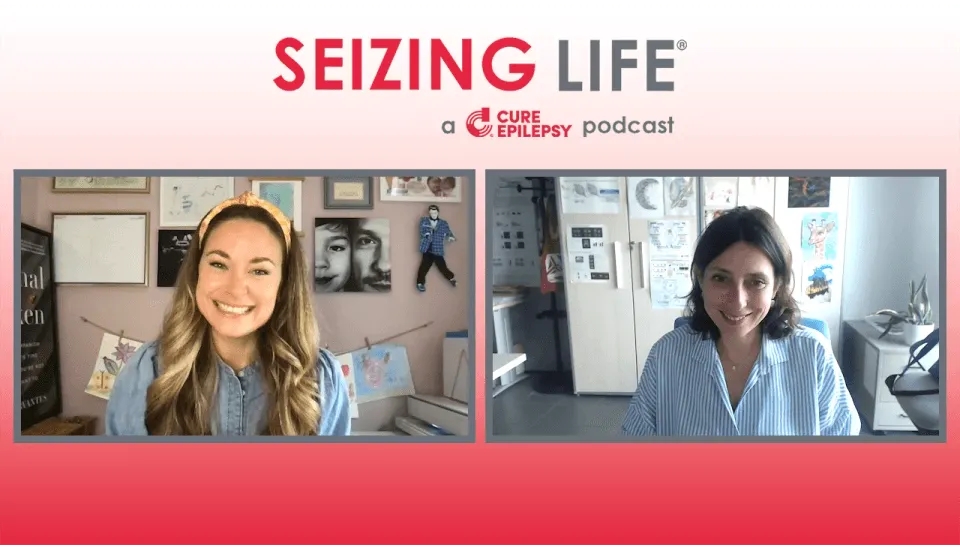
The talk features Dr. Christina Briscoe, a Pediatric Epileptologist at Boston Children’s Hospital and Instructor of Neurology at Harvard Medical School.
Dr. Briscoe is joined by Michele Torres, a Hospital Chaplain and mother to a 18-year-old son who lives with Lennox Gastaut Syndrome and is medically complex. Sharing her personal experiences in accessing and managing medications for her son through the years, Michele presents the “patient perspective” on several topics explored in Dr. Briscoe’s presentation.
SPONSOR
This video was generously supported by SK Life Science and was produced by CURE Epilepsy in an effort to provide epilepsy patients, their caregivers and families a resource for learning to work with providers, pharmacists, and insurance companies to ensure access to the best available epilepsy medications for their specific needs.
CHAPTERS
CHAPTERS 0:00 Introduction
1:33 Case 1: Waiting on insurance approval for a rescue medication?
4:20 What is prior authorization?
6:37 What is an appeal?
6:58 Common reasons why prior authorization is denied.
8:07 The appeal process
12:22 Patient Perspective: introduction of Michele Torres
13:35 Patient Perspective: Prior Authorization
15:51 Case 2: Running out of medication early and pharmacy can’t refill
16:34 Controlled Substances
20:30 Case 3: Medication dose is increased, but pharmacy can’t refill
20:58 Common reasons for refill issues after dose increases
25:09 What you can do to prevent refill issues
26:38 Patient Perspective: Pharmacies and Pharmacists
29:30 Case 4: Insurance has not approved a switch to a generic version of a medication
30:20 Branded versus Generic Medications
34:38 Patient Perspective: Generic Drugs
35:59: Other barriers to care and tips
THANK YOU
Dr. Briscoe would like to thank the following people for their contributions to this presentation. • Katie Joe Andalcio, MPH • Boston Children’s nursing team: Alyssa Wilcox (BSN, RN), Sabrina Merchant (MSN, RN, CSN), Alex Gelaides (BSN, RN), Mary Heins (MSN, RN, CPN) • Boston Children’s social work team: Meghann Kelly (LICSW) and Chris Ryan (LICSW)
TRANSCRIPT
Dr. Christina Briscoe:
Hi, good morning. My name’s Dr. Briscoe. I work for Boston Children’s Hospital where I’m a pediatric epileptologist, and I’m excited to be presenting to you today on how you can work with your doctor on epilepsy medication access for CURE Epilepsy. In terms of conflicts of interest, I don’t have any personal conflicts of interest. It’s important to note that this talk is sponsored by SK Life Science, which is paying for the recording of the talk, although I’m not personally receiving any kind of honorarium. The reason why we’re talking about this today is because getting anti-seizure medications can be a significant burden for families, as many of you likely know. We know that this can be a significant stress both for people with the epilepsy in their families. And based on survey research we know that about half of caregivers whose children who have epilepsy need a prior authorization for one of their medications. And about one-third of them have had delays up to a week long in anti-seizure medications because of these issues.
When kids with epilepsy and adults with epilepsy have delays to their anti-seizure medications, we know that they can have breakthrough seizures, hospitalizations could cause financial strain, and impacts on family’s mental health. So, that’s why the reason we’re talking about this today in terms to help understand what might be going on in different scenarios and help people strategize around how they might face certain barriers. We’re going to do this through a series of cases. These are not real patients, nor real names. But just to make this a little bit more engaging. So, we have Sarah, she’s 16. She has a new diagnosis of epilepsy and was just started on levetiracetam. Her epilepsy doctor gave her a seizure action plan about what to do if she has another long seizure, as well as a nasal risky medication if a seizure goes on for longer than five minutes.
Her family goes with her to pick it up from the pharmacy, but the pharmacist tells them that they can’t give them the medication because they’re waiting on insurance approval. Family goes back after two days, but the medication’s still not ready, and they don’t know what’s going on. So, what might be going on and what can they do about it? Most scripts these days in the United States are sent electronically, so sent through the medical record to the pharmacy. Sometimes when we send the script it will let us know that that medication needs a prior authorization or additional documentation like a medical necessity, clinic notes, et cetera. Sometimes it doesn’t. And so, if we know that it’s going to need a prior authorization, then that triggers a process which is unique to every hospital and doctor’s office of who needs to send in that information to the insurance company, how it gets sent, and fill out the forms that are needed.
Once those forms are filled out and they receive all the information they need, insurance companies review the claims. This is usually done by an administrator, or these days sometimes even artificial intelligence, who looks through the information submitted and says, “Does this meet our requirements for approving this medication?” They then make a decision, and again, this is not a medical person making a decision at this point, to approve or deny the medication based on the information that was provided. If they approve it, then you can go get your medication from the pharmacy. As you can imagine, in this multi-step process there’s lots of places where things can really break down. For example, because prior authorization requirements are constantly changing and shifting even within the same company, so even if someone doesn’t change insurance companies, that company’s policies shift. And so, sometimes we don’t get notified that a prior authorization is even needed.
And so, in some cases the necessary information isn’t sent to the insurance companies, simply because we don’t know that it’s needed. You can also imagine that when the administrator gets the information or artificial intelligence is reviewing it, that there can be errors there, either because things weren’t sent, or because of the person who’s reviewing them doesn’t have the medical knowledge to appropriately review the request. And so, there’s just lots of places at each one of these steps where things can break down. I’ve said the word prior authorization a lot, but it’s not always clear to everyone what this means. You also hear them called PAs. So, what is this? What does it mean when someone says a prior authorization? Prior authorizations are practices of healthcare insurance companies to evaluate whether things that the doctors request are medically necessary, and to ensure that there’s no cheaper options. So, it’s purely based on the insurance company needing to approve what the doctor recommends. These event increasing over time, it’s estimated between 10 and 20% increase in prior authorization requirements per year.
We’ve already talked about the barriers that this can pose to families in delaying medication for patients with epilepsy, but it also has significant costs to the system. About 25% of physicians report that prior authorizations have caused adverse events, meaning hospitalization, seizures, et cetera, for one of their patients. And over 80% of physicians report that it’s delayed care for their patients. The average time in the United States that physicians spend per week dealing with prior authorizations is about 14.4 hours per week. And it’s estimated that it costs physicians and hospitals over $26.7 billion per year. So, it’s a very costly and time-consuming process that can have a lot of negative implications for patients.
I’ll leave the slide with the only good news, which there is a new regulatory changes as medical associations have been pushing back on some of these requirements called CMS Final Rule, and that was passed last year in 2024. And this does require insurance companies to respond to urgent requests within 72 hours. So, if a medication’s marked as urgent, they have to respond within 72 hours, and non-urgent requests within seven days. And they have to include why they’re denying the medication. And in the future they’re also going to have to publicly report the metrics for how many prior authorizations they’re approving and denying. So hopefully, as this rule gets implemented things will start to get a little bit better and less costly.
So, going back to Sarah, our 16-year-old, who has a new diagnosis of epilepsy, and they can’t get her rescue medication from the pharmacy. So, Sarah’s dad calls the doctor’s office to say what’s going on, and the nurse calls back, the family back, and tells them that the prior authorization was needed, and it was denied by the insurance company. The doctor’s office says that they’re working on an appeal.
So, what does that mean? What does it mean that they’re working to appeal, and what can the family do in the meantime? Prior authorizations can be denied by insurance companies for a couple of common reasons. One of the reasons is that medications might simply not be on the list of the ones that the insurer considers approved. This is also called, you’ll hear the word non-formulary, meaning it’s not on their list of things that they cover.
A second reason that it might not be approved is that the insurance policy requires patients to have do it-step therapy or fail other therapies.
And third common reason why PAs can be denied is that the insurer determines that the information that was given by the doctor’s office doesn’t show why the specific drug is required. The term you’ll hear for this is that there’s a lack of documented medical necessity is the jargon that people will use for that.
And then the final but very common reason is just documentation that there’s not the right match between what the insurance company is looking for in the medical notes and what was sent to them. Now, when a prior authorization is denied, what does an appeal look like? What happens? So first, when a denial is issued, the doctor’s office can request what’s called an internal appeal, which can take two forms. First, they can submit additional documentation. So, like you can imagine that if they just need an updated diagnostic code or another piece of paper, that might just be sufficient to get the prior authorization approved. That’s not on all cases though. And so, in some cases the doctor will need to request a peer-to-peer. And so, a peer-to-peer is when the doctor’s office will schedule a call between the insurance company and the treating physician. That’s what a peer-to-peer is called.
It’s a little bit of a misnomer, because not always the person calling from the insurance company is a physician. Sometimes they can be a pharmacist or a nurse, and it’s relatively uncommon that they’re actually a specialist in the disorder of interest. And so, when I’m doing a peer-to-peer I’ve never had a conversation with another pediatric neurologist or an epileptologist. Sometimes they’re professions like pediatricians, general pediatricians, or OB-GYNs or even orthopedists. And so, it’s important to know that that person might not have the specialty knowledge that a peer-to-peer would imply. After this appeal, which can either be from documentation or this peer-to-peer process, the insurance will make another determination if the medication or the therapy is approved or not based on the conversation. This is usually fairly quick after a peer-to-peer, usually within two to three days. This is obviously a lengthy process, because it involves lots of steps, again, of calls getting scheduled, everyone being able to talk together, et cetera, et cetera, additional documentation being sent.
And so, Sarah’s family, this little girl who just was diagnosed with epilepsy, is waiting and they have no rescue medication if she’s going to have a long seizure. This obviously causes a lot of anxiety. What can they do while they’re waiting for this appeal? The first thing that people can do is call their insurance company directly. They can ask for a denial letter, which is required by law, and see the reason why that the medication that’s been recommended by their doctor is being denied. That should be included in the letter, it’s not always still, because the CMS Rule law is relatively new.
If it’s missing, you can request the insurance policy for medication and ask what documentation is missing or required for approval. You can also ask for who your pharmacy benefits manager is to ask if there’s any comparable drugs that are covered and if our prior authorization is needed for those. That’s the insurance company route, directly contacting them, and sometimes pressure from the families can also help to expedite things.
The second thing is talking to your doctor. You can ask them if there are any other rescue medication alternatives that might be equivalent. Are there any other options that might not require a prior authorization or that might be on that pharmacy’s list of approved medications? You can also, when you talk to your doctor, ask them to do a peer-to-peer. This is not an automatic process that’s offered by the insurance companies, and so the doctor’s office usually has to request it. The other thing that you can do when you talk to them is ask them to document the name and credentials of the person as the peer-to-peer is denied in the medical record so that this can be included in written or external appeals.
The last thing that the family can do while they’re waiting is look to see what other options for paying for the medication might be. So these can be things like coupons. One website that I sometimes look at is called GoodRx. I have no affiliation with them, but they sometimes have coupons that really bring down the cost of medication and allow families to reasonably pay for things out of pocket, especially in cases of things like rescue medications that are only needed one time. And then sometimes drug manufacturers have charitable drug programs that will offer free or discounted drugs. So, it’s sometimes worth looking on their website to see if that is an option.
Michele Torres:
I’m Michele Torres, and I am a pediatric chaplain at a major medical center. I’ve been here for 16 years. It’s my dream job. I’m also the parent of an 18-year-old who has Lennox-Gastaut syndrome and who was diagnosed with infantile spasms at five months old, and he’s also medically complex. I have two boys. My older son, Mateo, is 18 years old, and we noticed at three months he started losing milestones, and he was eventually referred to a neurologist. And as soon as the neurologist saw him in the waiting room, recognized that he had infantile spasms, and then the EEG confirmed that he had the hypsarrhythmia pattern, which is a diagnostic criteria. We received a few months later that he was legally blind and had cortical visual impairment.
We also learned he was aspirating and needed to get a G-tube. And that began a long future ahead of needing multiple therapies. We deal a lot with prior authorizations. For example, he’s on a medication for restrictive lung disease where he’s on an offline medication that’s typically used for kids with cystic fibrosis. And so, the pulmonologist has had to do not only a PA, so they approve it, and this drug literally keeps him out of the hospital. And I think this is also a kind of a common scenario for kids with encephalopathic epilepsies is that there’s a lot of respiratory side effects from the medications. And if there’s low tone, which often come with encephalopathic epilepsy, that impacts your breathing. And so Mateo was having admissions for aspiration pneumonia almost every month. But then when we started a particular antibiotic neb that was used for kids with cystic fibrosis, this was a game changer and we alternate with another antibiotic med every 28 days, and it kept him out of the hospital.
So, the insurance would approve him, and then with no warning they would say it’s no … Basically, the PA expired, but now the doctor had to do a physician-to-a-physician appeal and more than once it was denied again. And it was so crazy, because it’s like, “You’d rather pay for an ICU admission?” So, what we would do was, of course, reach out to the doctor and generally that there was a … In this case there was a pulmonary nursing DL, distribution list. So, I would email them, I would call. Now we have … I think most hospitals have the patient portals. And I mean, for me, I found that to be a very positive experience. So yeah, basically contacting the doctor, contacting the nursing team, and generally it’s the doctor having to do another appeal where thankfully he’s eventually succeeded.
Dr. Christina Briscoe:
Our next case, David, he’s 10. He has Lennox-Gastaut syndrome, which is also called LGS, and he’s been on liquid clobazam for a number of years. David, unfortunately, has been having a lot of issues with vomiting and regurgitation lately. Not entirely clear why. And because of this the family’s had to give him several extra doses of medication when he vomits them up. Because of this vomiting he’s run out of medications five days early, and the family only has enough medication to give him until tomorrow. And the pharmacy, when the family calls them, says that they can’t refill until the date that it is due. So, what might be going on, and what can the family do about it? Clobazam is an example of a controlled substance, which is often a type of medication that we have more challenges than getting refills on. Controlled substances are medications that have special government regulations. Because they’re thought that it’s possible that they could cause dependence, misuse or addiction.
They’re labeled as Schedule one through five is something that you will see, and all controlled substances limit the number of refills allowed. It’s very common for seizure medications to be controlled substances. Because anything that works in the brain requires a lot of additional work for companies to prove to the FDA and DAA that it does not have abuse potential. Controlled substances I mentioned earlier can often be a problem with refills, because state and federal laws that are meant to reduce misuse. So things like if you guys have heard about the opioid crisis, for example, we don’t want people filling opioids early, because that could cause abuse and overdoses and those sorts of things. When medications are controlled, they don’t allow for early refills, which are often needed like in the case of our patient, David. So obviously this is distressing to the family that they can’t get his seizure medication.
What can they do about it? The first thing that they can do when they talk to the pharmacist is they can ask them for an insurance emergency override for spillage. This is where the pharmacy calls the insurance company and requests an emergency override and explains why it’s needed. The second thing the family can do is call their doctor’s office and let them know. Sometimes the physician’s office is going to need to give approval for emergency overrides. Pharmacies will sometimes call the hospital main number and not be able to get through to the individual physician, and then the approval needed just is not granted because of logistical barriers. So it’s important to let the physician know that they need to call the pharmacy. Sometimes when it’s not possible to get an emergency override for situations like weekends and nights, the physician can recommend an emergency bridge with other medications, which are like clonazepam that can be given while the patient is out of medications.
As prevention in the future, you can also ask your doctor’s office to write when patients have compromised, for example, vomiting, the doctor’s office can also write for something as needed, which is called PRN, and that can be included on the script for doses for vomiting so that additional volume can be given to try to prevent these issues in the future. The third thing the family can do is similar to our other case, look online for coupons like through GoodRx and assess is it possible to pay out of pocket for a five-day supply, for example. And one tip for this is sometimes liquid medications are expensive, because the bottles cannot be broken. And so sometimes if the liquid are too expensive with the coupons, you can also look if there’s a similar dose for pills. This is where your doctor’s office is also going to be helpful to seeing if converting to pills is going to be an option.
The last thing is there are definitely patients when they run out of medication and I have no options of getting the medication or an appropriate bridge, or I tell them to go to the emergency room if they’re running out of medications. This is usually for patients who have a history of withdrawal that has provoked long seizures or severe seizures. Or if I don’t anticipate the patient will be able to get the medication the next day. There’s a lot of clinics and hospitals that have on call numbers that if you’re not sure about what to do, even after hours, that people can contact for assistance. And sometimes even some hospitals will have programs where they are able to give emergency supplies to keep people from needing to go to the ER. It’s very hospital dependent though.
Our next case is case three. This is Miguel. He’s 12. He has drug resistant epilepsy from a perinatal brain injury. He’s on a medication called rufinamide, and it was recently increased in terms of doses because he was having a lot of seizures. The family goes to the pharmacy and needs a refill and he has no more medication as of tomorrow. And the pharmacy says they can’t give it to him for another five days. So there’s a couple of common reasons for refill issues after dose increases. One of them is just logistical. Sometimes the pharmacies are automatically refilling the old prescription, and so the system might be confused and they might not be seeing the new prescription that has the updated dose on it. So, usually the first step will be talking to the pharmacy and making sure they’re filling the script, the new script with the correct dose.
A second common issue is that the pharmacy just doesn’t have the medication in stock. Sometimes in these cases the pharmacy can fill just what they have. So, if they have 10 pills, at least that gets the family to when the pharmacy will have the rest of the medication. Pharmacists are not physicians, and so they might not know the implications of being off medications, seizure medications for five days. The other thing that can happen if they’re having stock issues is they can send medications to another local pharmacy that might have enough. They should help you to identify which pharmacy has enough because they should be able to see in their computer who has what in terms of local pharmacies. Otherwise, most families would start calling many, many pharmacies and no one has it, and it can be very frustrating.
Controlled substances are going to need the doctor’s office to send a new script to the other pharmacy because they can’t be transferred between pharmacies, but it’s important to tell the doctor’s office which pharmacy to send it to. So, that’s the first step is identifying which pharmacy does have enough sufficient stock.
The third thing that might be going on is that the prescriber might not have sent a new script when they increase the dose or the pharmacy might not have received it. So if the pharmacy can’t see in the new script, you’ll need to call the doctor’s office to make sure that it was sent to the correct pharmacy or resend it.
The fourth thing that can happen is there can be an insurance system mismatch where the insurance is showing that the day supply hasn’t run out yet. In this case the pharmacy needs to contact the insurance company with a dosage increased date, so what date the medication dose was increased on. And they might need to call the doctor’s office to verify this.
The last thing that might be going on is that some insurance companies, when they approve a prior authorization for a medication, limit the number of pills that can be distributed per month. So, it’s possible that the rufinamide for our patient is not able to be given, even if they have it in stock, because they need a new prior authorization for the higher dose. The insurance company needs to say that they approve 120 pills, instead of 80 pills. This will need to go through all of the same processes as the other cases. And so you can imagine that an emergency plan would be needed in these situations that would be similar to the other cases where people have run out of medications in our other prior two cases. So lots of things that might be going on. And really gets to that the first step when there’s medication issues is making sure that the pharmacist can tell you exactly what the issue is.
So, let’s say for Miguel, it’s 6:00 p.m., the insurance company is closed, and the medication needs a new prior authorization. What can the family do? If the insurance company was open they could ask the pharmacist for an emergency override, just like they had for the other cases, so that sometimes can get you through to when the PA will be approved.
The second thing similar to the other cases is calling the doctor’s office to let them know, again, because sometimes approval is needed for emergency overrides, or the provider can give you an emergency bridge with medications like lorazepam or clonazepam that can help avoid dangerous seizures during the time that he’s out of the rufinamide.
Third thing you’ll see, which is similar, is checking for coupons, assessing ability to pay for out of-pocket, looking at pills if liquid is too expensive.
And then the fourth thing, similar to our last case, when all else fails, all patients are still protected from coming to the emergency room if you’re worried about a severe neurologic complication like status epilepticus, or severe withdrawal seizures from medication if there’s no other options.
So, what can family do to potentially prevent this from happening again? The first thing we always tell all of our patients to do is that all refills should be requested five days before running out. Why five? Why not seven, or 10, or 14? For controlled substances, which many anti-seizure medications are controlled. If you request the refill more than five days before, it will generate an automatic denial from the insurance company because of those problems with controlled substances that we talked about before. Five days does give enough time for the prescriber’s office to approve it and the pharmacy to fill it if there are issues like a new prior authorization being required. And it’s especially important to try to be at that five-day mark after a dosage change, weekends, holidays, that sort of thing where there might be more issues. It’s important not to rely on what the application or website says in terms of when you’ll be able to refill, because these might not be accurate, especially for critical medications like anti-seizure medications it’s important to call or go in-person to the pharmacy to request these.
The last thing, which is a little bit easier than calling five days before every time that you run out of medication, is a lot of pharmacies have automatic refill options that can help to decrease this burden. These might not work though if there’s been dose increases or that sort of thing. So, it’s a good option to help prevent the day-to-day, but might not work in all situations.
Michele Torres:
We have trained many pharmacists over the years. They’re such an important member of the team. I like to say the pharmacy is one of our second homes where we’re there, it feels like at least three times a week. And then there’s also a compounding pharmacy and then there’s the 24-hour pharmacy that we use when you need to get a medication the same day that might be new, or if it’s a crisis and you’ve had a recent increase and you need to call them that day. So, we had a day in September where Mateo started clustering, and clusters can lead to status. And so, we were nearby, so I just took him to the epilepsy department and asked to speak with a nurse practitioner who works with his epileptologist. His epileptologist was out of town. We consulted with the covering epileptologist who wanted to increase his clobazam doses.
And so, he was currently getting a dose once a day and he wanted to add a second dose. The pharmacist that we worked with regularly has very limited hours, and it was 5:00 p.m., and I knew there was no way the prescription was going to arrive in a timely fashion where we could pick it up. So, I was aware that there’s a 24-hour pharmacy that’s close by, and I asked the doctor to call it in there. When I filled the medication then the same day, they informed me that, “You now have to refill this medication here, unless the doctor calls in a separate script into the original pharmacy.”
So, that was in September. And then this weekend there was a lot going on and we suddenly realized we’re low on the clobazam. When I woke up this morning, I remembered it’s at the 24-hour pharmacy. I called early and with all the automation you have to leave a voicemail. Eventually the pharmacist calls you back. She said the primary insurance had approved it, but MassHealth had denied it, but she would call me back. I waited an hour, no call back. So, then sometimes you just have to go in-person, it will simplify and expedite things. I get to the pharmacy and she was kind of flustered and I said, “Why don’t we call MassHealth?” She called MassHealth, because she was able to get it approved. And so, it is helpful to kind of, if you have a pharmacy with limited hours, to also know is there a 24-hour pharmacy, because that does come up.
Dr. Christina Briscoe:
Our last case, Francesco, he’s nine months old. He has infantile spasms and is on a medication called Vigabatrin. There’s a national back order of the branded medication, we’ll call it X. And the pharmacy has informed the family that their shipment’s going to be up to a week late of the Vigabatrin. He’s going to run out of medication in this time. The family calls their neurologist per the prior slide’s advice, and the neurologist prescribes a generic version of this medication. But when the family calls the pharmacy to help arrange the generic version of Vigabatrin for delivery, the pharmacy tells them that he’s not approved for the medication. They ask about options for paying out of pocket, and just a seven-day supply of this medication is $1,000, so that’s not going to be an option for them. So, what might be going on and what can the family do about it?
So, what are branded versus generic medications? These terms get thrown around a lot. What do they mean? Brand is a drug that’s under patent protection. This is when a manufacturer or drug company makes a drug, they get a patent for a X number of years, up to 20. It gives them the exclusive rights to manufacture and produce under the brand name. A generic medication is a medication that’s marketed after the brand’s patent has expired. Not all branded medications have generic. Somebody has to be interested in making a generic version of the brand medication, so there are branded medications, like ACTH, that don’t have a generic alternative. And so, the only person that’s producing them is that manufacturer.
The third category, which is even more confusing, is there’s something called a branded generic, which is essentially a generic drug where a manufacturer wants to put their label on it. So, it’s a brand name, but it is a generic medication. What’s the difference between a brand and a generic and what does this all mean for the patient? A generic drug has the same active ingredient, same dosing, same safety strength, same quality, same way it works, the way same way it should be taken, same way it should be used. So, there’s no differences in terms of branded or generic in terms of all of that active ingredient or dosing. Generic medications are FDA approved, so have to go through that whole rigorous process. And they’re usually cheaper than the branded medications in most cases, although they can be still quite expensive.
They can differ though in non-active ingredients. So, those are like fillers, what else is in them to make up the rest of the pill? It’s usually not a problem for most patients, but there have been some patients that are very sensitive to certain fillers, or may need a branded medication because they don’t react well to the generics, or vice versa.
So, going back to Francesco, what might be going on with him? Even though the brand generic Vigabatrin have the same active ingredient, for the insurance company they don’t automatically treat them as being the same, which is confusing, they have the same thing in them. And so, it may be an insurance issue, which is what the pharmacist alluded to.
So, possibilities for this. Vigabatrin, it has a special patient protection program called REMS. And sometimes the pharmacist can get an error if the REMS form hasn’t been transferred from brand X to generic Y. Sometimes it’s just a matter of the pharmacist or the physician you need to transfer a form.
The second thing that might be going on is that the incurrent insurance coverage, the prior authorization that was provided is brand specific. So, they approved brand X, but they haven’t approved the generic. The third thing that might be going on is the pharmacy might not have the generic medications that needs to be sent to a different pharmacy. So, what can the family do about it? They can ask the pharmacist what the issue is to clarify. Does it need a REMS? Does it need a prior authorization? Do they not have the medication similar to our other scenarios where it’s important to clarify exactly what’s going on?
The second thing they can do is ask the pharmacist to make sure that they’ve called the pharmacy benefits manager to request an emergency supply override. This is similar to our spillage scenario where the pharmacist can contact the insurance company due to manufacturer shortage to say that they need to dispense the generic. Suppressive should be automatic, but isn’t always. They can also alert their doctor’s office if they need to send the medication to a different pharmacy. And sometimes the pharmacist can do a temporary override once the prescriber documents the shortage. Sometimes they might need that documentation before they can process the override.
The third thing they can do is call their insurance member services line and request the temporary override themselves for emergency due to manufacturer shortage directly.
And then the fourth thing is that they can see if there’s any compassionate use programs through branded medications, or if the hospital might have an emergency supply that they can help them with. So, you’re seeing a lot of themes across these scenarios I’m hoping, about different issues that have similar strategies to help resolve them.
Michele Torres:
We have had certain seizure meds where the epileptologist has said, “You need to have the name brand.” And we have had generics where, and I’m trying to remember which seizure med it was, but at the time there were five different generics of this particular medication. And so, there was one particular generic that the continuity was important in terms of the effectiveness. And so, if the pharmacist left and a new pharmacist came on, or somebody was covering, but also just the industry, it seemed like suddenly there’s a new generic, or the store decides they prefer one generic over another for whatever reason, and then you get home, you have to check. And then it’s like, “Oh, this is different.” So, then it’s calling the pharmacy, and do they have to get the one that he’s been on from another store? Most of the time it was possible to get the one he had been on. Occasionally we would have to call the doctor’s office and say, “What do we do?”
Dr. Christina Briscoe:
We’re through our cases. I had a couple of things that people wanted me to quickly mention. So, you’ll see the definitions here. I’m not going to read them out to you. There can be other barriers to care that we’re not going to go through in detail, but just to mention them. One is when people have self-funded insurance plans where the medical claims are paid for by their employer. These may be more restrictive and they have a lot more leverage to not follow state and federal regulations in terms of what they cover and don’t. So when people have self-funded insurance plans they have little recourse for appeals. This is where secondary insurance might be helpful for those patients. There’s something called carve-outs where these employer-sponsored plans may also carve out prescription drug benefits and they’re outsourced. So this can affect a lot of how much people are paying out-of-pocket copay access to medication and can sometimes be a barrier as well when there’s just more intermediaries.
High copays, sometimes a pharmacy benefits plan will technically cover a medication, but the copays can be hundreds or thousands of dollars out of pocket, and so just aren’t accessible to their families, even once they’re “approved.”
And the last thing I’ll mention on this barrier slide is that depending on the state people live in, there’s barriers to access to Medicaid based on documentation status, based on income level, et cetera. And this is highly variable depending on what state people are living on. So, just crossing a state border might dramatically change the benefits that somebody is eligible for. So, we certainly have patients who move different states so that their child can get access to therapies, which is obviously a very high bar and high challenge for families.
I’m going to end with something a little bit less depressing, which are tips and tricks that we haven’t talked about. And so, social workers and community health workers, patient navigators, a lot of different epilepsy offices will have these personnel, and they’re super helpful for families to try to minimize or defray the costs of obtaining medication. They can help people identify what programs they might qualify for, help them get secondary insurance, strategies around barriers. So, it’s always helpful to ask your office if they have a social worker.
Second tip, with any new script that you have on any medication, you can call your insurance company and ask for an approval of a 60 to 90-day supply by mail. And so, obviously if something is arriving to you through your door and it’s automatically being refilled, that can be a lot easier and help prevent issues.
And the last tip is that prior authorizations are usually approved for a year. Most kids with epilepsy are on their medications for longer than one year. And so, we tell people to mark their calendars at 11 months after approval is granted, and that’s when you should let your doctor’s office know that you’re going to need a new prior authorization to say that you’re on that medication.
I want to acknowledge that navigating the system is its own job, particularly for people who have drug-resistant epilepsy and complex medical needs. And I wish we had a system that was more efficient and didn’t require that. But hopefully this can help to think through some ish common issues. Thank you so much for your attention, and please reach out if you have any concerns or questions.