
Frequent Cannabis Use and the Association with Seizure Burden in Drug-Resistant Epilepsy
Originally published in Epilepsia
Cannabis use has become increasingly common, and today’s cannabis products often contain much higher levels of THC (tetrahydrocannabinol), the main chemical responsible for the drug’s mind-altering effects. Although some cannabis-based products may help treat certain types of epilepsy, particularly those containing purified CBD (cannabidiol), much less is known about how frequent use of THC-containing cannabis affects people who already have epilepsy.
A recent study examined whether frequent cannabis use is associated with more severe epilepsy, differences in seizure types, and changes in brain structure among adults with difficult-to-control seizures. The researchers reviewed the medical records of 64 adults with drug-resistant epilepsy who were admitted to a specialized epilepsy monitoring unit (EMU) at an academic medical center between 2019 and 2024. Drug-resistant epilepsy refers to seizures that continue despite trying at least two appropriate anti-seizure medications.
Participants were divided into two groups: frequent cannabis users and nonusers. The researchers compared several measures of epilepsy severity, including: the number of years between epilepsy onset and admission to the EMU, whether patients experienced focal-to-bilateral tonic-clonic seizures (seizures that begin in one part of the brain and spread to both sides, often causing loss of consciousness and full-body convulsions), and how frequently these seizures occurred.
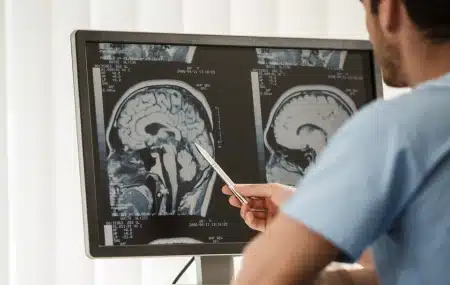
They also examined the number of anti-seizure medications patients required at discharge, as well as brain MRI scans to look for differences in the size of structures involved in epilepsy, particularly the hippocampus and amygdala, which are important parts of the temporal lobe.
The study identified several important differences between frequent cannabis users and nonusers. Frequent cannabis users experienced more severe seizures. Additionally, a much higher percentage of frequent cannabis users experienced focal-to-bilateral tonic-clonic seizures compared with nonusers. Frequent cannabis users also experienced these seizures more often. At discharge from the EMU, frequent cannabis users were taking an average of approximately three anti-seizure medications, compared with approximately two medications among nonusers. Interestingly, the groups were taking similar numbers of medications when they were admitted.
The difference emerged because medication treatment was increased more often among frequent cannabis users during their hospital stay. This may indicate that their seizures were more difficult to manage. The researchers discussed several possible explanations for the relationship between frequent cannabis use and more severe epilepsy including changes in brain signaling, effects on temporal lobe networks, interactions with anti-seizure medications, and changes in memory and attention that could potentially interfere with consistently taking prescribed medications.
Importantly, the researchers also found that cannabis use began before seizure onset in the 15 frequent users for whom this information was available. However, this observation does not establish that cannabis contributed to the development of epilepsy. The researchers emphasize the need for larger, prospective studies that follow people with epilepsy over time.
This study found that frequent cannabis use was associated with several indicators of more severe epilepsy in adults with drug-resistant seizures. These included more frequent convulsive seizures, a greater need for anti-seizure medications, and a shorter interval between epilepsy onset and specialized epilepsy evaluation.
The findings are particularly interesting because frequent cannabis users in this study all had temporal lobe epilepsy, a form of epilepsy involving brain regions rich in cannabinoid receptors. However, the study does not prove that frequent cannabis use causes epilepsy to worsen. It also does not establish that all cannabis products have harmful effects on seizures. The effects may depend on the specific compounds in the product, particularly THC and CBD. The findings highlight the importance of discussing cannabis use openly with healthcare providers and the need for more research to understand how frequent exposure to modern cannabis products affects people living with epilepsy.
Related Research News