

Study Links Brain Network Interactions to Depression Risk in Pediatric Epilepsy
Source: Children’s National
A team of researchers have identified a potential neurobiological marker for depression risk in children with epilepsy by studying how brain lesions interact with functional brain networks. The study focused on focal cortical dysplasia (FCD), the most common cause of surgically treatable, drug-resistant epilepsy in children.
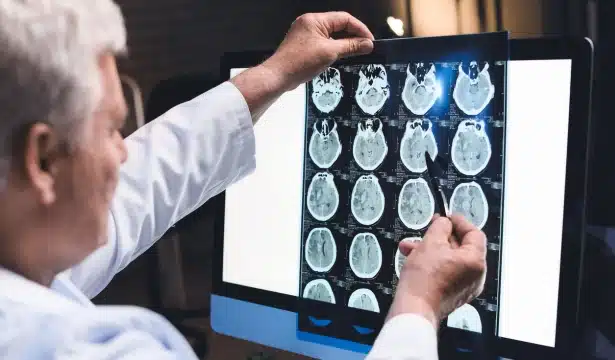
In this study, researchers analyzed children with FCD-related epilepsy who completed the Child Behavior Checklist, linking parent-reported psychiatric symptoms with advanced imaging. They mapped FCD lesions from MRI and measured how those lesions overlapped with major functional brain networks, then used statistical models accounting for age and gender to examine how network-level brain organization related to real-world psychiatric symptoms.
The results showed that greater overlap between FCD lesions and a network known as the default mode network (DMN) was associated with higher depressive symptom scores. The DMN is crucial for processes like self-reflection, emotional processing, social interaction, and mental and becomes active when the brain is at rest. These associations were stronger in adolescents, suggesting that network maturation amplifies risk during this developmental stage.
“By anchoring depression risk to a specific brain network, we’re starting to connect the biology of epilepsy with the lived experience of patients in a much more direct way,” a study author said. “This kind of approach helps move the field toward identifying measurable markers that could eventually guide more personalized care.”
More Epilepsy Research News