



MR Fingerprinting Shows Potential to Reshape FCD Detection and Epileptogenicity Mapping
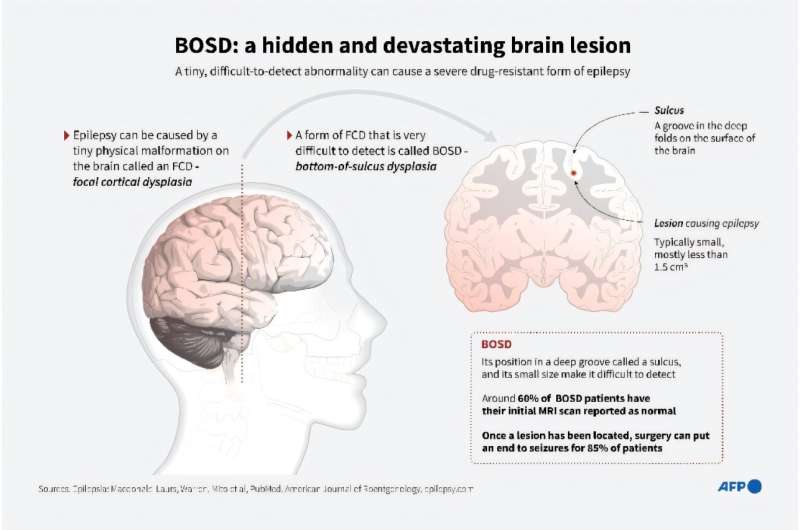
Two recent studies demonstrate that magnetic resonance fingerprinting (MRF) — a rapid, quantitative imaging technique — can significantly improve the ability to detect the elusive lesions of subtle focal cortical dysplasia (FCD) and determine which ones are actively driving a patient’s seizures. For clinicians managing medically refractory focal epilepsy, a leading challenge frequently lies in what have been termed “nonlesional” brain MRI scans. Subtle FCD often eludes visual assessment on standard MRI, resulting in forgone or deferred epilepsy surgeries or unsuccessful surgical outcomes.
The first study focused on developing a robust framework for whole-brain FCD detection by combining MRF with machine learning and surface-based morphometry, a widely adopted MRI postprocessing technique. Researchers analyzed 44 patients with confirmed FCD who underwent an MRF scan. They also recruited 70 age- and gender-matched healthy individuals to undergo MRF scanning to serve as a control group.
The second study focused on patients with multiple cortical malformations to determine where seizures originate. Determining which lesion(s) to target often requires invasive stereoelectroencephalography (SEEG). The study investigated whether MRF could noninvasively indicate the active seizure onset zone.
Researchers analyzed 69 individuals who underwent a whole-brain MRF scan, which included 21 patients with refractory focal epilepsy and 48 healthy controls. Of the patients with epilepsy, four had complex cortical malformations for which they underwent SEEG and/or surgery. In one of the complex cases, conventional MRI identified a lesion that was ultimately proven non–epileptogenic.
Conversely, MRF detected elevated gray matter in a different, MRI-negative region that was later confirmed by SEEG as the true seizure onset zone.
According to researchers, these two studies collectively offer several insights for the management of intractable epilepsy. “MRF shows promise as a noninvasive imaging approach for epileptogenicity,” says the study’s senior author, Irene Wang, PhD. “What we need to understand more is which quantitative metrics consistently and strongly correlate with epileptogenic tissue. If our initial findings are confirmed in larger studies, MRF will have a role in guiding SEEG implantation and surgical planning in complex cases, including those with multiple cortical malformations.”
Latest from the Community