





Understanding Epilepsy Main Menu
Table of Contents:
- What is a Seizure Action Plan?
- How to Develop a Seizure Action Plan
- Implementing your Seizure Action Plan
- Seizure Emergency Plans
- Seizure Action Plan Coalition
- When should rescue medications be part of a plan?
Seizure action plans are critical tools for people with epilepsy who are not always able to control their seizures. Epilepsy is unpredictable and seizures are a medical emergency and can happen at any time and in any place. Being prepared for an emergency ahead of time can increase seizure safety and minimize the risk of injury.
Educational Resources on Seizure Action Plans
What is a Seizure Action Plan?
All seizures are an emergency, and some may even be life-threatening. In emergency situations, preparation is the key to success. While caregivers, parents, and romantic partners may be well-versed in seizure safety, others may not know what to do – or what not to do – when a seizure happens.
A seizure action plan (SAP) is just that – a plan for when a seizure happens. It contains essential information about an individual’s medical history, epilepsy syndrome, and seizure type, as well as any other important details needed to keep that individual safe during a seizure. According to the Seizure Action Plan Coalition, creating an SAP may reduce the time to action during a seizure, which can decrease the risk of prolonged seizures, mortality, or the need for rescue medications.
How to Develop a Seizure Action Plan
While there is a lot of critical information to include in this document, remember that your SAP might be used by someone who does not know you, or during a high-stress situation. Moreover, you will likely be unable to communicate your needs during a seizure. For these reasons, your SAP should be clear, concise, and easy to understand.
Click here to view examples of seizure action plans »
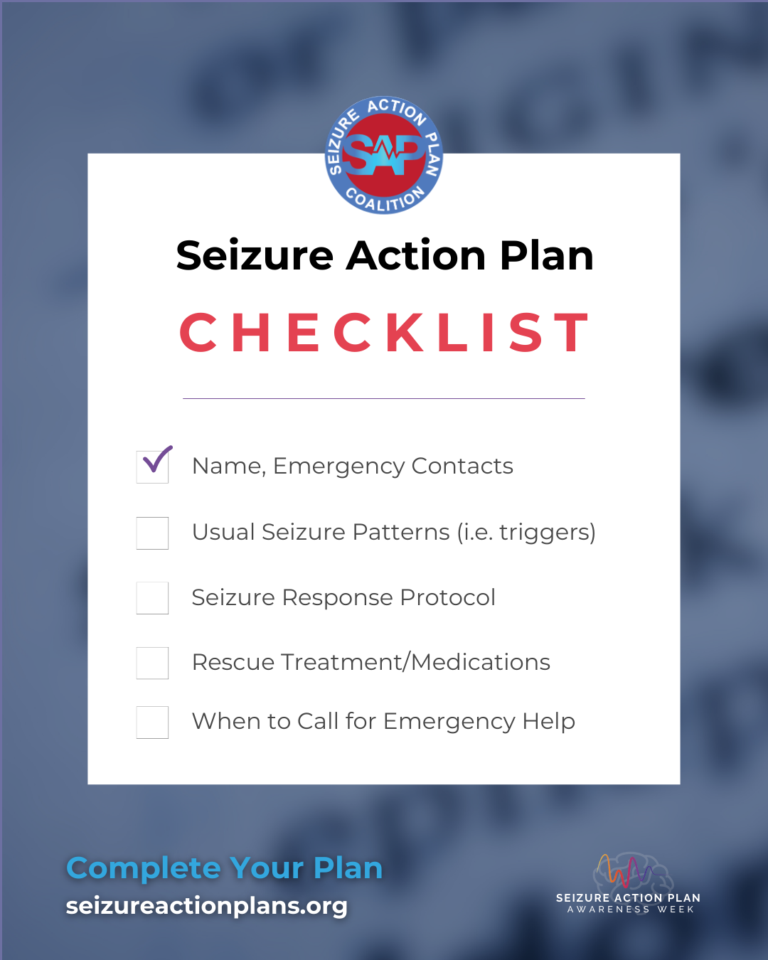
People with epilepsy and/or their caregivers should work with their neurologist to create a personalized plan. To help you get started, the Seizure Action Plan Coalition has created a list of information that would be useful to have in an SAP:
- Patient name, date of birth, height/weight, and diagnosis
- Emergency contact information
- Neurologist contact information
- List of daily medications and doses
- List of drug allergies
- Short statement of current seizure pattern
- List of seizure triggers
- Summary of the physical appearance of the seizure
- How to help the patient during the seizure
- Examples of when your seizures require additional help or assistance
- Other emergency care or situations that are specific to the patient
- Rescue medications with dosage and administration timing
- Can a second or third dose be given?
- Note possible adverse side effects of rescue medications
- How to record the patient’s seizures
List source: https://seizureactionplans.org/for-families/
Be sure to review your SAP annually, or if your medical history changes (such as starting a new medication), whichever comes first. Regular updates will ensure that both caregivers and medical professionals have your current medical history during an emergency.
Implementing your Seizure Action Plan
Your epilepsy diagnosis is personal information, and you are not required to tell anyone about your condition if you do not want to. However, if you or your loved one are often in public settings, such as school or at work, it may be a good idea to tell people you trust about your plan. This can include colleagues, teachers, school nurses, coaches, or even friends and family members.
Once you have determined who should know about an SAP, give them both paper and digital copies of the plan. Walk them through the plan and give them time to ask questions. In some cases, it may be useful to rehearse your plan so that they feel more comfortable with the steps and are better prepared to act during an emergency.
Keep a paper copy of your SAP on you while you’re in public.
Seizure Emergency Plans
For people with drug-resistant epilepsy, it may be necessary to develop a seizure emergency plan in addition to a seizure action plan. SEPs are especially important for people who experience prolonged seizures (status epilepticus) and/or seizure clusters, which may need to be stopped through emergency rescue medication at a hospital.
According to the Seizure Action Plan Coalition, people with drug-resistant epilepsy should include their emergency plan on the first page of their SAP. If you have an SEP, follow the same steps for developing, updating, and sharing your SAP.
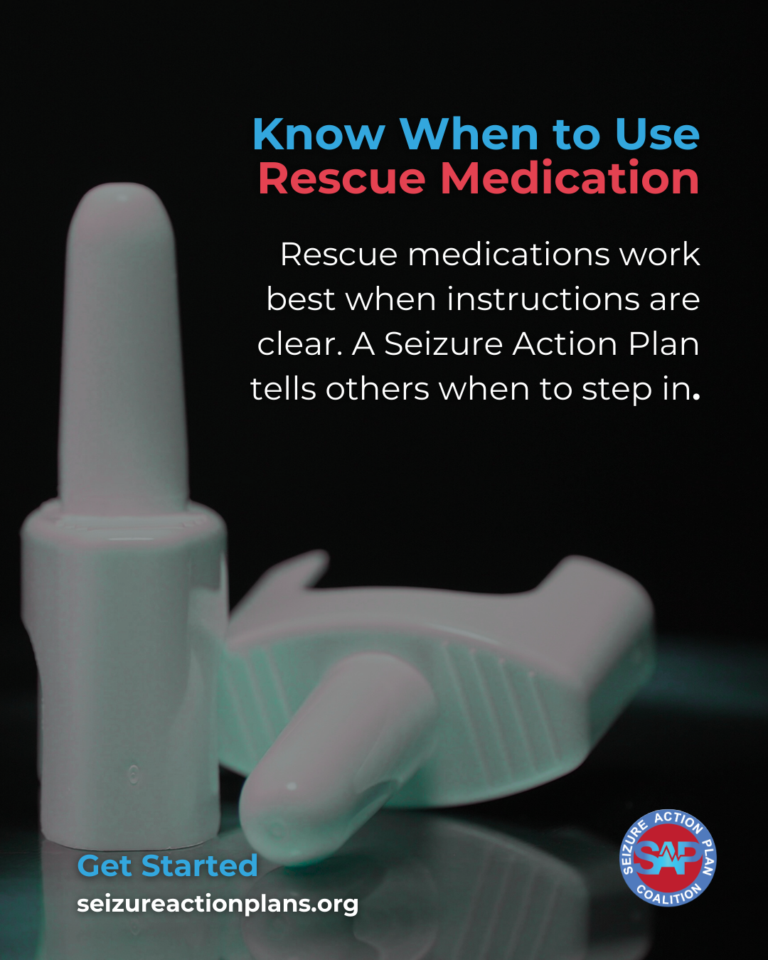
When should rescue medications be part of a plan?
For some people with epilepsy, one seizure triggers subsequent seizures. This is called a seizure cluster, flurry, or group. Because a person’s first seizure increases their risk for additional seizures, a rescue medication can be very helpful addition to a seizure action plan. While these medications can’t prevent that first seizure, they can help decrease the risk of additional seizures on that day.
Seizure Action Plan Coalition
The Seizure Action Plan Coalition has compiled a list of tools, learning resources, and important information to help people with epilepsy develop a seizure action plan. Click here to visit their website for more.

Educational Resources
Find out more about Seizure Action Plans.




 Spread the Word
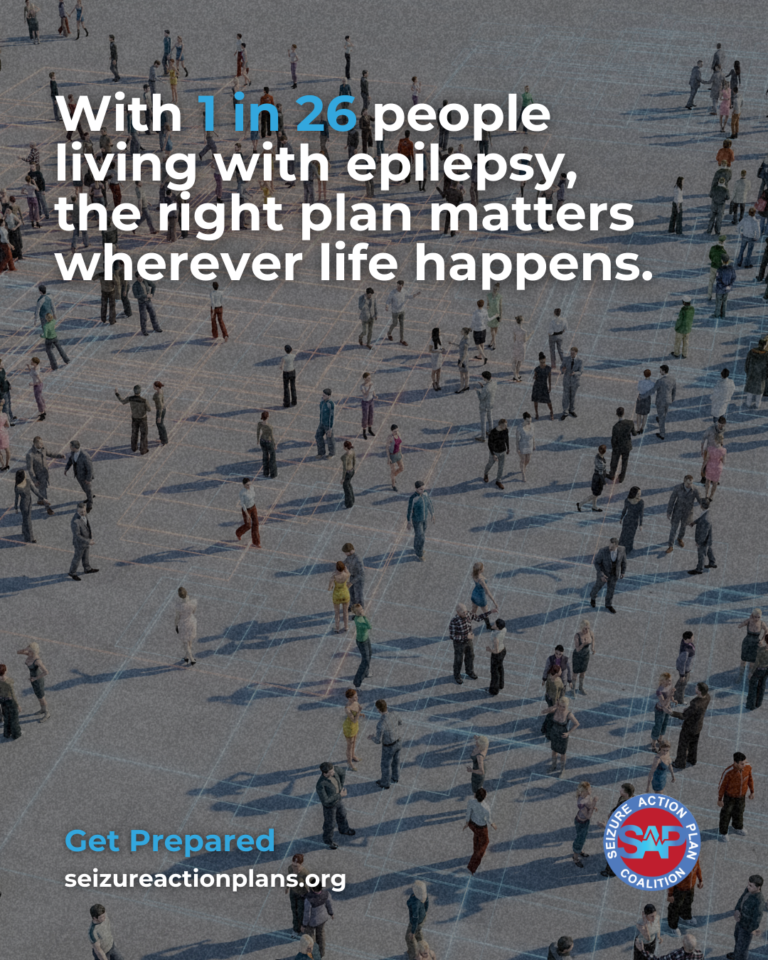
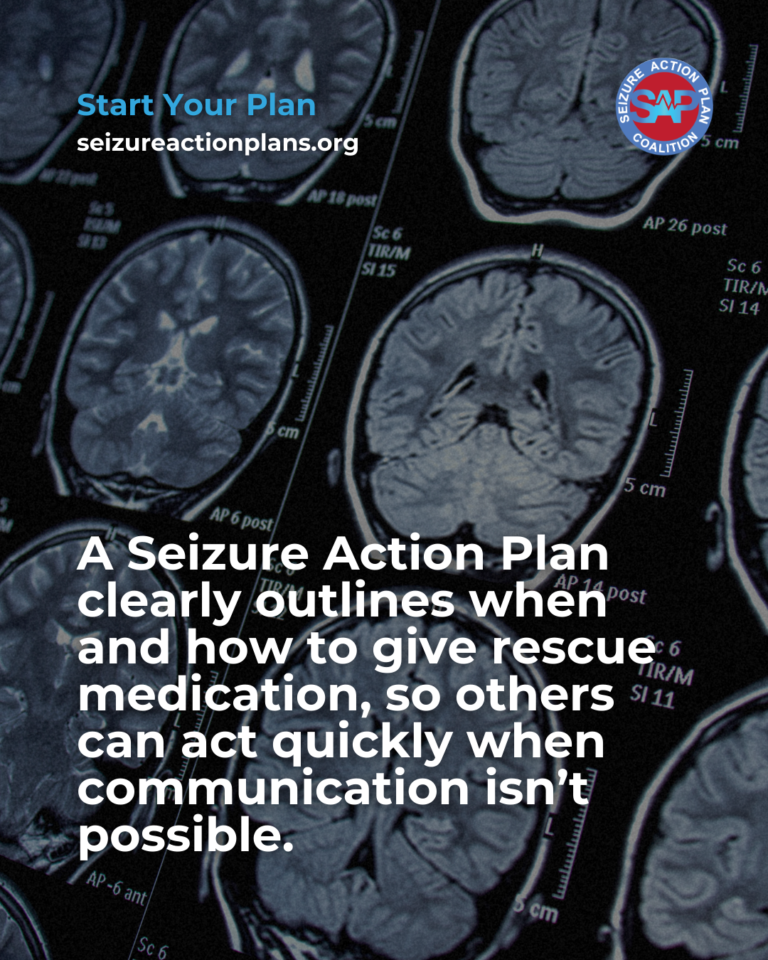
Share these social media graphics from SeizureActionPlans.org

Stay in touch
Sign up for our email list and get the latest epilepsy news right to your inbox.