
Late Onset Epilepsy Explained: Identifying and Treating Seizures in Older Adults
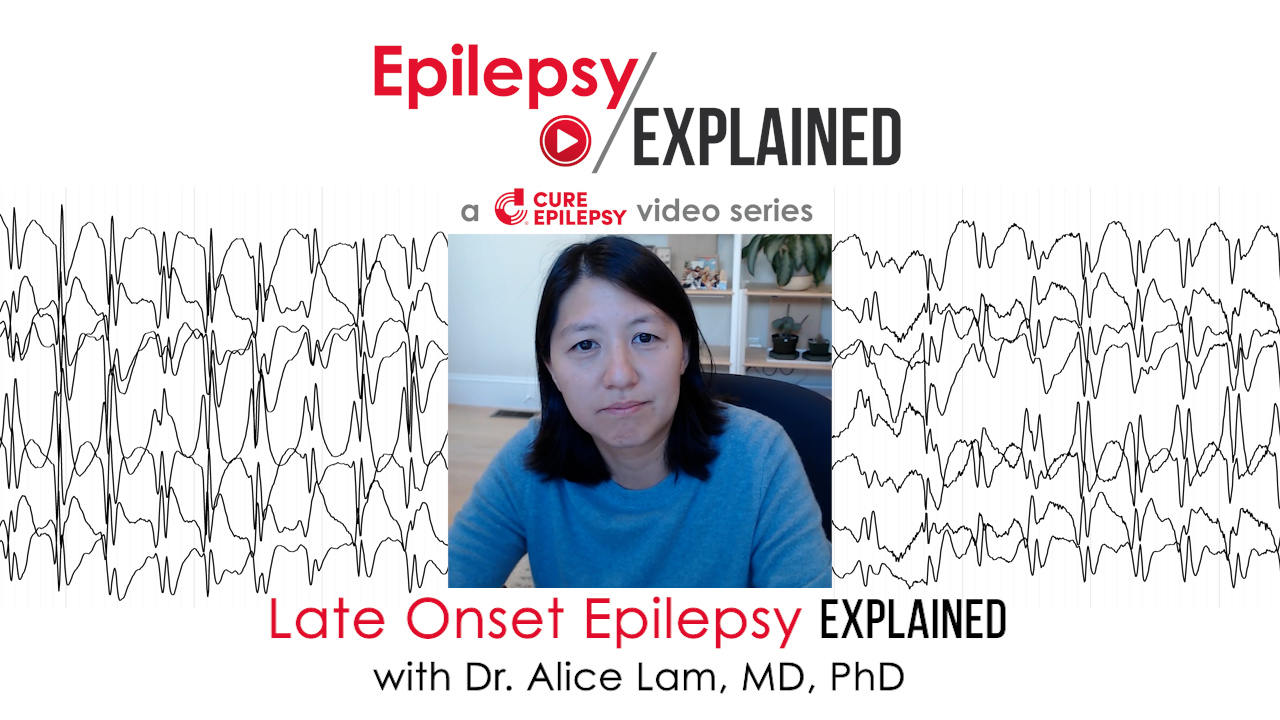
In this episode of Epilepsy Explained, Dr. Alice Lam, MD/PhD, answers your questions about late onset epilepsy – seizures that begin later in life, generally after the age of 55 years old. Dr. Lam is a Neurologist and Associate Professor of Neurology at Mass General Brigham Neuroscience Institute in Boston, Massachusetts. In Late Onset Epilepsy Explained, Dr. Lam answers the following questions.
0:00 Intro
0:15 What is late onset epilepsy and how prevalent is it?
1:32 What causes late onset epilepsy?
2:21 What are the symptoms of late onset epilepsy and how can they be distinguished from other aging health concerns?
4:55 What should I do if a loved one seems to be displaying symptoms of late-onset epilepsy?
6:12 How is late onset epilepsy diagnosed?
7:53 What are the treatments for late onset epilepsy and how effective are they?
9:03 Is there a higher risk for those with late onset epilepsy to develop other health issues?
Look for new episodes of Epilepsy Explained on the third Wednesday of every other month on CURE Epilepsy’s YouTube Channel and on our website at: https://www.cureepilepsy.org/epilepsy-explained/
If you would like to submit a topic or questions for future episodes of Epilepsy Explained, please go to: https://www.cureepilepsy.org/epilepsy-explained/
ABOUT CURE EPILEPSY
CURE Epilepsy is the leading, non-governmental funder of epilepsy research. Since its inception in 1998, CURE Epilepsy has raised more than $100 million to fund epilepsy research and other initiatives that will lead the way to cures for the epilepsies. CURE Epilepsy funds grants for young and established investigators and to–date has awarded more than 300 cutting-edge projects in 18 countries around the world. Our mission is to fund breakthrough research that will transform the lives of people living with epilepsy as we lead the search for a cure.
LEARN MORE ABOUT EPILEPSY
Visit the “Understanding Epilepsy” section of CURE Epilepsy’s website:
https://www.cureepilepsy.org/for-patients/understanding/
STAY CONNECTED WITH CURE EPILEPSY
Sign up for our newsletter for the latest in epilepsy research news: https://www.cureepilepsy.org/subscribe/
Follow us on Facebook: https://www.facebook.com/CUREforEpilepsy/
Follow us on Twitter: https://twitter.com/cureepilepsy/
Follow us on Instagram: https://www.instagram.com/cureepilepsy/
INCREASE YOUR IMPACT
Share your story: https://www.cureepilepsy.org/personal-stories/
Help us find a cure: https://www.cureepilepsy.org/get-involved/donate/
EPISODE TRANSCRIPT
What is late-onset epilepsy and how prevalent is it?
Dr. Alice Lam
All right. So late onset epilepsy is epilepsy that first develops later in life. So we’re talking about an older adult who has never had seizures their whole life, who all of a sudden starts developing new onset seizures as an older adult. And when we’re talking about what is an older adult, what age group does that mean? We’re usually talking about people who first develop seizures after the age of 55, 65, something around that time period.
It’s much more common than people think. Most people think of epilepsy as a disease of childhood or of younger people, but it turns out in older adults, it’s quite common. So if we were to follow a thousand people over age 65 for a period of a year, what we would find is about four people would develop late onset epilepsy.
And we can compare that to other really common neurological diseases that develop in older adults. So late onset epilepsy is about twice as common as Parkinson’s disease in terms of, again, how many people might develop it in a given year. And it’s a little less common than stroke, maybe about 70% as common as stroke from that standpoint.
What causes late onset epilepsy?
Dr. Alice Lam
All right. So the most common identifiable causes for late onset epilepsy are things like stroke, which accounts for about 15% of cases of late onset epilepsy, bleeding in the brain or brain hemorrhages account for about 10%, brain tumors about 7 to 8%. And neurodegenerative diseases like Alzheimer’s disease, things like that account for about 5%. But what’s actually interesting in late onset epilepsy is that the most common cause is actually unexplained.
So late onset unexplained epilepsy means that someone has developed seizures later in life. Without clear reason for why they develop seizures. And that actually accounts for about 30% of people with late onset epilepsy.
What symptoms should older people or their loved ones look for, and how can these symptoms be distinguished from other health concerns like Alzheimer’s, dementia, or stroke?
Dr. Alice Lam
Yeah, that’s a great question. So the most obvious way that seizures can present in older adults is with a convulsion, right. Like whole body shaking unresponsiveness, foaming at the mouth. And that’s pretty obvious, right? It usually results in a trip to the emergency room because it’s pretty scary the first time that happens. But seizures in older adults can actually present with much more subtle symptoms without a convulsion.
And those symptoms can actually vary quite a lot from person to person. So I can give you a few examples of like what are the common symptoms that we might see. So sometimes people can be awake, they can be talking, but all of a sudden they become unresponsive and unaware of what’s going on around them. It’s kind of like the lights are on, but nobody’s home.
So that can be a seizure symptom. Sometimes people can be talking, and all of a sudden they’re not able to get their words out, or what comes out might be really jumbled or just make no sense. Like they’re talking ragtime. And that can be a different symptom of seizures. Sometimes people might just be acting kind of strangely, or they might just be a little bit confused, even though they’re able to talk and interact, but they’re just kind of clearly off their baseline.
And then sometimes seizures can be more of an internal sensation. So people can tell me that maybe all of a sudden they get very scared of or very panicky, or maybe they have a feeling of like flushing in their face, or they feel warm all over. Things like that. Sometimes they might smell things that aren’t there that other people don’t smell.
So, you know, the symptoms can vary quite a lot. And what I would say is the things that, to me, kind of really set seizures apart for some of those other diseases that you talked about, are first the timing. So usually the symptoms of a seizure lasts about a minute, two minutes. No longer than that really. It might take someone a little bit of time, a little bit more time to recover from that seizure.
So it might take them a few minutes or maybe an hour to recover. But in general, you know, they’re pretty short lived. And then the other thing that I would think about would be kind of repetition, right. And so typically when someone develops epilepsy, they have kind of the same seizure symptoms every time they have a seizure.
So those same symptoms that occur kind of repeatedly over time last just a couple of minutes, but kind of have that very stereotyped cookie cutter kind of fashion. Those would be the things that make me think about seizures rather than, again, other diseases.
What should I do if I’m concerned that a loved one might be displaying symptoms of late onset epilepsy?
Dr. Alice Lam
Yeah. So I think the first thing I would do is talk with them about it, ask them if they’re aware of these symptoms and if so, how long has it been going on for? You know, maybe they already have a diagnosis. You know, for what these symptoms are just this is the first time you’ve seen it happen.
And if they don’t have a clear explanation for what it is, then it’s something I would definitely have them discuss with their doctor. If you’re one of the few people who’ve seen these spells, often, it might be helpful if you can come to the appointment with them if they’re amenable to that, because it can be really helpful for a doctor to have kind of an eye witness who saw exactly what happened.
Especially if the person who experienced it wasn’t very aware of the of the event as it was happening. And then the other thing that can be really helpful is trying to take a video of the symptoms as they’re occurring. So you can just use your cell phone or something like that for that and just capture what’s going on.
It can be helpful if you interact with a person while they’re having their symptoms, and that can give people a sense of how responsive or how aware someone is during the event. And again, that can be helpful for making a diagnosis of what’s going on.
How is late onset epilepsy diagnosed?
Dr. Alice Lam
So late onset epilepsy is typically diagnosed as a clinical diagnosis, which means that kind of understanding what the symptoms are, how long they last, you know, whether they repeat over time and the circumstances under which they occur, are kind of the main things that go into determining whether someone has late onset seizures or not. We’ll often do tests like an EEG or a brainwave study and an MRI of the brain to look at the brain structure.
And these are tests that can often help confirm a diagnosis of late onset epilepsy. And again, depending on the circumstances that you have, these events, you know, there may be other kinds of testing that may be indicated to to further look into this. I mentioned earlier that a lot of the symptoms that can be associated with seizures in older adults, can vary quite a lot.
And these symptoms are also often nonspecific, meaning that you might see them in other kinds of medical conditions that are common among older adults. And so what that means is that in addition to the kinds of tests where we’re trying to see whether someone might have seizures, we also need to make sure we’re not missing other common medical conditions, such as, you know, maybe a heart rhythm problem or other kind of heart condition, maybe some sort of a sleep disorder.
And so that may lead to other kinds of tests. Again, to make sure we’re not confusing seizures with other common medical problems.
What are the treatments for late onset epilepsy and how effective are these treatments?
Dr. Alice Lam
Yeah. So we treat late onset epilepsy using anti-seizure medications. And these are pills that people would take every day to try to prevent further seizures from happening. These medications can be pretty effective in older adults. So over 70 sometimes over 80% of patients can be seizure free just by taking these these medications. Nowadays we have a lot of options to, to choose from in terms of anti-seizure medications.
And this allows us to select a medication that’s specifically tailored for a given person based on things like side effect profile. You know, what other medical conditions someone might have and what other medications they might be taking. So when you’re talking to your neurologist and thinking about what anti-seizure medication might be best for you, it’s really important to make sure they’re aware of all the different medical conditions you have, as well as all of the medications that you’re currently taking, because those things are really important in terms of making that decision.
Is there a higher risk for those with late onset epilepsy to develop other health issues?
Dr. Alice Lam
The answer to that question is yes. So we do know that people who develop late onset epilepsy are at increased risk for developing dementia, as well as developing stroke down the line. And scientists are still trying to understand, you know, exactly who is at greatest risk for developing these things. And why do people with late onset epilepsy develop these conditions?
But what I think is really important to stress here is that we’re talking about risks and not a given, okay. And so it’s important to be aware of these risks and to know that there are things that you can do, lots of simple things that you can do to reduce these risks. Right. So for example, making sure you’re working with your primary care doctor to be regularly screened for blood pressure, you know, cholesterol, blood sugar and to make sure all those things are well controlled.
And then, you know, making sure you’re eating a healthy diet, a heart healthy diet, as well as exercising regularly. And then also, I think really important for preventing dementia is staying socially active, meaning spending time with your friends, families, going out, learning new things, right, and really finding ways to exercise your brain. So I think it’s really important to be aware of the risks and talk to your doctor about what you can do to prevent those risks.
But I think some of those things I mentioned earlier can really be helpful at keeping your brain as healthy as possible for as long as possible.