
Decoding the Effects of GRIN Variants
GRIN (Glutamate Receptor Ionotropic N-Methyl-D-Aspartate) genes provide the instructions for making the subunits of the N-methyl-D-aspartate (NMDA) receptor, a protein found on the surface of brain cells that helps regulate communication between neurons.
NMDA receptors play essential roles in learning, memory, and brain development, but their activity must remain carefully balanced. Too much or too little signaling can disrupt normal brain function and contribute to developmental disabilities, epilepsy, and other neurological symptoms.
As genetic testing became more widely available, clinicians identified increasing numbers of children with variants in different GRIN genes. Yet discovering a variant was only the first step.
The critical question remained: What effect was that variant having on NMDA receptor function?
A Fork in the GRIN Variant Road
While variants may have a myriad of different effects on the many distinct properties of these receptors, some variants clearly make the receptor overactive, producing a gain-of-function effect. In gain-of-function cases, the receptor remains open too long or responds too strongly, increasing excitatory signaling in the brain and potentially contributing to seizures.
Other variants have the opposite effect — loss-of-function. Loss-of-function variants reduce receptor activity, weakening signaling pathways that are essential for normal brain development and function.
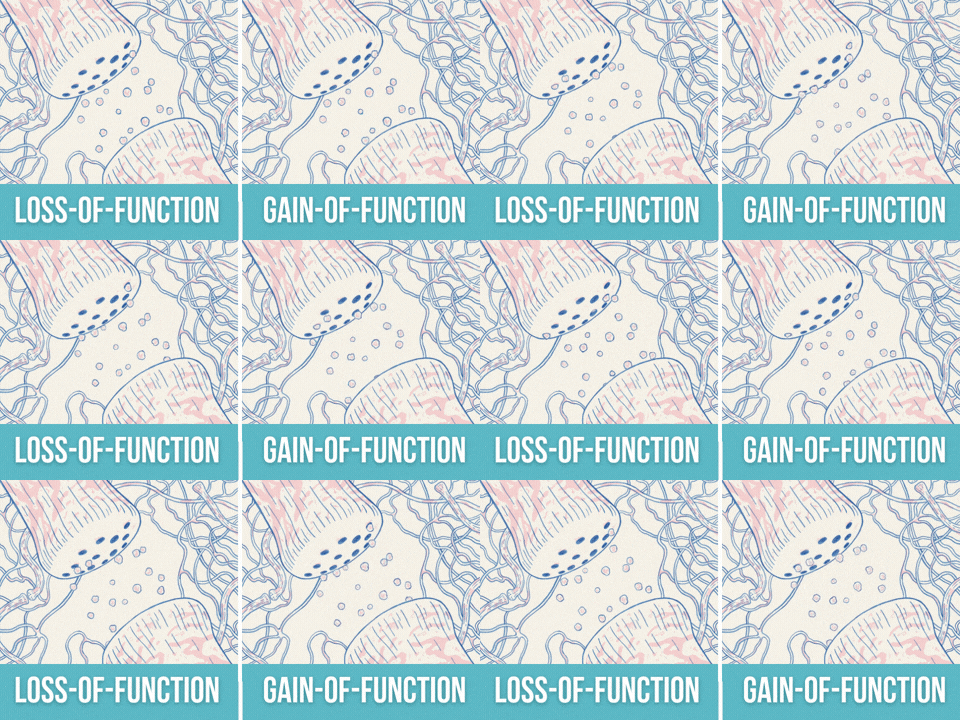
Still other variants have complex effects that alter localization or function in ways that cannot be categorized as simply gain- or loss-of-function.
The brain is complex and will change in ways that seek to compensate for the altered function of variant NMDA receptors, However, because clear gain- and clear loss-of-function variants affect the receptor function in opposite ways, they may require fundamentally different treatment strategies. A therapy that benefits one group could potentially worsen symptoms in the other.
The CURE Epilepsy Grantee Transforming GRIN Care
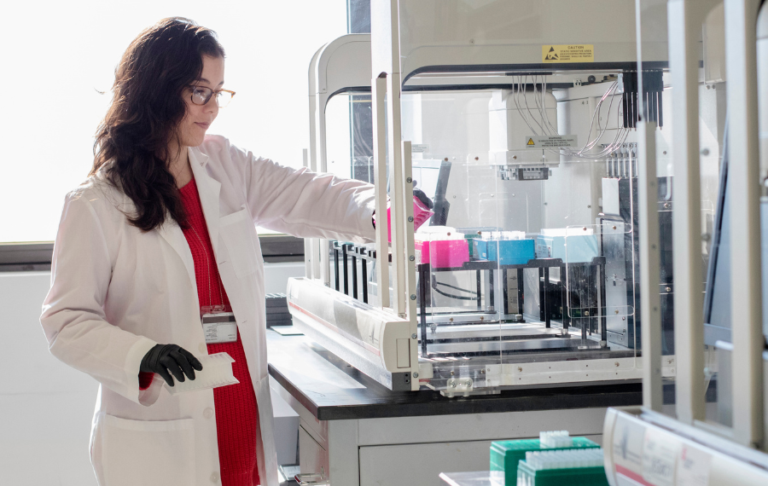
In 2016, with funding from CURE Epilepsy, Dr. Stephen Traynelis and colleagues at Emory University set out to develop methods to determine precisely how individual GRIN variants alter NMDA receptor function by assessing multiple receptor properties.
The team expressed patient-derived variants in laboratory systems and evaluated basic functional properties and whether FDA-approved NMDA receptor inhibitors—including memantine, a medication commonly prescribed for Alzheimer’s disease and other dementias—could reduce excessive receptor activity.
At the same time, they collaborated with clinicians caring for patients receiving off-label treatment, tracking seizure frequency, EEG findings, developmental progress, and other clinical outcomes.
The work proved transformative. The team developed a framework for classifying many (but not all) GRIN variants according to their functional effects, allowing clinicians to distinguish between clear gain- and clear loss-of-function variants and helping identify patients who might benefit from targeted therapies.
Today, Dr. Traynelis’ laboratory routinely collaborates with clinicians around the world to evaluate the functional consequences of newly identified GRIN variants. The platform has been used to analyze many hundreds of variants, providing critical information that helps guide treatment decisions for patients with these rare disorders.
According to Dr. Traynelis, the CURE Epilepsy award was catalytic, providing the resources needed to aggressively pursue functional characterization and establish GRIN disorders as an important class of genetic epilepsies.
The work of CURE Epilepsy is vital to all citizens as it seeks to improve the lives of millions of patients and families. Every researcher who receives such support is keenly aware of the individuals for whom their work could help, of the sacrifices made by donors as well as administrators of CURE Epilepsy who give freely of their resources and time, and of their responsibilities to perform research at the highest levels to ensure reliable results emerge that will catalyze improvements in clinical care.
Emory University

A Family’s Search for Answers
 For families affected by GRIN disorders, the scientific advances pioneered by Dr. Traynelis and his colleagues have fundamentally changed what a genetic diagnosis can mean.
Kaitlin appeared healthy at birth, but her parents soon began to notice what was eventually diagnosed as “global developmental delays.”
For years, Kaitlin experienced intractable epilepsy, absence of speech, and cortical vision impairment with no known cause. Finally, at ten years old, Kaitlin finally received a disease-causing GRIN1 variant diagnosis through whole exome sequencing.
Identifying a named variant brought both relief and new questions. What did Kaitlin’s specific variant actually do? And were there treatments that might help?
Just a decade earlier, clinicians often had no way to answer those questions. Today, functional testing can determine whether many GRIN variants increase or decrease NMDA receptor activity, information that increasingly helps physicians make treatment decisions, identify patients who may be eligible for precision medicine clinical trials, and understand the overall relationship between genetic changes and a patient’s symptoms.
Kaitlin’s family has also become part of the growing community working to advance GRIN research. Through the CureGRIN Foundation in addition to other advocacy efforts, families are partnering with scientists, participating in research, and helping build the knowledge needed to accelerate the development of targeted therapies.
Their experiences underscore why understanding the function of individual genetic variants is so important—not only for answering scientific questions, but for improving the lives of children living with these rare disorders.
From the Laboratory to a Phase 3 Trial
The partnership between researchers like Dr. Traynelis and families like Kaitlin’s has helped move the field from understanding GRIN variants in the laboratory to testing precision therapies in the clinic. Kaitlin herself was previously enrolled in Praxis Therapeutics’ relutrigine trial.
Additionally, GRIN Therapeutics is conducting a Phase 3 clinical trial of radiprodil, a therapy designed for patients with specific gain-of-function GRIN variants. The study relies on the functional testing approaches pioneered by Dr. Traynelis and colleagues to help identify appropriate participants and guide enrollment.
Importantly, the trial is evaluating outcomes that matter most to families. Researchers developed a GRIN-specific Clinical Global Impression scale in partnership with caregivers, ensuring that measures of success extend beyond traditional clinical endpoints to capture meaningful improvements in daily life and functioning.
Building the Foundation for Precision Therapies
The story of GRIN disorders illustrates how fundamental scientific discovery can ultimately transform patient care. What began as an effort to understand how individual genetic variants affect a single receptor has evolved into a precision medicine framework that helps match patients with targeted therapies.
CURE Epilepsy continues to advance this work. A recently announced Rare Epilepsy Partnership Award with the CureGRIN Foundation is supporting Dr. Geoff Swanson in testing a genetic therapy for a disease-causing variant in the GRIK gene family, which is closely related to GRIN genes and is associated with one of the most severe forms of epilepsy within this broader group of glutamate receptor disorders.
Ten years ago, Dr. Traynelis hoped his research might one day lead to personalized treatments for children with GRIN-related epilepsies. Today, that vision is helping shape a late-stage clinical trial while providing a functional testing platform that may inform future precision medicine studies for other rare genetic epilepsies.
It is a powerful example of how investments in fundamental research create the knowledge, tools, and partnerships needed to move from gene discovery to precision medicine—one patient, one variant, and one breakthrough at a time.
You Make This Work Possible
300+
grants awarded in 19 countries
$100M
raised to find a cure for epilepsy
More CURE Epilepsy Discoveries