

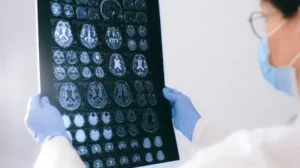

For many people with epilepsy, medications do not completely stop seizures. Neurostimulation, which uses small electrical currents delivered directly to brain tissue, is a treatment option, but it does not work equally well for everyone. One reason is that we still do not fully understand how the brain transitions into a seizure or how stimulation affects that process.
This project will use brain electrical activity recordings (EEG) from people with difficult-to-treat epilepsy, in combination with brain responses to neurostimulation at different settings, to identify signals that can indicate when and why a seizure is becoming more likely. It will also develop new ways to distinguish seizure-generating brain networks from healthy ones.
By uncovering how the brain responds to different levels of stimulation, this research could help make neurostimulation more personalized, leading to better seizure control and reducing the need for trial-and-error treatment approaches.
Related Research