
Remembering Cameron Boyce: Friends Share Memories and Raise Awareness of Epilepsy and SUDEP
Episode Overview
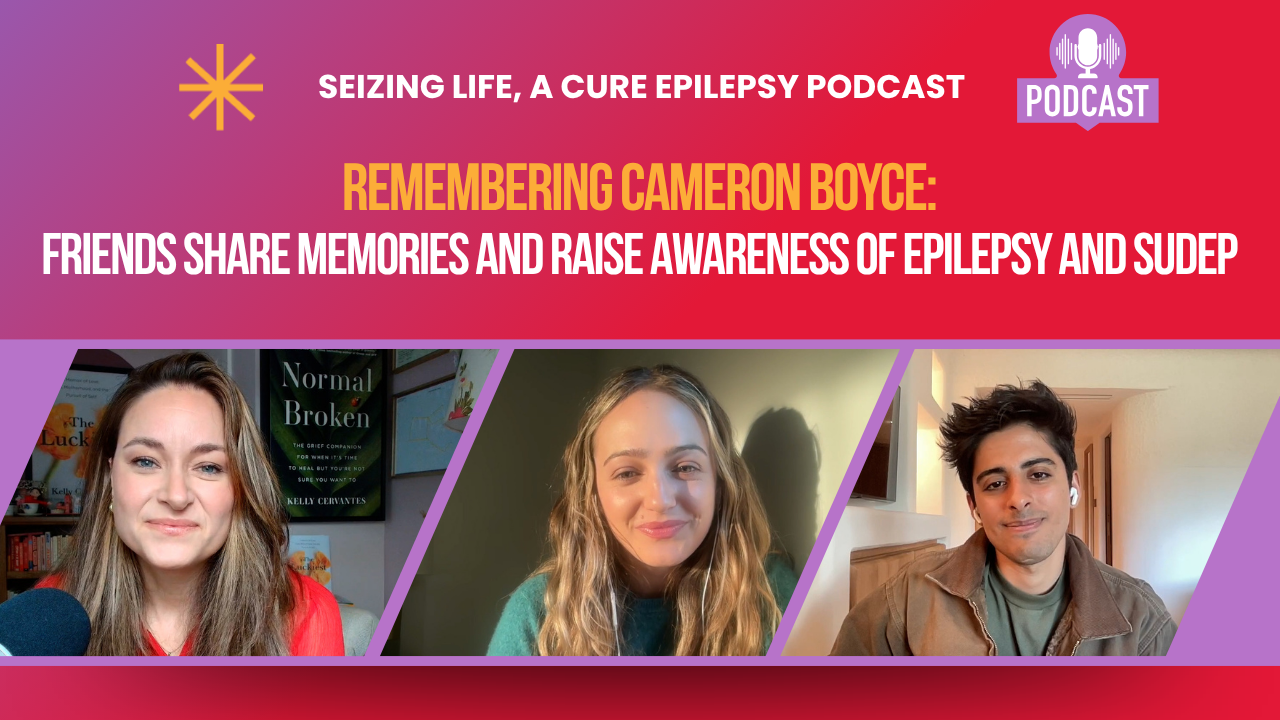
Actors Sophie Reynolds and Karan Brar join Kelly for a heartfelt conversation about their close friend Cameron Boyce—his humor, curiosity, compassion, and the way he approached living with epilepsy.
Sophie and Karan reflect on being with Cameron when he experienced his first seizure, learning about epilepsy alongside him, and seeing how he continued to embrace life while managing his diagnosis. They also speak candidly about learning of Sudden Unexpected Death in Epilepsy (SUDEP) after Cameron’s passing and the urgent need for greater awareness, research, and honest conversations about SUDEP.
Sophie and Karan share why they joined The Cameron Boyce Foundation, what they value about the organization’s achievements, and what its long-term stewardship by CURE Epilepsy means for the community fostered by the Foundation. Sophie and Karan celebrate Cameron’s friendship, legacy, and the “soft bravery” he displayed in living with epilepsy and embracing life with an open heart, joy, and enthusiasm.
Episode Transcript
Kelly Cervantes:
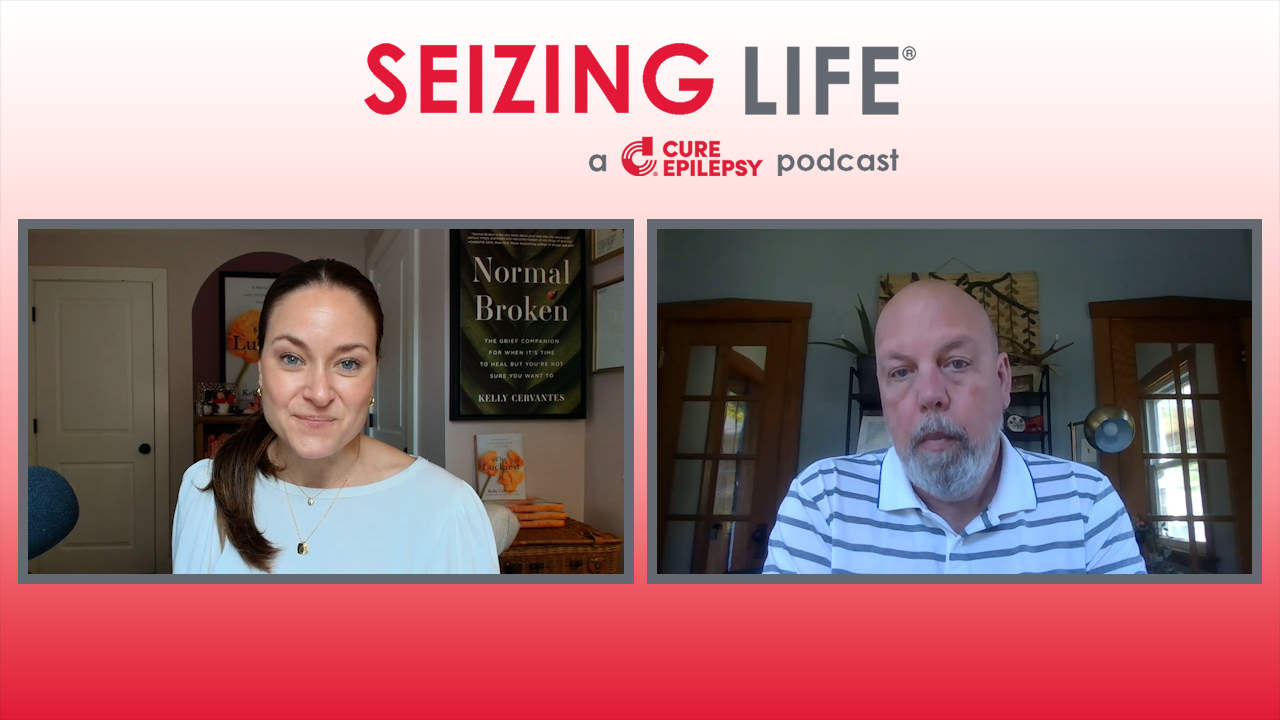
Hi, I’m Kelly Cervantes, and this is Seizing Life, a monthly podcast produced by Cure Epilepsy. This month I’m happy to welcome actors and Cameron Boyce Foundation advisory board members, Sophie Reynolds and Karan Brar to the podcast. They are here to share some memories of their friend Cameron, and to discuss their work with The Cameron Boyce Foundation to honor Cameron’s legacy and raise awareness of epilepsy and SUDEP. Sophie, Karan, thank you so much for joining us today. I’m so thrilled to have you here. To start things off, can you each tell us a little bit about your relationship with Cameron, how you guys met?
Karan Brar:
Yeah, I’m going to speak for Sophie as well. Cameron was probably one of the most annoying people that Sophie and I have ever known, and also simultaneously one of our favorite people. Sophie and I actually met through Cameron. So, Cameron was my co-star on Jessie, and very, very quickly, almost instantaneously became my best friend. We worked together for about four years, and right after that, he jumped onto Gamer’s Guide, his own show, and Sophie was on that show. And I very distinctly remember him kind of coming back and being like … I was like, “How’s the cast? How do you like them?” He was like, “Everyone’s really great, but I really get along with Sophie. Sophie’s super awesome, we should start hanging out with her.” And then he introduced us, and then the three of us kind of became a little pod.
Kelly Cervantes:
What was Cameron like as a person and as a friend?
Sophie Reynolds:
Cameron was one of those people, it sounds so cliche, but in sincerity, truly lit up the room. He had the brightest personality, very funny, the best laugh. Honestly, he was more of a laugher than he was giving the jokes himself. And yeah, he was just a very compassionate, loyal friend. Karan, you want to espouse more on him?
Karan Brar:
Yeah, espouse. Kelly, on the side, we’ve all been teasing each other in our friend group about our vocabulary these days. So, I love that espouse has been added to-
Sophie Reynolds:
Hopefully I used it right.
Karan Brar:
No, you definitely have because you’re always on it with that. Yeah, Cam was really, to put it quite simply, he was the best. He made people feel very, very safe, very supported, championed. And I remember Sophie saying this and it has always stuck with me, where she goes, “The constant about Cameron and why it was so devastating losing him was that he just loved living life and you knew that about him.” Yeah, he was the best.
Sophie Reynolds:
Yeah.
Kelly Cervantes:
I think so much of what you said comes through in the photos and the videos and interviews. I didn’t get to meet Cameron in life, but I love hearing your stories about him. When did you learn that Cameron had epilepsy?
Sophie Reynolds:
We had a bit of an interesting journey with that because we were there for the first time he had a seizure. It was Karan and I that were there with him. And prior to that he had no history of epilepsy or seizures. So we were 17 maybe, I think when that was. I’m trying to think.
Karan Brar:
Yeah, I think it was 17.
Sophie Reynolds:
Yeah, and that really changed everything. So, from then on we were kind of on the journey with him through the testing. And I guess I can’t recall exactly when they formally diagnosed him on my end, but I think from the start of him learning it, which I imagine was also a difficult journey for him, but we were there with him trying to figure it out together.
Kelly Cervantes:
Did you guys know anything about epilepsy at the time, or was this brand new to you?
Karan Brar:
Personally, it was brand spanking new to me. I distinctly remember telling my mom when Cameron had gotten diagnosed, and she said to me, which I feel like perfectly encapsulates how a lot of society views epilepsy, she goes, “Oh, don’t worry. Growing up in India, I knew a girl who had epilepsy and she took medication and it was fine. So, I’m sure he’ll just get put on a medication and everything will be fine.” So, my experience with epilepsy was actually quite non-existent, and that one anecdote from my mom was really all I had.
Kelly Cervantes:
Did his epilepsy affect his social life or his life as an actor?
Sophie Reynolds:
I mean, I think I want to say no because I don’t think he let really anything stop him, but then in a way, yes. I think it’s something that you carry with you that you think about. He definitely did not let it fully alter his life in any way. But yeah, I mean, I think with acting and stuff there was always extra concern of make sure you get sleep. We work a lot of long hours and that was a big trigger for him. And I think as far as socializing, there were certain triggers that you have to think about. But I would say in general he definitely did not let it slow him down at all.
Kelly Cervantes:
He just kept living his life and loving his life.
Karan Brar:
Yeah.
Sophie Reynolds:
Yeah.
Kelly Cervantes:
I love that.
Karan Brar:
And it felt like he and his family were just taking the next indicated right step, because I’m sure Kelly, as you’ve experienced with the medical system, there’s a lot of like, okay, this is … When he had his first seizure, there was the conversation of like, well, maybe it’s just one seizure. A seizure does not necessarily equate to an epilepsy diagnosis. And then after he had a second, then it was like, okay, well, we should get testing. And he formally has an epilepsy diagnosis, though I don’t know exactly that timeline. And there was steps being taken, medication being taken. And also, as Sophie said, an understanding of triggers for a system. I don’t think I’ve ever seen someone consume so much coconut water in my life. That’s what he did to stay hydrated, but yeah.
Kelly Cervantes:
And do you think he ever experienced or did you ever witness him experience any stigma around his epilepsy?
Sophie Reynolds:
I feel like no. In my experience, I never really witnessed that. He often had seizures at night, so he didn’t have a lot of instances where it was like he was publicly having seizures or anything like that. So, he was perhaps a bit more private than some people are allowed to be with their epilepsy who are then faced with a lot of stigma. But no, I think in many ways we had a good community around us and he had a very good family that was super understanding of it. And I wouldn’t say that that was something he faced, but I do think it’s something he thought about it. I do think it wasn’t something that he was completely talking about all the time. Who knows if he had been someone who had been forced to discuss it out loud all the time.
Karan Brar:
Yeah. It’s not divorced from the situation, is what I’m trying to say. It’s always kind of there and it’s always a factor. One thing that we were lucky to have with our friends is actually one of our friends at the time, this friend group that we had that we would see each other quite frequently, one of our friends, Tim, has epilepsy. And so, some of our friends were actually quite familiar and had seen a seizure before, knew how to handle a seizure, not that Cameron had a seizure in front of them, and nor that people were blase about it, but there was just an understanding of it. And I think anyone with any diagnosis in any profession is going to consider how does this affect my work? How does this affect my relationships within my work? How does it affect my relationships outside of my work?
And kind of tying it back to what Sophie said earlier, it just didn’t slow him down. I will never forget he had to do some of these brain scans, and it was like he had to wear this kind of helmet while he slept to monitor things. And he had all these wires going down his back and he just had to have it on for 24 hours so it could monitor his brainwaves. He threw a cap on and went to the LA Rams game. I have no idea how he got through security with that, and it just looks like he’s wearing this incredibly oversized hat. And Sophie, I don’t know if you remember that, but that does not-
Sophie Reynolds:
No, I do. I was just going to say he made me take a bunch of pictures of him. He did a photo shoot with the wires too. He was not someone who was easily embarrassed or would let anyone make him feel bad about his epilepsy, which I think is good.
Kelly Cervantes:
Oh my goodness, I love that story so much. That is absolutely brilliant, and I hope that every young person or any person who has to have the ambulatory EEG hears that, and walks around with their own cap around their home and hometown, and feels just as comfortable as Cameron did.
Speaker 4:
Sudden unexpected death in epilepsy, or SUDEP, occurs when a person with epilepsy dies for no known reason. It’s estimated that SUDEP takes the lives of over 3,000 people living with epilepsy each year. CURE Epilepsy is committed to unraveling the mysteries of SUDEP. Our work has helped establish respiratory arrest as a leading cause of SUDEP, among many other important findings. Learn more at cureepilepsy.org. Now back to Seizing Life.
Kelly Cervantes:
Sophie and Karan, after Cameron passed, what did you learn about SUDEP? Especially what did you learn that you wish that adults and families knew about SUDEP?
Karan Brar:
I learned that it existed. I had no idea that it existed at all, and it is a challenging thing-
Kelly Cervantes:
People need to hear that, but it’s the truth. It’s the truth.
Sophie Reynolds:
Yeah.
Karan Brar:
Yeah, it’s the reality of the situation. And I do think immediately after Cam’s passing, when you lose anyone, the immediate thought is like, “How did this happen?” But I felt that particularly around Cameron’s passing because it’s not that he was neglecting his diagnosis. He was taking care of himself, he was doing everything by the book and was getting the care that he needed. And of course, in retrospect, as anyone is always going to check under the hood and want to be like, “Was there anything else we could have done? Is there any more?” And when we heard about SUDEP, it’s just like, wow, there’s genuinely nothing that could have been done in that situation. And it’s very challenging, because it created this very large conversation around SUDEP. You had a lot of young people that were afraid because they were like this with epilepsy that they didn’t know it existed.
And you heard from parents who have kids with epilepsy being like, “I’m kind of freaking out. Why hasn’t my doctor told me this?” And when it comes to that doctor-patient relationship, it’s quite challenging because there is no cure for SUDEP and there is no real treatment for SUDEP other than seizure management. And I think that what I’ve learned about SUDEP has led to an equal amount of questions, if not more.
Kelly Cervantes:
Ain’t that the truth? We know so, so little about the brain and about epilepsy and about SUDEP. My husband and I like to say that we don’t believe that things happen for a reason, because there is no reason good enough for the world losing a light like Cameron. There’s no reason good enough for my family losing our daughter Adelaide. But we do believe that we can make reason out of the things that happen, and both of you are such beautiful examples of that, of making reason out of this loss by joining The Cameron Boyce Foundation advisory board and hosting the podcast. What did that mean to you? I guess for those people who may not be aware of the organization as well, can you share a little bit about its mission and why you chose to be a part of it?
Sophie Reynolds:
Yeah. The Cameron Boyce Foundation was founded in 2019 just after Cameron’s passing to support Cameron’s … Cameron was a very philanthropic person himself, so it was in part to support things that he was passionate about, but also to work towards ending SUDEP and spreading epilepsy awareness, and creating community for people, particularly young people who had epilepsy, because they think that that was something that we realized with all of the people sharing their stories with us. There was a lack of community and a lack of a young perspective in the epilepsy space. I think there was parents had more places to go, but a lot of these people in their teens and their 20s who had grown up watching Cameron were like, “Wow, I have epilepsy and I feel so alone in that.” And that was sort of the founding of the foundation. And I think being a part of it has always meant to me …
I don’t want to say it’s an obligation, but in a way I felt like we do have somewhat of an obligation to these people who are looking to Cameron and his family and his friends, and asking questions about SUDEP and feeling seen for the first time in their epilepsy, and wanting to be able to be there for them because their stories were so powerful to me. And wanting to be able to sort of carry his legacy forward, but more so just amplify the voice of the community that I think is so often unheard, it’s so underfunded and under researched. And I think a big part of raising money is raising awareness and having these conversations, the number of people who didn’t know about SUDEP like us. I just want more people to feel informed and like they have each other through the journey. So, that’s my very long-winded answer.
Kelly Cervantes:
Perfect. That’s perfect. So, CURE Epilepsy and The Cameron Boyce Foundation have had a very long relationship, really since the founding of the foundation. I was telling Karan before we got started that I actually met Cameron’s mom, Libby, just a few months after, because Cameron and Adelaide passed away within months of each other. And it was Susan Axelrod, the founder of CURE Epilepsy, who she had us to her home in Arizona and just with some other moms who had lost kids from complications from epilepsy, and we got to meet, and I really feel like that relationship between the two organizations, it started so early and it’s been so meaningful to me, and I know so many of the people who work with CURE Epilepsy. And now we are getting to work together even more closely. CURE Epilepsy is going to be the long term steward of The Cameron Boyce Foundation.
What does that mean to you? What does it mean to its supporters to know that the foundation is going to continue forward alongside CURE Epilepsy?
Karan Brar:
The first thing that comes to my mind is guidance. Ultimately, all of us got thrown into this work very suddenly, and that has been incredibly meaningful and at times really disorienting. I like to joke that I’d never used a spreadsheet before. As an actor, there was never a reason for me to use a spreadsheet and now I love a spreadsheet.
Kelly Cervantes:
I don’t think my husband has ever used one.
Sophie Reynolds:
Yeah.
Karan Brar:
And unfortunately for the foundation, Heather Kun, our director, executive director, she has to deal with me always coming up with a new spreadsheet and being like, “I found a new way to organize this thing for us,” whatever it is.
Sophie Reynolds:
Helpful, helpful.
Karan Brar:
Helpful. But we have had amazing friends and allies in this space, but what CURE can do is kind of nurture the spark that we have found, not only with this community but with our mission, and help us preserve it and nurture it for the long term. Because I think prior to this, once again, for better or worse, epilepsy can be both a scary thing but it can also feel very shameful for young people. And I’ve met so many young people that are like, “Oh, I never talk about this. I’ve never told anyone. I haven’t even told my friends.” I’ve heard about incredibly sad stories where someone is like they didn’t even want to see a doctor because their family was so confused and didn’t really know what to do, and whatever it might be. And we have loved what we’ve found with this community, which is helping young people discover their agency when it comes to seeking medical care.
And CURE has been doing that for much longer than we have. Hannah has been working across the board, and as the kids like to say, they can help us level up.
Kelly Cervantes:
I love that. What TCBF has managed to curate in terms of a community is so beautiful and so meaningful. And I’m really excited to see how an organization with the infrastructure that CURE Epilepsy has, how they can leverage that to really push research and awareness forward. I think it’s a really exciting time to be in this space. So, I guess because you have both spoken to so many young people with epilepsy, for someone who is recently diagnosed and is asking now what, what first steps do you think that they should take in their conversations? What questions should they be asking?
Sophie Reynolds:
I think the first question for me goes medical in finding an epileptologist, which is different than a neurologist. And so many people don’t know that. And I think finding the care that isn’t matched to you can be really hard and it can be really daunting, and the medical system is confusing. So, my follow-up to that is that there is a great community online. You are not alone in this. It is worth figuring out because in the long run, you’re going to want to be informed. You’re not going to want to just bury your head in the sand and hope for the best, but that there is an army of people who are with you while you figure it out. It won’t be easy, it won’t be one size fits all, but the more people that you can talk to and that you can find that are going through it, the less alone that you might feel and that you’re going to be okay.
Karan Brar:
What I would tack onto everything that Sophie said is ask questions. If you’re a young person looking online, there’s plenty of questions out there of here’s what you should ask your doctor, and I encourage you to ask the questions that are not already out there, regardless how big or small or dumb you might think they are. Even if it’s like you’re asking your doctor like, “Hey, is this going to affect my sex life?” Whatever it might be, it’s just important to get a conversation going. I know for me personally, I don’t have a chronic condition, but even if I see my dermatologist I freeze up a little bit and I don’t ask as many follow-up questions. And I leave and I go, “Oh, I should have asked about that one thing.” And it’s important for, especially as a young person can transition to adulthood, understanding how to prepare yourself to take on the torch of your own medical care.
And that involves asking what you might view as ridiculous questions, but those will eventually lead you to the questions that you need to ask, that you truly want to ask.
Kelly Cervantes:
Yeah, that is all incredible, incredible advice. So, unfortunately I think when someone dies young or unexpectedly, it is very easy to get wrapped up in the death and not the life of a person. And so, as we sort of close the conversation, I really want to focus on Cameron’s life and his legacy. And as two people who knew him so well, what do you hope that people remember about him? What do you hope his legacy looks like?
Karan Brar:
The first thing that’s coming to my mind very spontaneously right now is I hope they take away some of his bravery, and not in the typical sense. I think we think of bravery as a brute force skill that it appears and you’re charging through something. I find Cameron’s bravery to have been led with tremendous amounts of curiosity. It felt like he would just pick up an instrument or try something new just for the sake of trying it and falling down and getting back up. And I found it to be such a gentle way to move through the world and grow, and I hope people can find fragments of that soft bravery within themselves.
Sophie Reynolds:
I think I hope that people are able to take away how he made other people feel, because I think he truly made everyone feel like they were so important and valued and special in all of his even small interactions. And that’s something that since his passing I think I know even more, because people will come up to us having met him for one moment and feel so impacted by that. But that really was true to who he is, he really wanted everyone to feel valued. And I think in a day where we feel very disconnected, remembering to connect with one another and to value another like that, I hope that that continues on with him.
Kelly Cervantes:
And one last question. I would love to know how you both keep Cameron’s memory alive. In what ways do you remember him or see him throughout your day?
Sophie Reynolds:
I mean, in a way I feel like it’s everything for me. Sometimes I feel like just driving … I mean, I live in LA and that’s where he grew up and loved so much. So also sometimes just driving around I feel like I’m deeply connected to him, but I think we try to tell stories. We try to not shy away from like, “Oh, Cameron loved that.” Just casual mentions I think become really taboo sometimes after someone passes. And as a friend group, I’m very proud of the fact that I think we’ve always been very open to just you have a thought, share it about him, a story about him, and it doesn’t have to be such a big sad moment every time, and that kind of keeps him feeling alive within the environment all the time. Yeah.
Karan Brar:
Yeah. Very much the same with Sophie. Everything is almost in relation to him, not in this sad way of being like, “Oh, he can’t see this,” but there was such a vividness to how I know he would react to any given moment in either one of our lives. And that’s what comes to mind is watching something ridiculous happen or whatnot, and picturing Cameron’s reaction to it all. I think the way that I kind of keep him alive or find him is through my relationships, one through Sophie, his parents, one of our other best friends, Zoe, there are these little fragments of him that are buried within all of these people, and the ways that they emerge are really beautiful to stumble upon.
Kelly Cervantes:
Sophie, Karan, thank you so much for taking time out of your incredibly busy lives to have this incredibly gorgeous and honest conversation, and for doing all that you have to raise epilepsy awareness and to connect with this community, and to keep Cameron’s memory alive.
Karan Brar:
Thank you, Kelly.
Sophie Reynolds:
Thank you.
Karan Brar:
It was a pleasure.
Kelly Cervantes:
Thank you, Sophie and Karan for sharing your memories of Cameron, and for honoring him with your work with The Cameron Boyce Foundation. As we mentioned during the podcast, CURE Epilepsy has recently become the long-term steward of The Cameron Boyce Foundation’s legacy in epilepsy. This collaboration brings together two organizations long aligned in their commitment to epilepsy research and awareness, particularly around SUDEP. If you would like to learn more or support the mission of these organizations, please visit cureepilepsy.org. Thank you.
Legal Disclaimer:
The opinions expressed in this podcast do not necessarily reflect the views of CURE Epilepsy. The information contained herein is provided for general information only and does not offer medical advice or recommendations. Individuals should not rely on this information as a substitute for consultations with qualified healthcare professionals who are familiar with individual medical conditions and needs. CURE Epilepsy strongly recommends that care and treatment decisions related to epilepsy and any other medical conditions be made in consultation with a patient’s physician or other qualified healthcare professionals who are familiar with the individual’s specific health situation.