Taking Flight Award
Chris McGraw MD, PhD / Massachusetts General Hospital
Dr. McGraw is developing a system in a zebra fish model that integrates the latest advances in genetic engineering (Crispr/Cas9) and non-invasive monitoring of neural activity (genetically encoded calcium sensors) to enable a rapid screen for genes that enhance seizure resistance.
The Catalyst Award
Detlev Boison, PhD / Rutgers University
Our goal in this project is to optimize and test a new epilepsy preventing drug, which meets criteria for future clinical development.
AES/CURE Training Fellowship for Clinicians
James Gugger, MD, PharmD / University of Pennsylvania
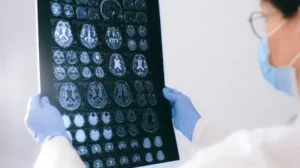
Dr. Gugger will use a special type of brain scan called diffusion tensor imaging (DTI) to investigate if changes in the brain’s wiring, amount of water in the brain or brain inflammation are associated with the development of epilepsy following a brain injury.
CURE Epilepsy Award
Christopher Reid, PhD / Florey Institute, Australia
Associate Professor Chris Reid and his team will develop new rodent models which replicate having both epilepsy and a genetic heart abnormality, and compare these for incidence of SUDEP against existing models.
CURE Epilepsy Award
Heather Mefford, MD, PhD / University of Washington
In this study, Dr. Mefford and her team, will search for a different type of causative change – abnormal methylation which is a type of chemical modification of DNA in a large set of individuals with DEE without a known cause.
Taking Flight Award
Bin Gu, PhD / University of North Carolina at Chapel Hill
By using genetic and electrophysiological techniques, Dr. Gu is also interested in understanding the physiological changes that can act as SUDEP triggers.
Post-Traumatic Epilepsy Initiative
Pavel Klein, MD / Mid-Atlantic Epilepsy and Sleep Center, LLC
Dr. Pavel Klein and his team seek to address this problem by examining a group of “high-risk” patients with a greater chance of developing post-traumatic epilepsy.
CURE Epilepsy Award
Nicholas Varvel, PhD / Emory University
For their project, Dr. Varvel and his team are interested in using a small drug to block monocyte entry in mouse brains after SE.
Post-Traumatic Epilepsy Initiative
Dr. Jeffrey Loeb / University of Illinois, Chicago
By examining patients with subarachnoid hemorrhage and an animal model of subarachnoid hemorrhage, the Loeb team will use methods such as MRI and EEG to characterize the development of PTE with the aim of understanding and predicting who is at risk for developing this condition and identifying potential treatment strategies.