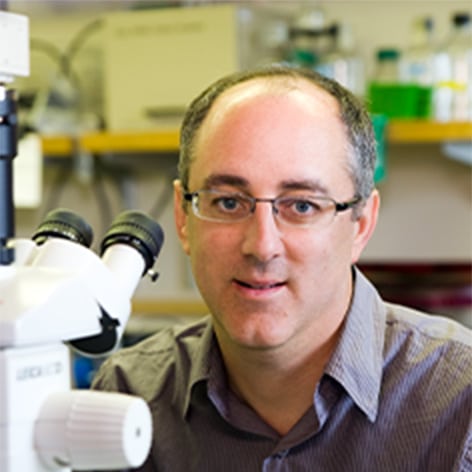
Vivian I. Teichberg, PhD / Weizmann Institute of Science, Israel
Dr. Teichberg is investigating the scope and efficacy of vaccination against a particular AMPA receptor in epilepsy.
Graham Goddard Young Investigator Award
Karin Borges, PhD / Emory University
In a mouse model of epilepsy, Dr. Borges will identify and evaluate genes involved in the brain’s own protective mechanisms for their ability to inhibit the development of epilepsy.
The Maggie Loeffel Award
Gregory A. Worrell, MD, PhD / The Mayo Clinic, Rochester, MN
Dr. Worrell’s study of the usefulness of high-frequency epileptiform oscillations to more accurately locate the area of the brain involved in the seizure, is a unique collaboration combining the neuroengineering strength of the University of Pennsylvania with Mayo Clinic’s large surgical epilepsy practice, translating engineering advances into clinical practice.
Scott C. Baraban, PhD / University of California, San Francisco
The aim of Dr. Baraban’s project is to investigate whether stem cells transplanted into the central nervous system of mice can alter synaptic function in the brain, change the overall level of excitability in the brain and act as a “cure” for patients with uncontrollable epilepsy.
Jana Veliskova, MD, PhD / Albert Einstein College of Medicine, Bronx, NY
The Christopher Donalty Memorial Award
Carl L. Faingold, PhD / Southern Illinois University School of Medicine
Sookyong Koh, MD, PhD / Children’s Memorial Hospital, Northwestern University
The goal of Dr. Koh’s project is to study, in young rats, the effectiveness of environmental enrichment in reversing seizure-induced brain damage.
Edward B. Bromfield, MD / Brigham and Women’s Hospital, Boston
The objective of Dr. Bromfield’s study is to determine whether polyunsaturated fatty acids can be used safely and effectively to treat epilepsy.
Arnold R. Kriegstein, MD, PhD / University of California, San Francisco
In this study, observation of the proliferation and migration of these cells will add valuable insight into how these gene defects influence cortical development and on potential new therapies.