Taking Flight Award
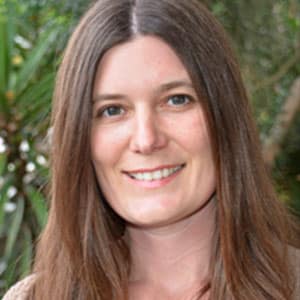
Laura Ewell, PhD / University of California, San Diego
Dr. Ewell’s team is studying the role of a miR that is abundant in inhibitory interneurons.
CURE Epilepsy Award
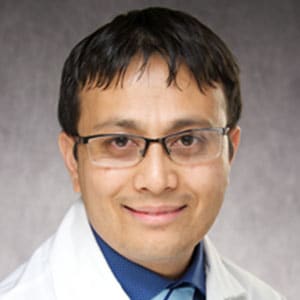
Rup Kamal Sainju, MD / University of Iowa – Iowa City
This study may identify a new biomarker for patients at high risk for SUDEP and a novel treatment to be tested in future studies.
CURE Epilepsy Award, Funded by the Isaiah Stone Foundation
Annapurna Poduri, MD, MPH / Children’s Hospital Boston
The goal of this project is to find genes that underlie the hippocampal defects seen in each of these disorders, and thereby understand the biology of how SIDS, SUDEP, SUDC and febrile seizures are linked.
CURE Epilepsy Award
Kristina Simeone, PhD / Creighton University
Dr. Simeone’s overall goals are to determine a central trigger of SUDEP, identify novel biomarkers to better identify risk for and imminence of SUDEP, and identify a treatment to postpone and ultimately prevent SUDEP.
Taking Flight Award
Stuart Cain, PhD / University of British Columbia
The goals of this project are to define the specific brain regions that promote spreading depression into the brainstem and to test whether spreading depression and death can be affected by a new, experimental, seizure-suppressing drug.
CURE Epilepsy Award
Avtar Roopra, PhD / University of Wisconsin – Madison
Dr. Roopra’s data suggests that a Master Regulator called Polycomb (Pc) is induced in multiple epilepsy models and suppresses a GABAA receptor gene called delta that is normally required for tonic inhibition.
Innovator Award
Kevin Staley, MD / Massachusetts General Hospital
The team will focus on actin, a highly charged structural molecule that likely can act as a “salt substitute”. If they find that brain cells alter the effect of GABA by changing local actin, they can target this mechanism to treat epilepsy.
Traumatic Brain Injury Awards
Richard J. Staba, PhD / University of California
Dr. Staba’s research uses direct brain recordings to characterize very fast electrical events called pathologic high frequency oscillations (pHFOs) that are believed to be responsible for the generation of epilepsy in the brain.
Innovator Award, Funded by the Rock the Block for Pediatric Epilepsy Research Award
Paula Waters, PhD / University of British Columbia/British Columbia Children's Hospital
Paula Waters, together with co-investigators Marion Coulter-Mackie and Sylvia Stockler, is working toward an innovative new treatment for PDE.